Description
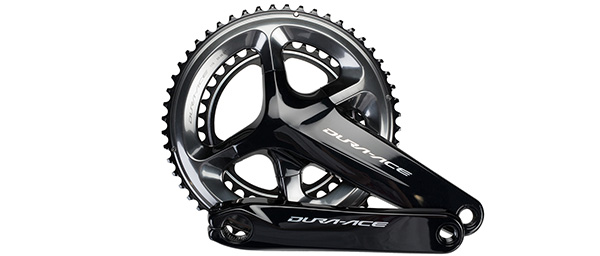
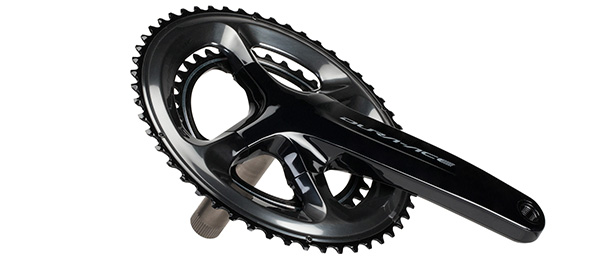
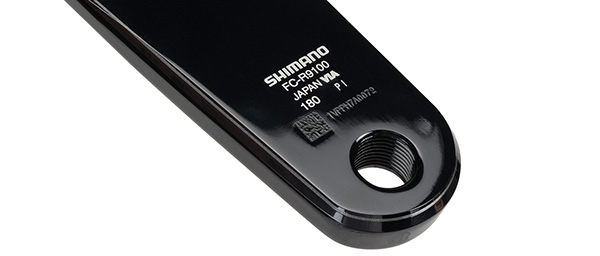
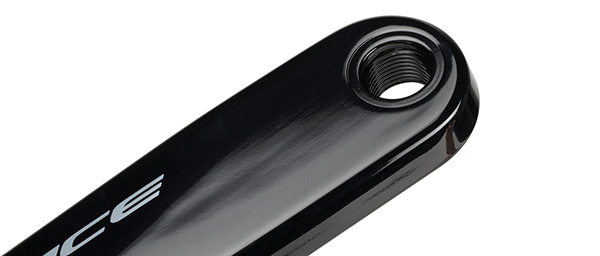
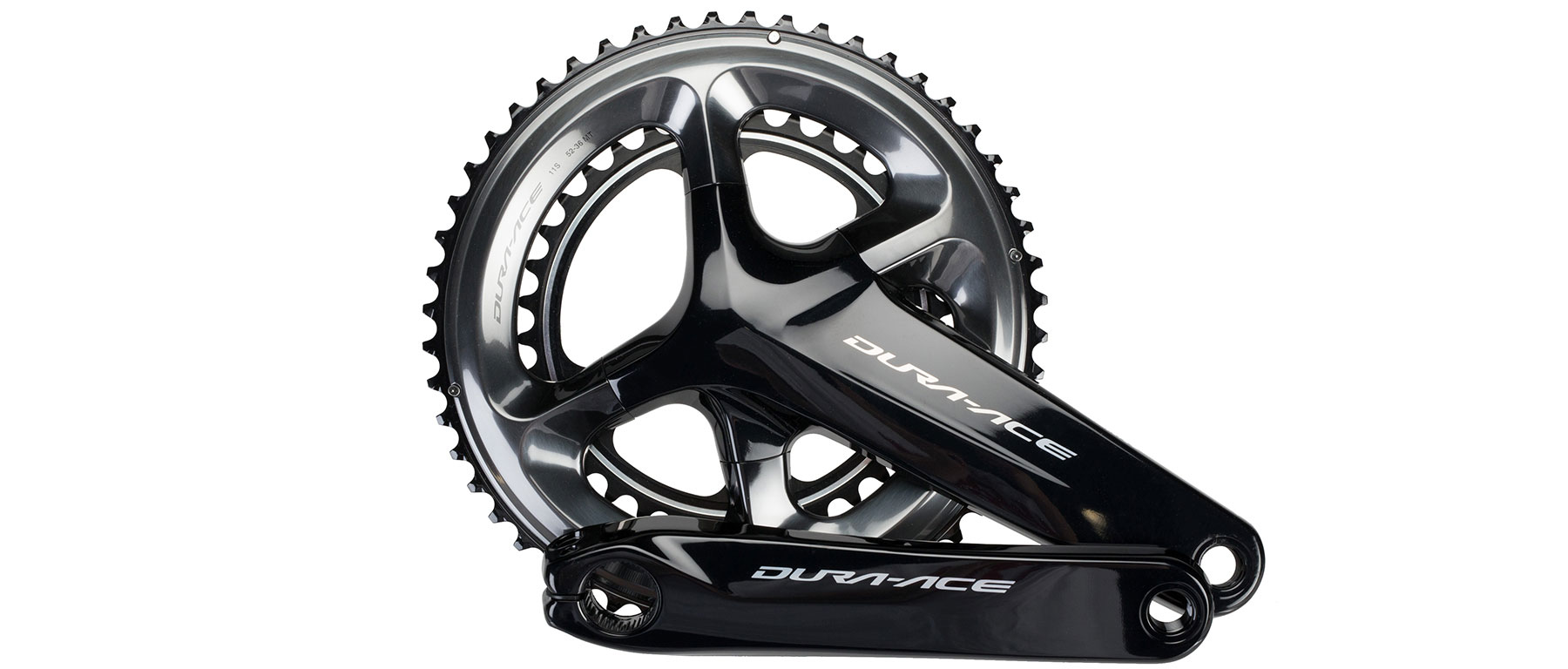
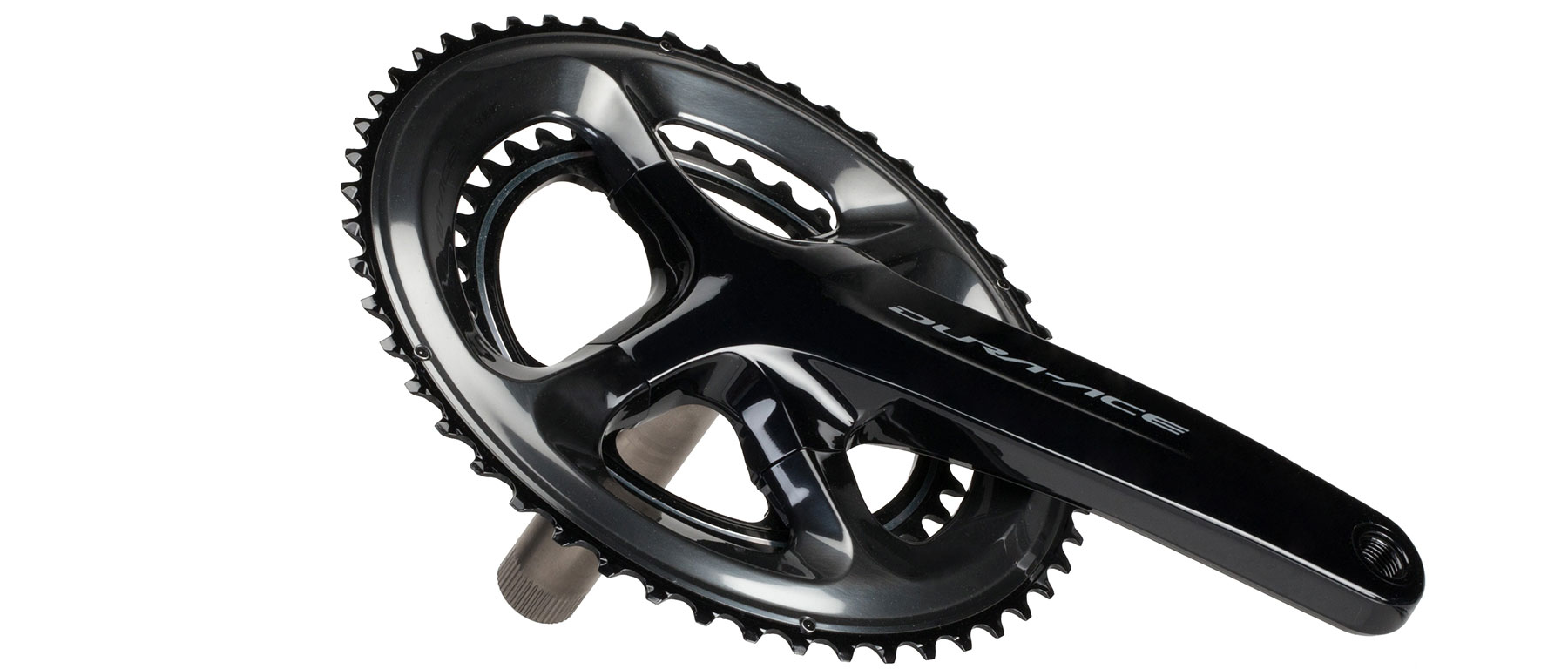
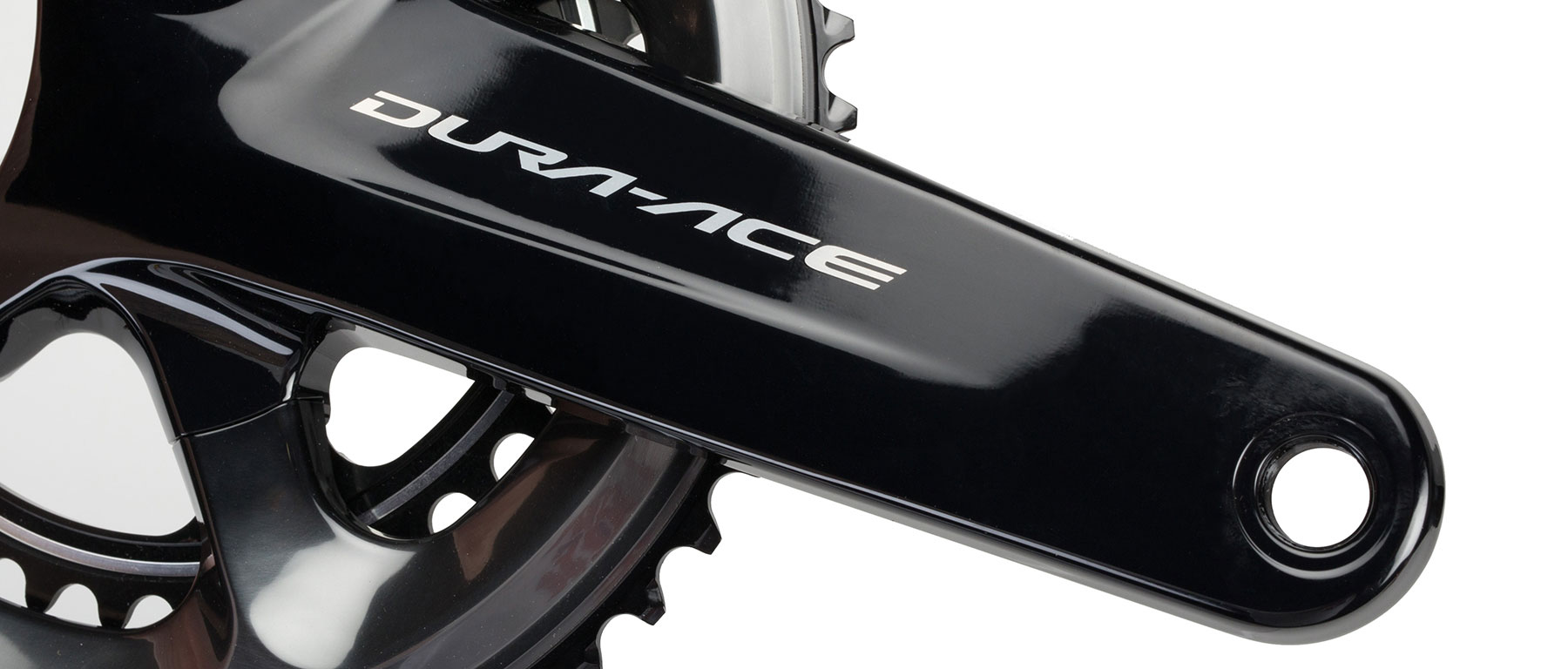
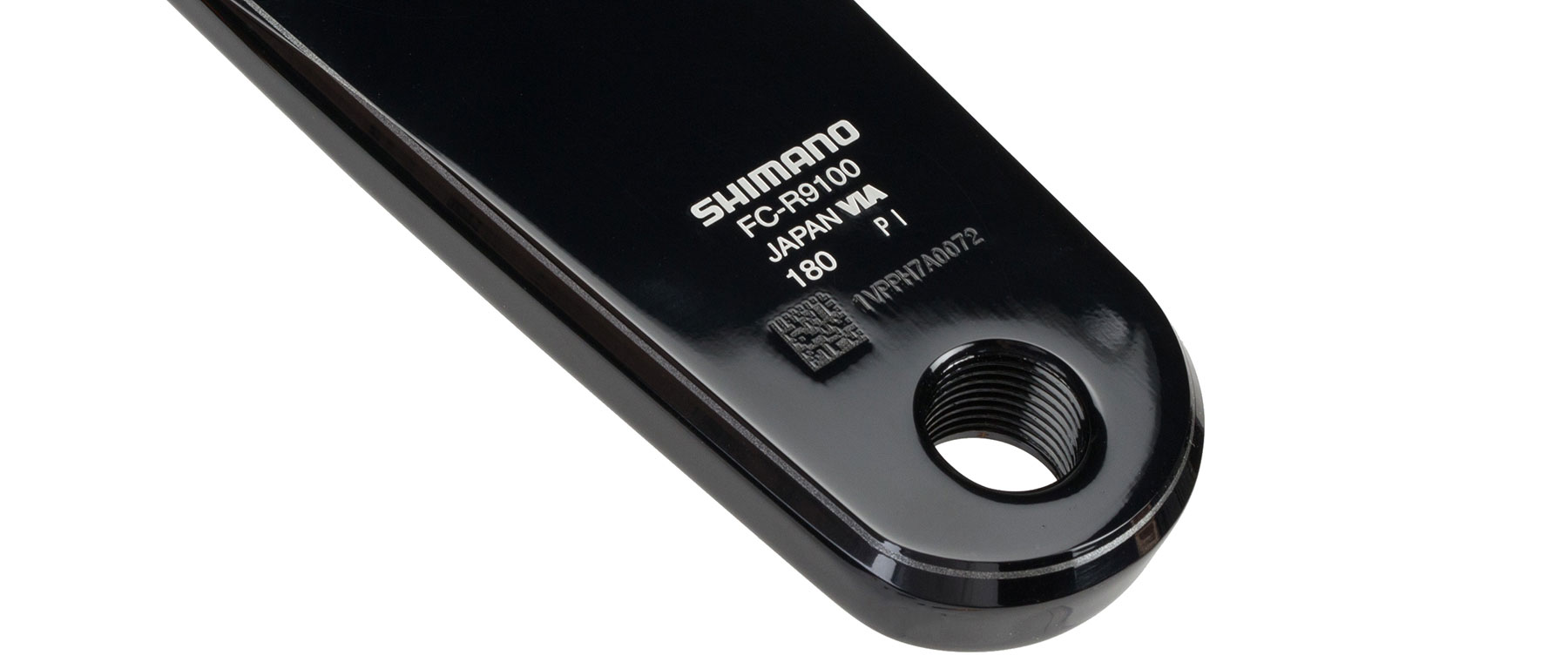
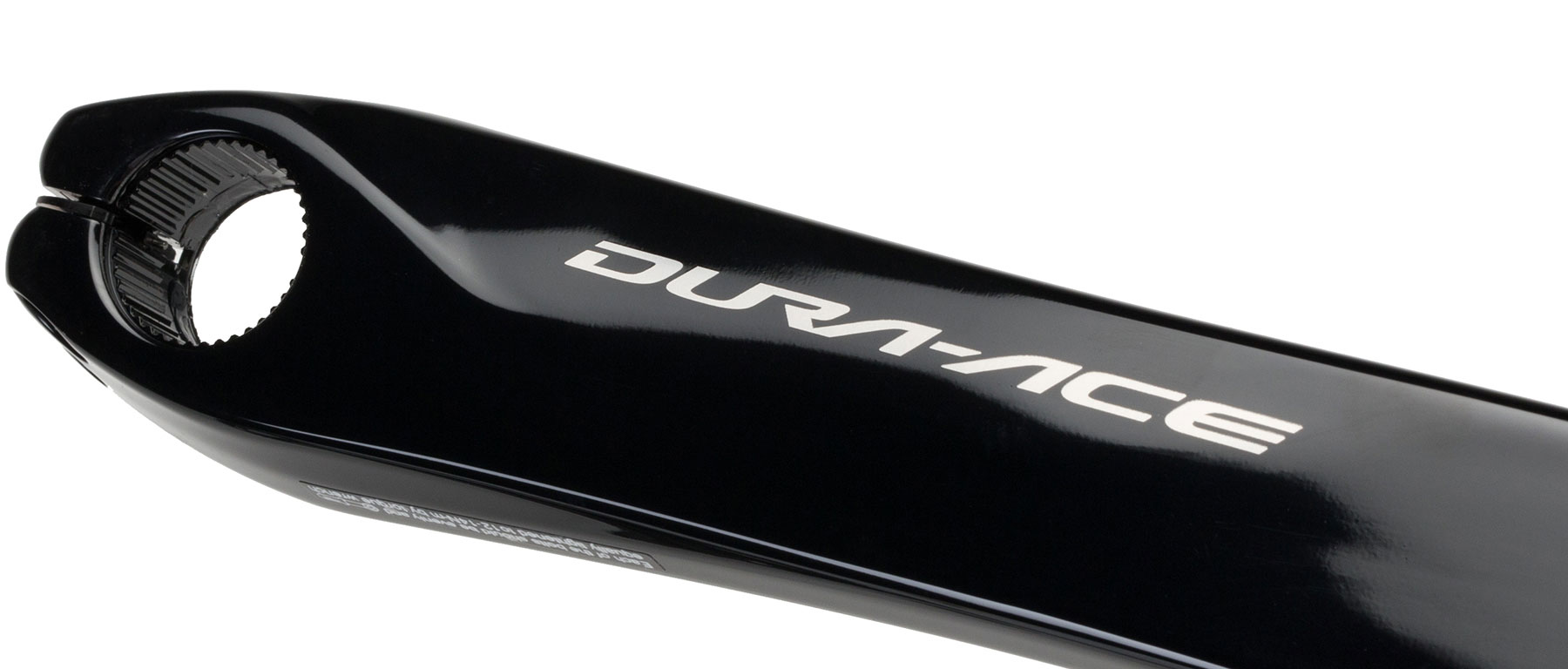
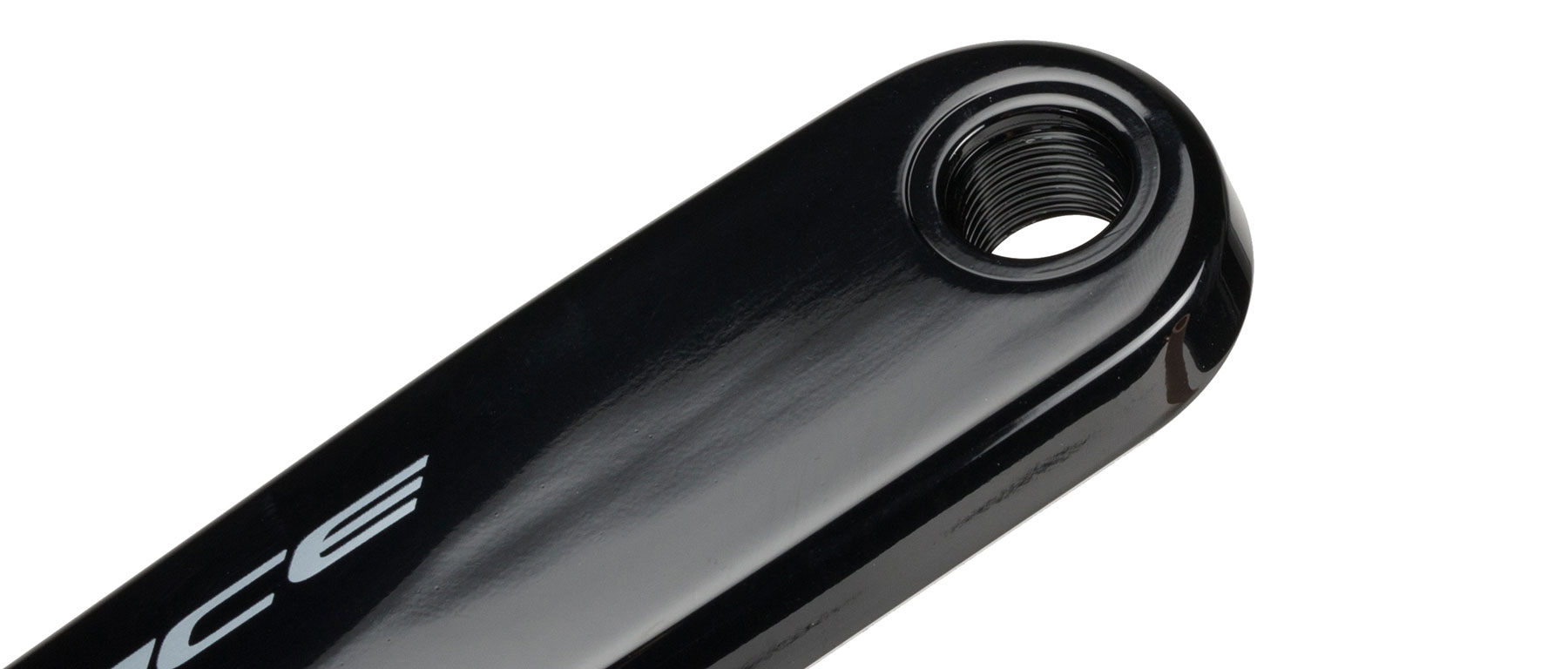
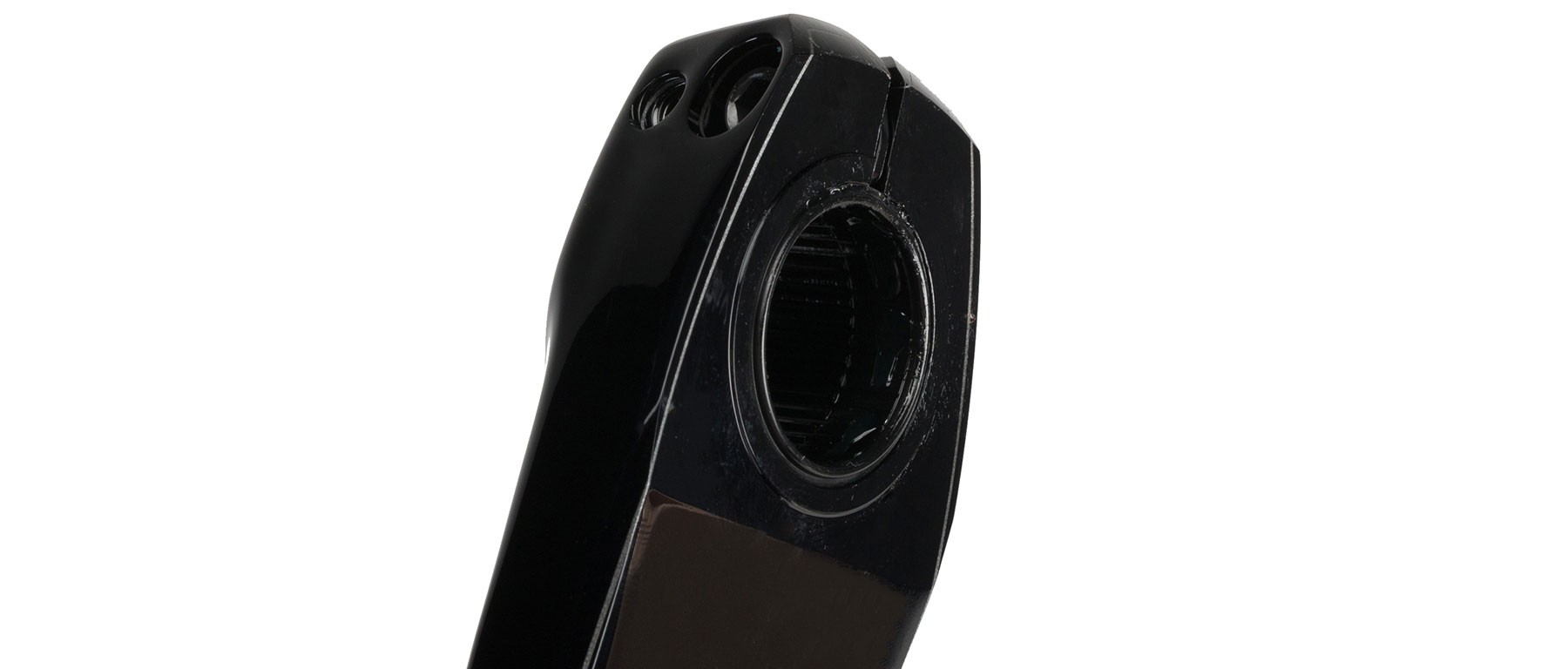
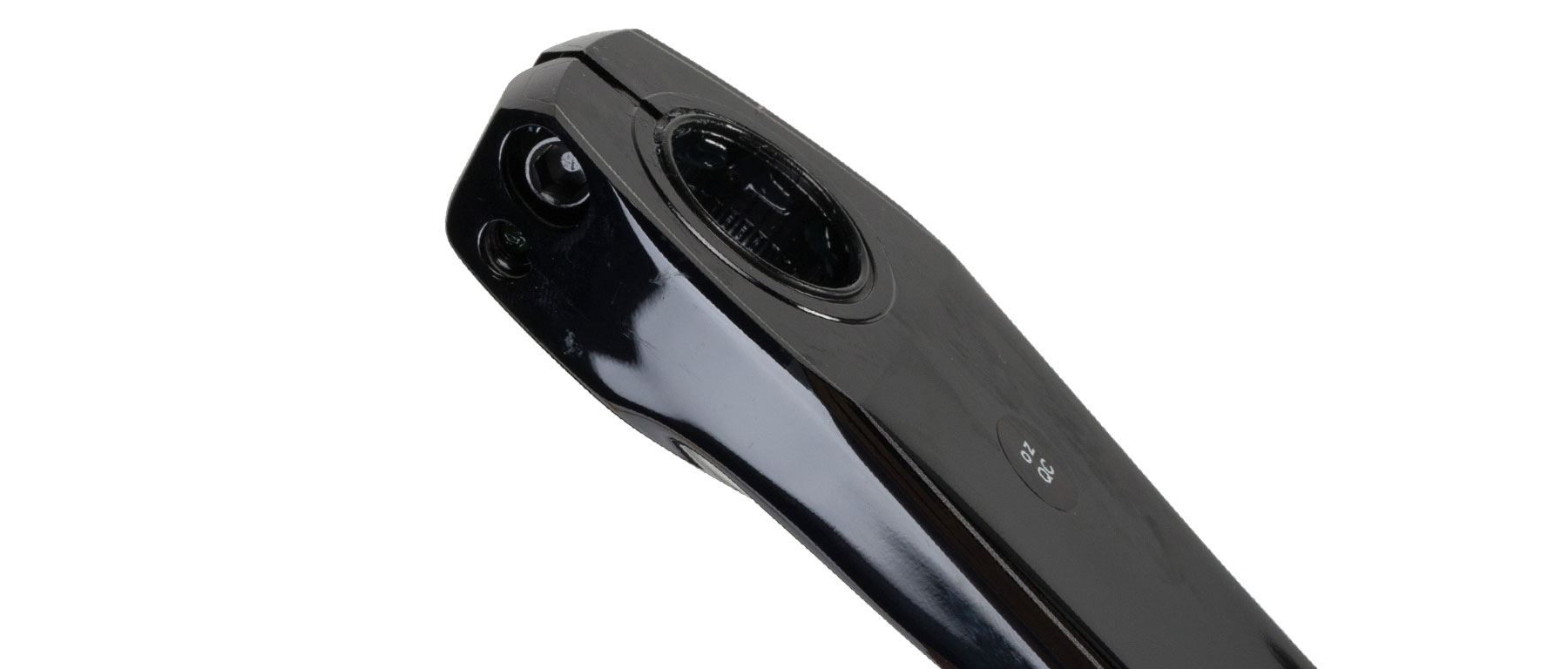
It doesn't matter what amazing advances or new features Shimano engineers into their Dura-Ace drivetrain and groupset, the first component mentioned and critiqued is the crankset. Shimano has always applied amazing finish qualities to the crankset, which likely demonstrates that the Japanese manufacturer could just be aware of this. It isn't really a question of finish over function but how the entire Dura-Ace ethos can be identified in one quick look. For the second generation 11-speed Dura-Ace, the 9100 series, the distinct, asymmetric, 4-arm design seems to carry over at first glance. Once the viewer looks past the mesmerizing highly polished near black-to-pewter finish scheme, a more careful inspection reveals the driveside arm has been augmented within the same asymmetric bolt circle pattern. It seems the engineers have been busy, and the spider and arm structure is only the beginning of the story.
It is safe to say that no other company or lab has built the body of research that Shimano has into every aspect of crankset and chainring design. Certainly no has held as many patents in this area. Yet with every new generation, the engineers find new ways to improve and refine the system integration design that drives every Shimano drivetrain. For road groups, it all starts with Dura-Ace. Shimano added width and size to the drive side arm for optimal power and efficiency in the most crucial phase of the pedal stroke. Carrying the structure closer to the chainring mount junction just above the oversized arm, more direct power and overall stiffness is applied to the highest stress point on the crank and ring in the drive power phase. Keep in the mind that the asymmetric spider has the same proprietary BCD as the 9000 series crankset. Also remember that Shimano is also offering a power meter version of the R9100 crankset. Reading between the lines, suffice to say that an extraordinary amount of data, engineering and testing has gone into this design.
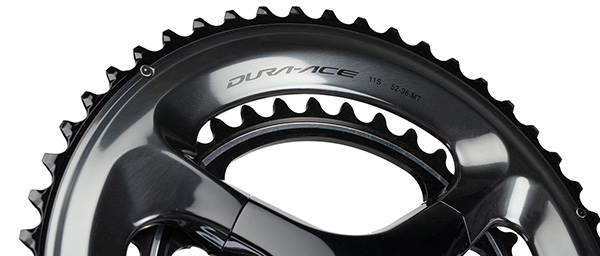
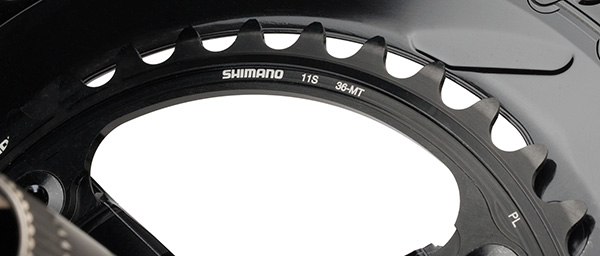
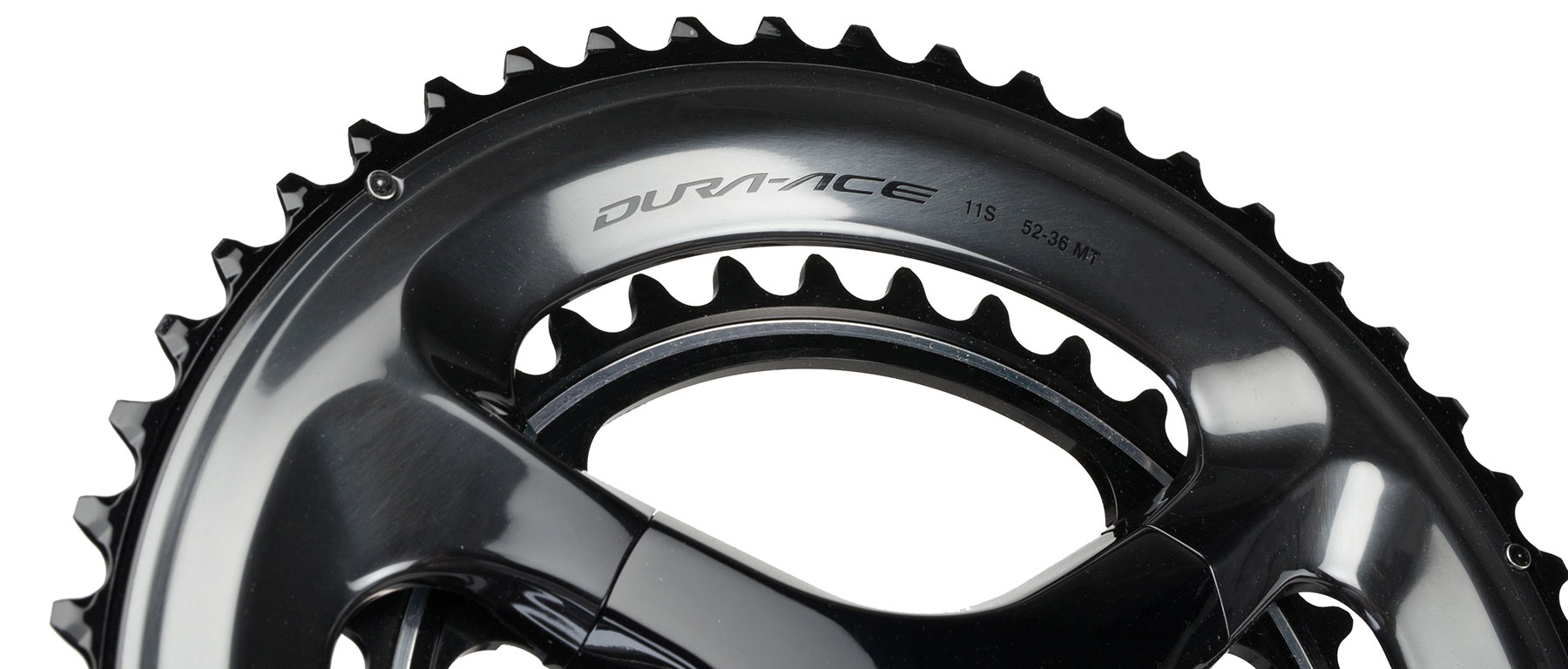
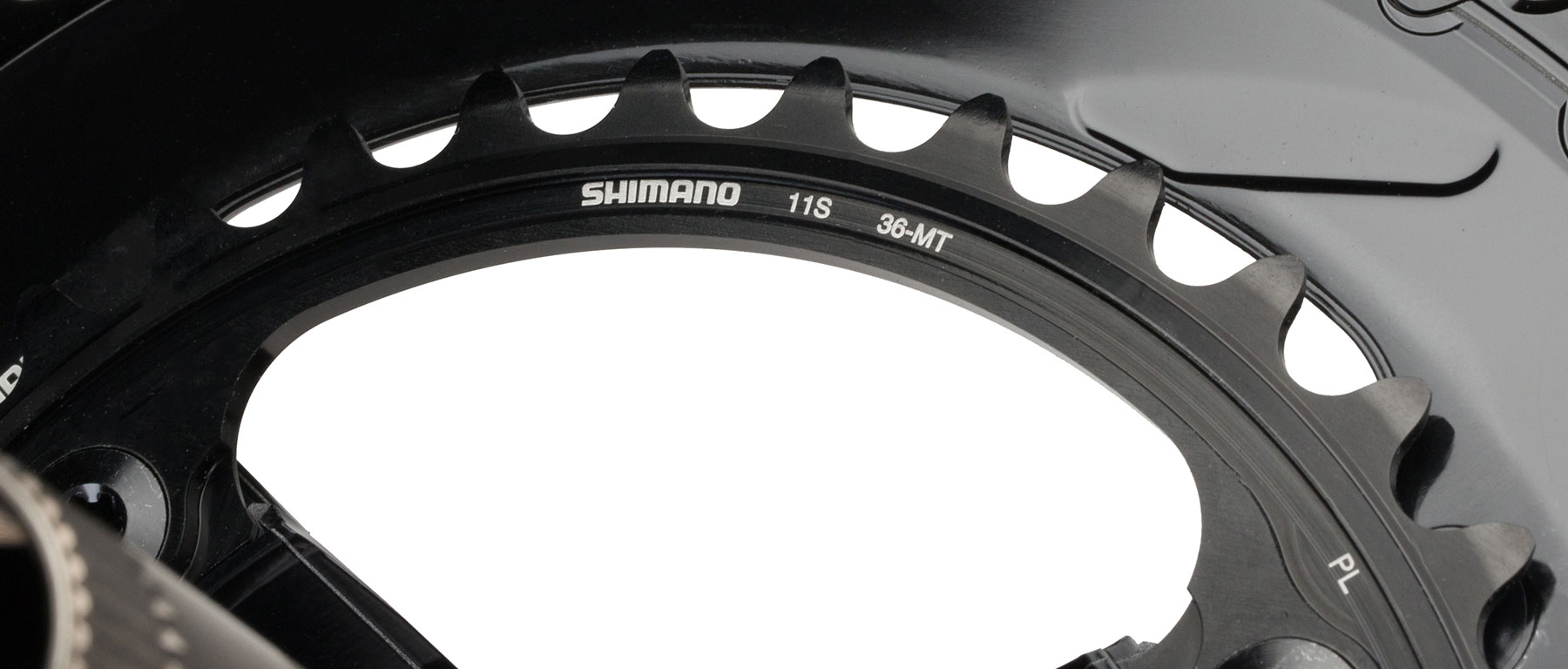
As mentioned, the spider and arm design is not the only advancement. Continuing with complete commitment to system integration, the teeth of the chainrings have been re-engineered for greater efficiency, reduced friction and wear, and faster, quieter shifting performance (with mechanical or Di2 systems). The reconsideration of the tooth profiles was also driven by the more extreme chainlines found on today's shorter chainstay frames, which when combined with greater cassette range and new rear spacing, totally changes the load the chain must manage for safety, as well as shifting performance. To create a little more diagonal clearance the inner chainring has been offset .4mm inboard to the center of the bike. This development necessitated changes to frame clearance of the FD-R9100 Front Derailleur, which brings up an upgrade/compatibility issue. The FC-R9100 Crankset should only be run with the FD-R9100 Front Derailleur. While it is possible your current FD-R9000 derailleur will work, it is totally dependent on whether or not the derailleur will swing close enough to the frame to give the cage proper clearance for the inner chainring in all cassette cog alignments. So if you want to upgrade your 9000 drivetrain one piece at a time, we recommend you change the front derailleur first (there are other positives to this), then change the crankset. Keep in mind, the Shimano's listed median chainline remains the same, at 43.5mm, so if you read this and think you can get away with a 9000 FD and and a 9100 crankset, you may well be wrong, as it is only the inner ring that has the .4mm offset.... Read More
Features
- Redesigned 4-arm asymmetric road crank, optimal power transfer, shift refinement
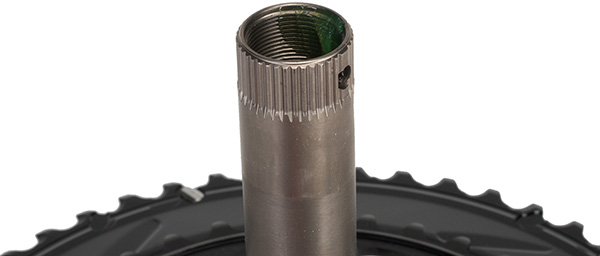
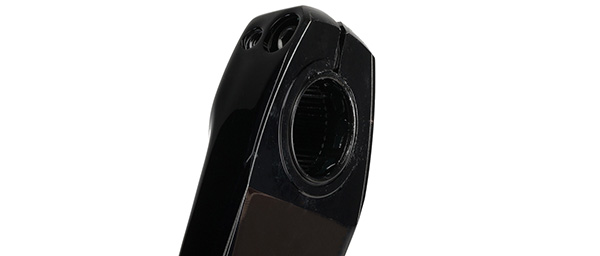
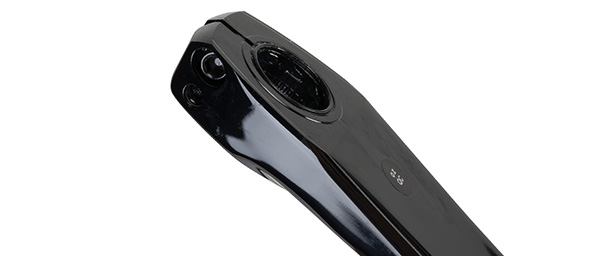
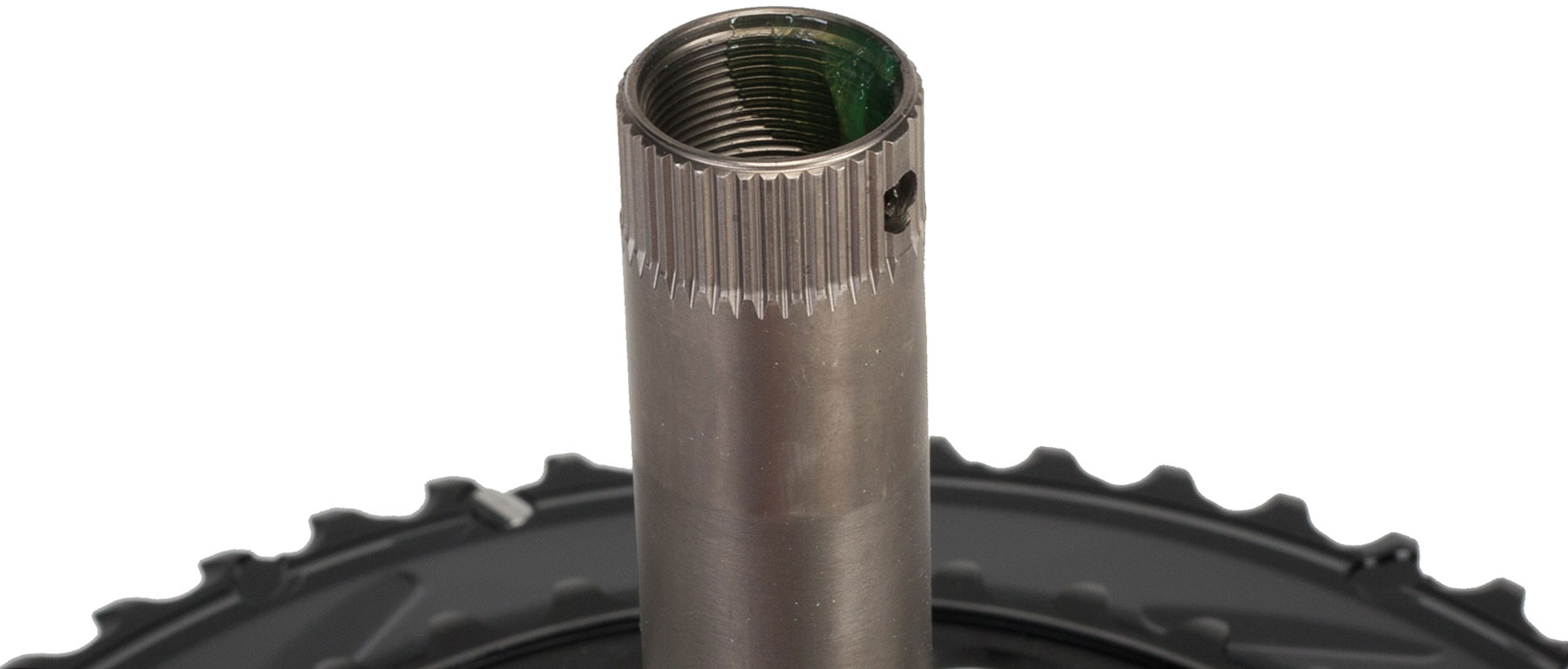
- 24mm Hollowtech II design with driveside integrated steel, plated axle; non-drive arm
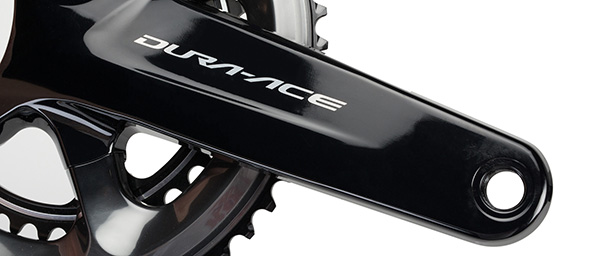
- Driveside arm has been made larger, offset towards ring for optimal force in stroke
- Hollowglide chainrings feature new tooth profiles for improved shifting, less wear
- Large ring from anodized aluminum/ CFRP composite
- Small ring is anodized aluminum, and has been offset inboard to frame .4mm
- Shimano recommends only using FD-R9100 with 9100 crankset
- Rings fastened underneath with anodized aluminum bolts
- Proprietary 4-arm 110mm asymmetric BCD in all sizes
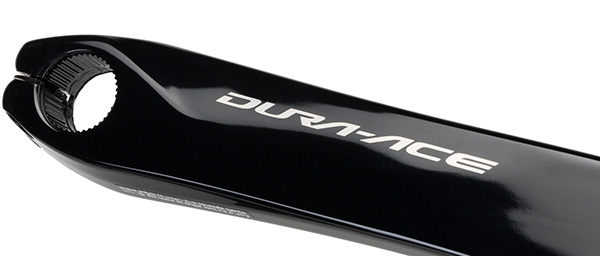
- Crank arm finish is anodized Near Black, then polished
- Chainring finish is anodized Near Black fade to Pewter, then polished
- Effective chainline: 43.5mm
- Optimized for HG-EV 11-speed/ HG-X11 Shimano chains
- Does not include bottom bracket
- Crank lengths: 165, 170mm, 172.5mm, 175mm, 177.5mm, 180mm
- Chainring combinations: 34-50, 36-52, 39-53
- Weight: 691 grams (170mm, 39-53)