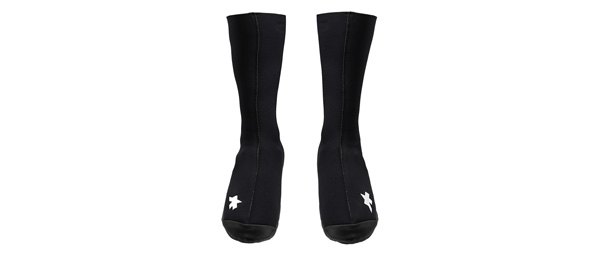
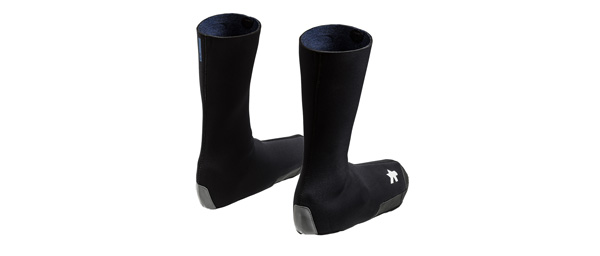
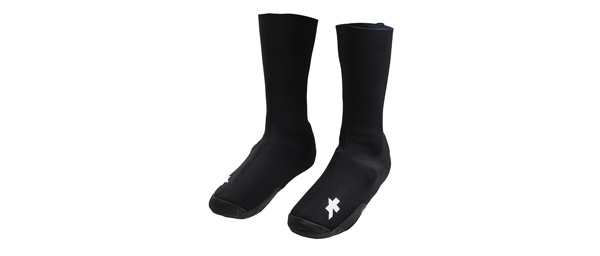
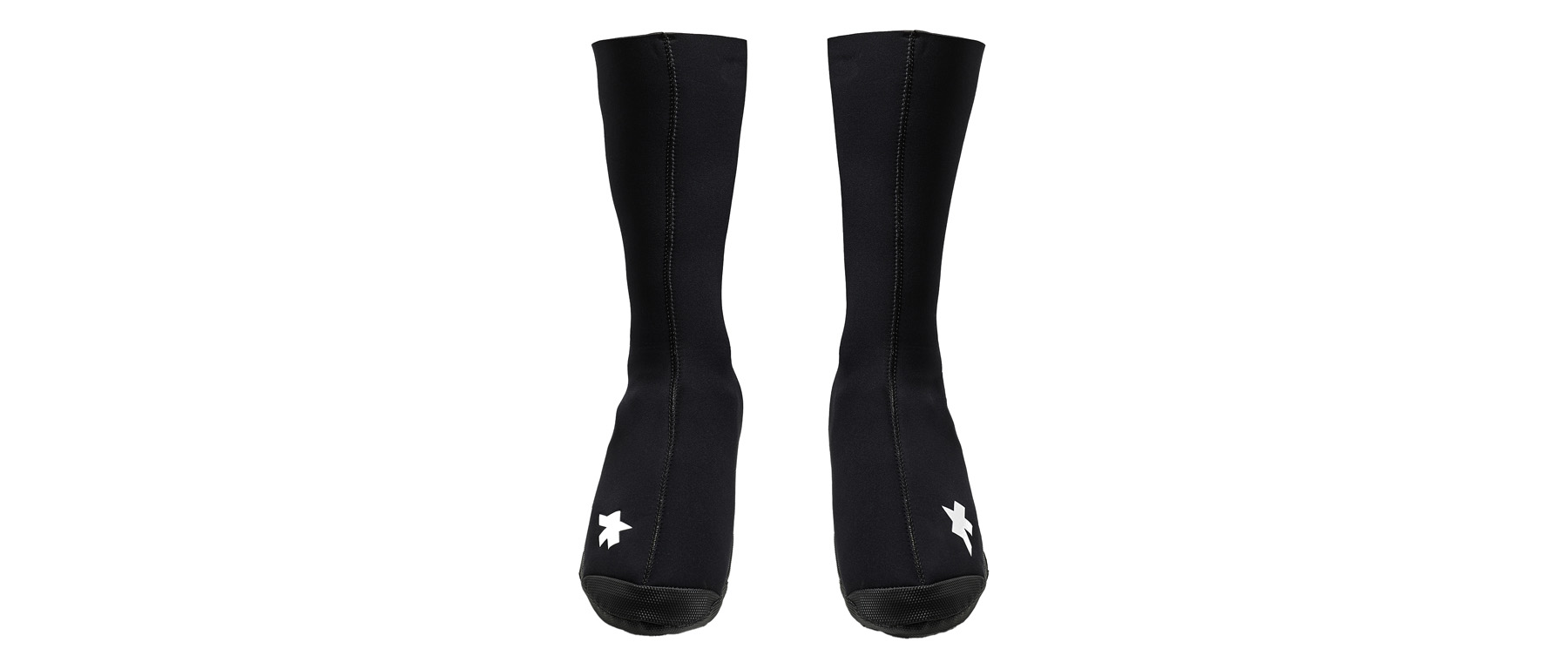
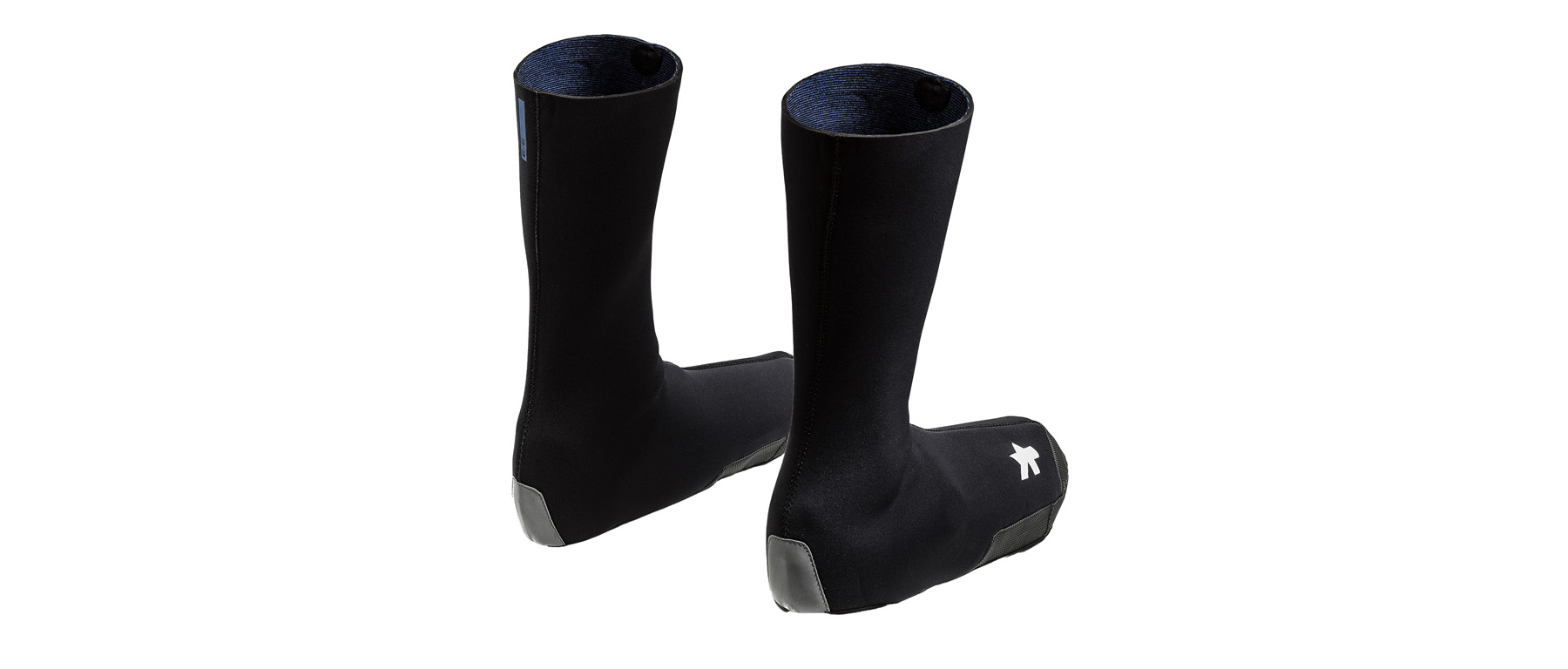
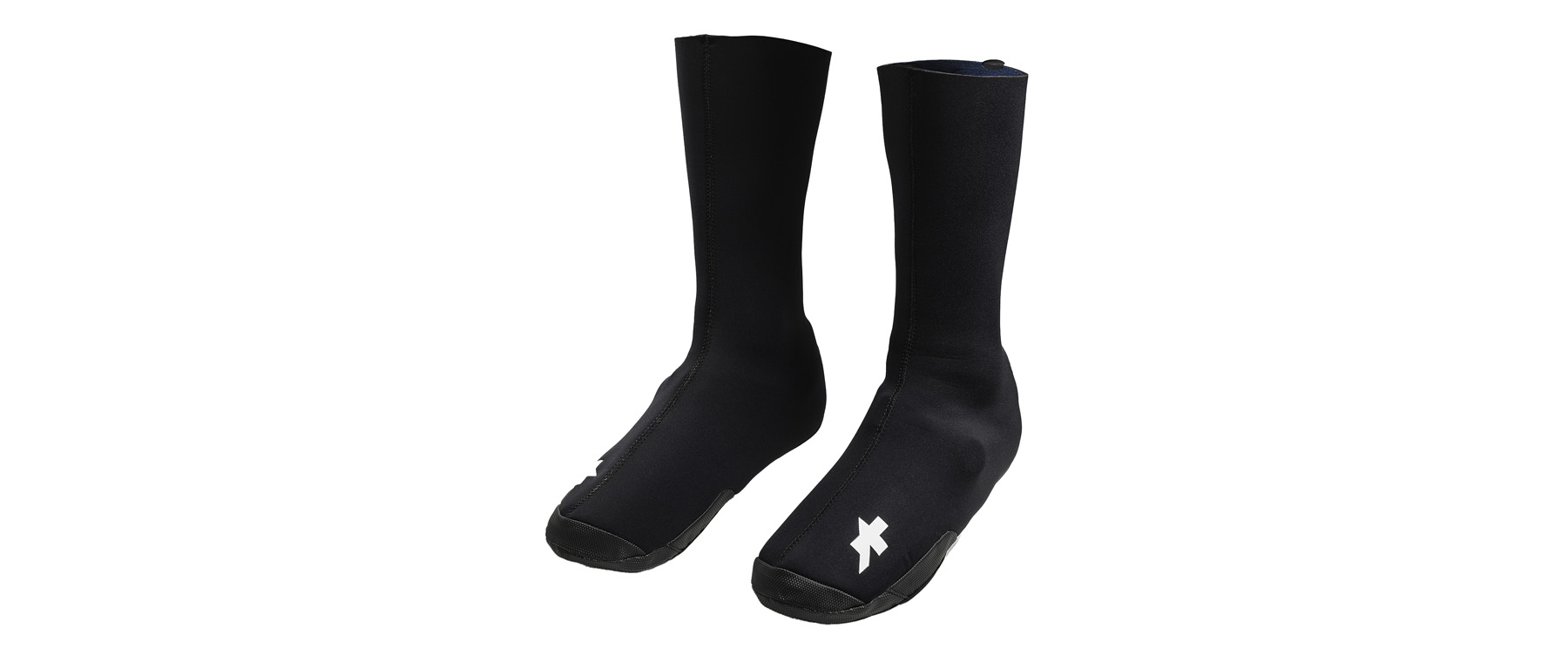
Zippers are usually the first thing to fail on a shoe cover, and they're also where water tends to sneak in. Assos skipped the zipper entirely on the Thermo Rain Booties P1. These are insulating neoprene shoe covers built for wet rides at any time of year, and Assos designed them without seams or weak points in the neoprene so rain and road spray have nowhere to get through. They're rated for 39.2 to 68°F, and Assos scores them 5 out of 5 for both waterproofing and wind protection.
Neoprene is what makes this work. It's the same family of material used in wetsuits, and it keeps insulating even after it gets soaked, which matters on long rides when a steady drizzle eventually wins. Chloroprene rubber makes up 80% of the fabric, with polyamide, polyester, elastane, and polyurethane rounding out the blend. The insulation rating sits at 4 out of 5, so these have the thermal protection for raw, wet mornings in the low 40s, not just summer showers.
If you're choosing between these and the RS Spring Fall Rain Booties P1, it comes down to fit and temperature. The RS version uses a racing fit and a zipper, carries an insulation score of 2 out of 5, and is rated from 53.6°F up. The Thermo Rain Booties use a regular fit and extend the range down to 39.2°F. If you ride through the cold, wet months and want one pair of rain booties to cover them, this is the pair to grab.... Read More
The sole is engineered to work with off-road shoes, so these aren't limited to the road bike. That opens them up for wet gravel rides, muddy winter mountain bike loops, and commutes in two-bolt shoes. The one exception is toe spikes. The sole isn't compatible with them, so cyclocross racers who rely on spikes for muddy runups will need to look elsewhere.
Breathability scores 2 out of 5, and that's the honest tradeoff of a fully sealed neoprene shell. On a hard effort in mild, dry weather your feet can run warm, so these earn their place when it's actually wet or cold rather than as an everyday cover for dry days. Reflective details help catch light, which counts for a lot on rainy commutes and winter evenings when drivers already have trouble seeing you.
Skipping the zipper does mean putting them on takes a little technique. Most riders find it easiest to pull the cuff up over the ankle before putting on the shoe, then roll the bootie down over the shoe once it's on. Expect a few fumbling attempts the first time. After that it becomes part of the routine, and you're left with a cover that has no zipper to leak, snag, corrode, or wear out over a few winters of use.
Pair them with a thermal sock and the Thermo Rain Booties P1 can handle the long, soggy shoulder-season rides that tempt you toward the indoor trainer. Once the thermometer drops toward freezing, the Ultraz Winter Booties P1 are built for that job, but for the wide band of cold, rainy days from late fall into spring, these have it covered. Each pair is backed by a 2-year warranty and a crash policy, which is reassuring for gear that lives through a lot of grit and spray.