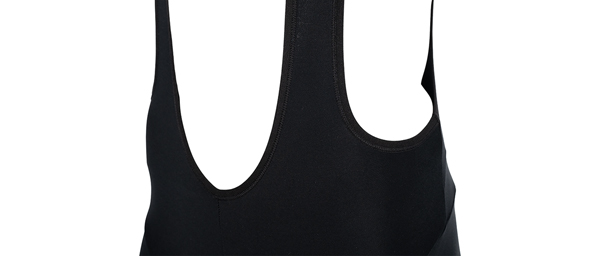
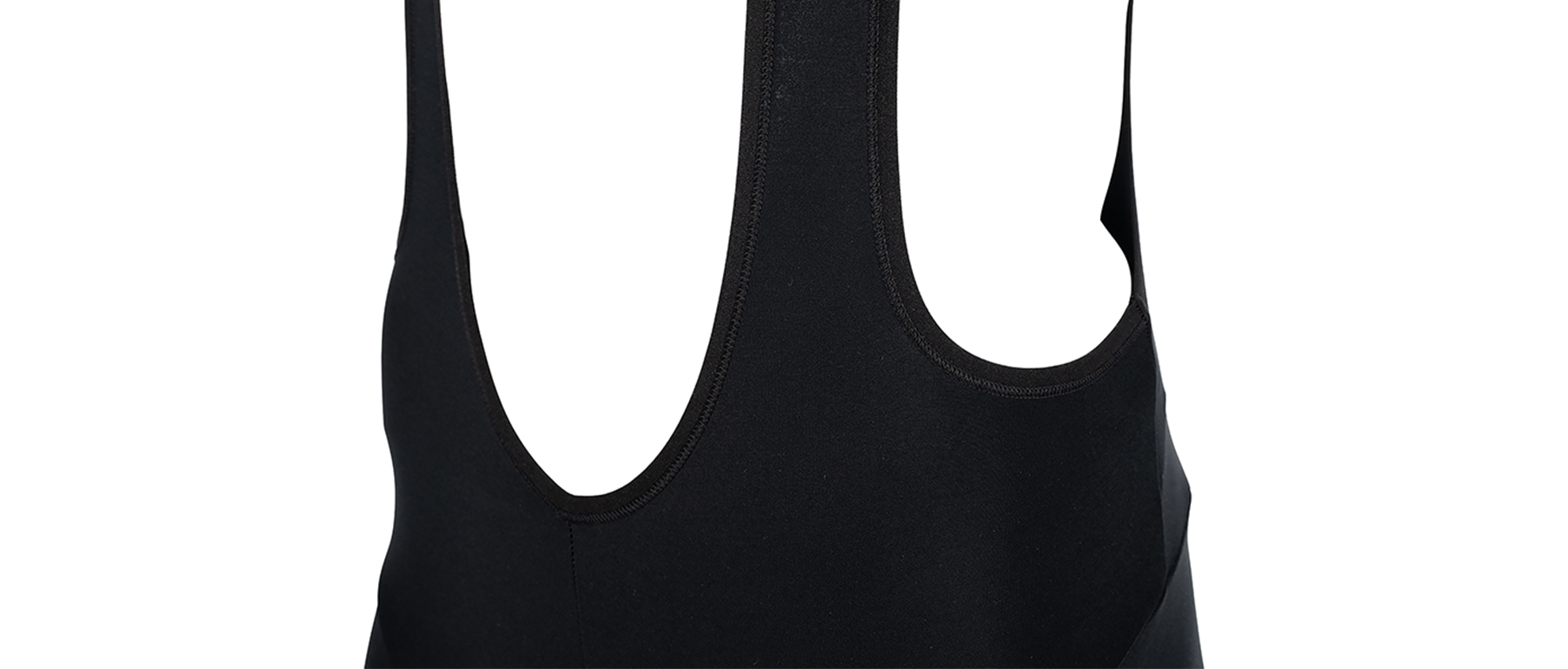
Three-layer fabric construction sets Giordana's AV Windfront Bib Tight apart from standard thermal tights. The outer layer carries an Acqua Zero Eco hydrophobic treatment that bonds to the fibers and repels water, keeping the fabric from saturating in rain or road spray. When wet conditions hit, the tight stays lighter than untreated alternatives because it absorbs less water — and that lighter weight translates to less cling and drag. The middle layer provides a wind-resistant membrane, while the inner layer maintains breathability so moisture can still escape during hard efforts.
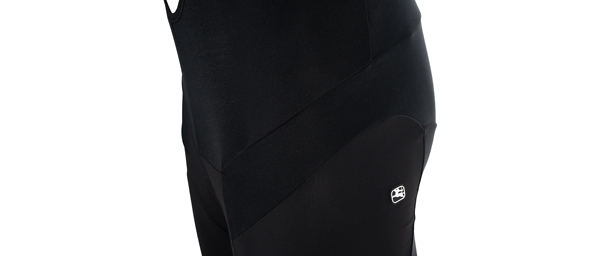
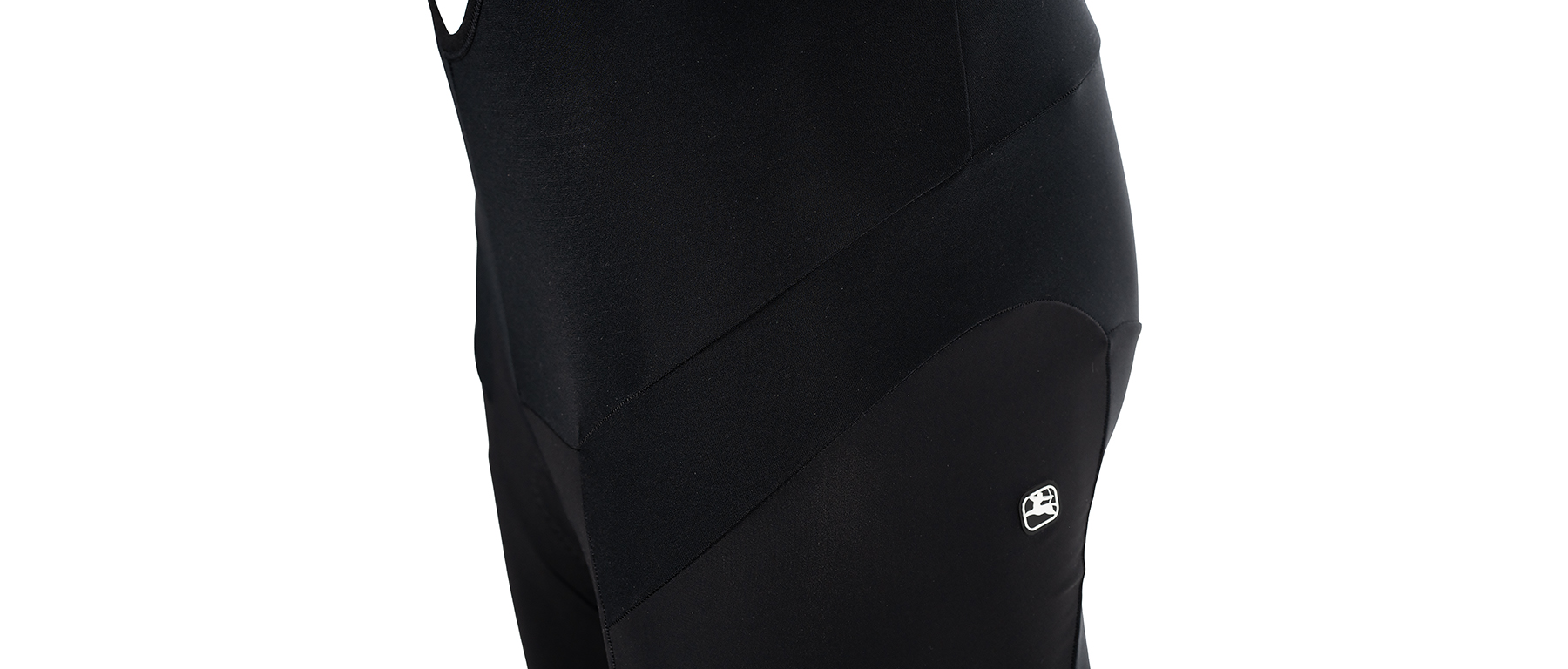
Wind protection follows a strategic placement pattern rather than covering the entire leg uniformly. The windfront panels start at the torso where your legs meet your body, then extend down through the thighs, knees, and shins — covering the areas that face directly into the wind when you're in a riding position. The rear of the legs use a lighter thermal fabric that breathes more freely, preventing heat buildup during sustained efforts. That zoned approach keeps you warm where wind chill matters most without turning the tight into a sweat trap on climbs.
Gusseted stitching at the knees addresses a common complaint with windfront designs. The heavier wind-resistant fabric can restrict mobility at articulation points, making pedaling feel stiff. The gusset construction maintains full range of motion through the pedal stroke without compromising the wind protection. These tights may fit slightly snugger than comparable thermal options due to the heavier windfront material, so sizing up is worth considering if you're between sizes.... Read More
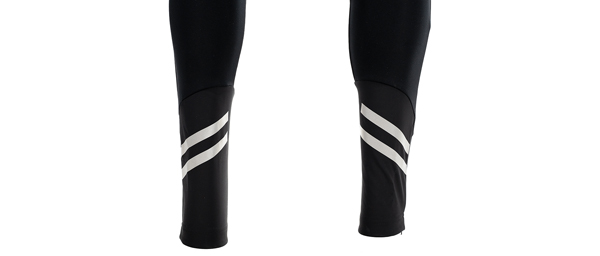
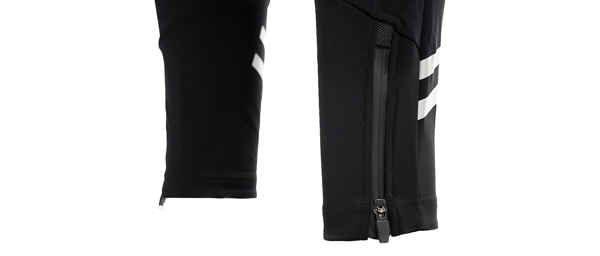
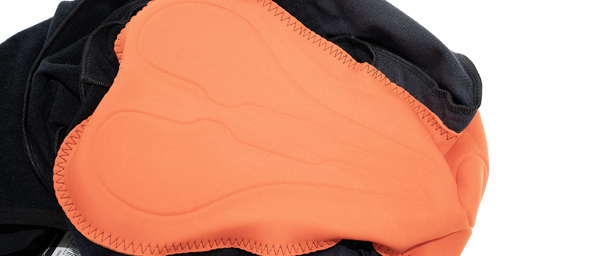
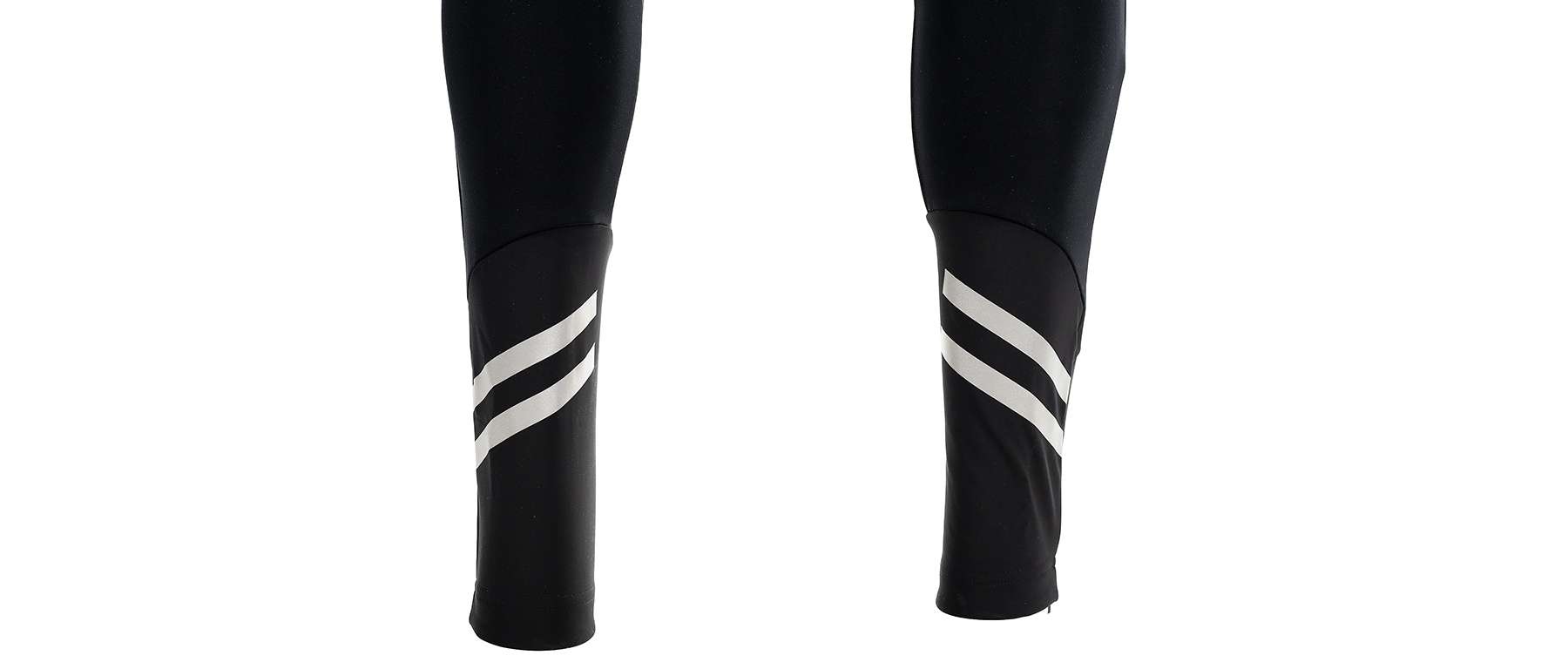
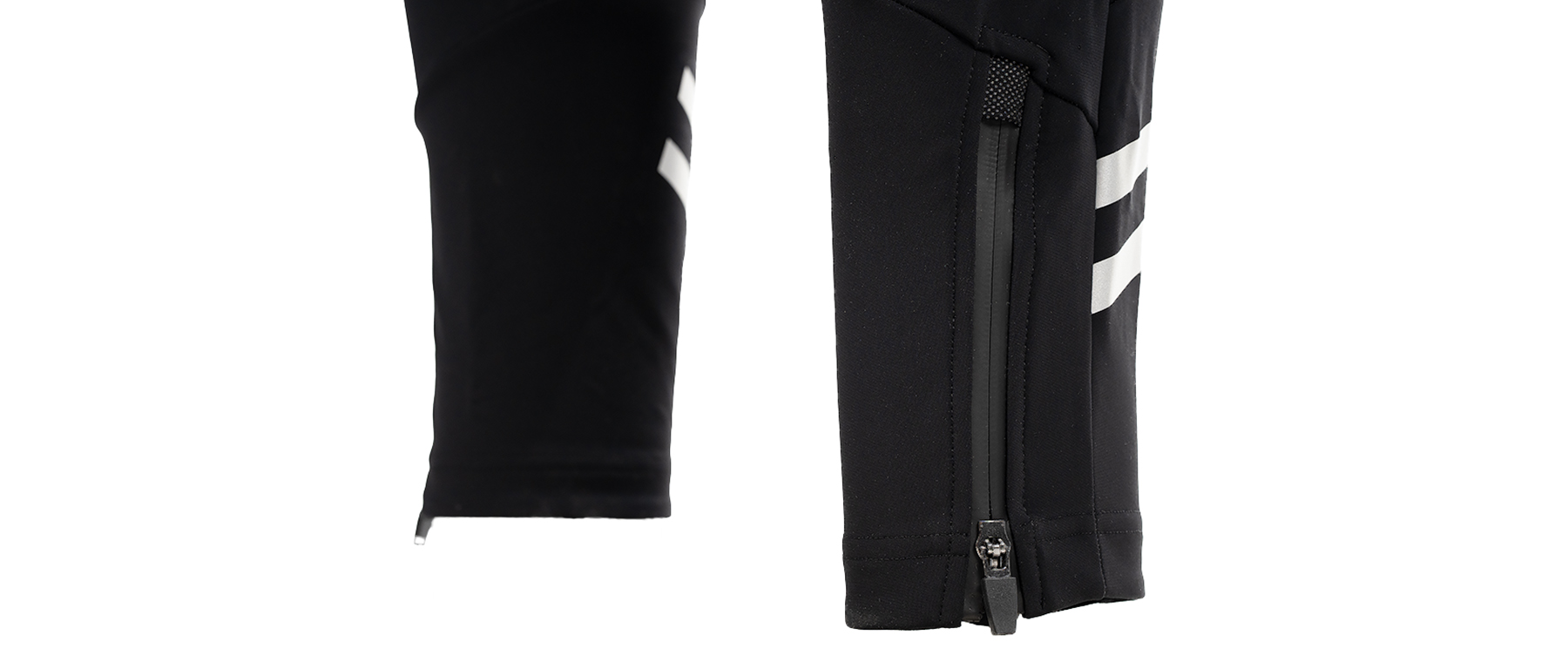
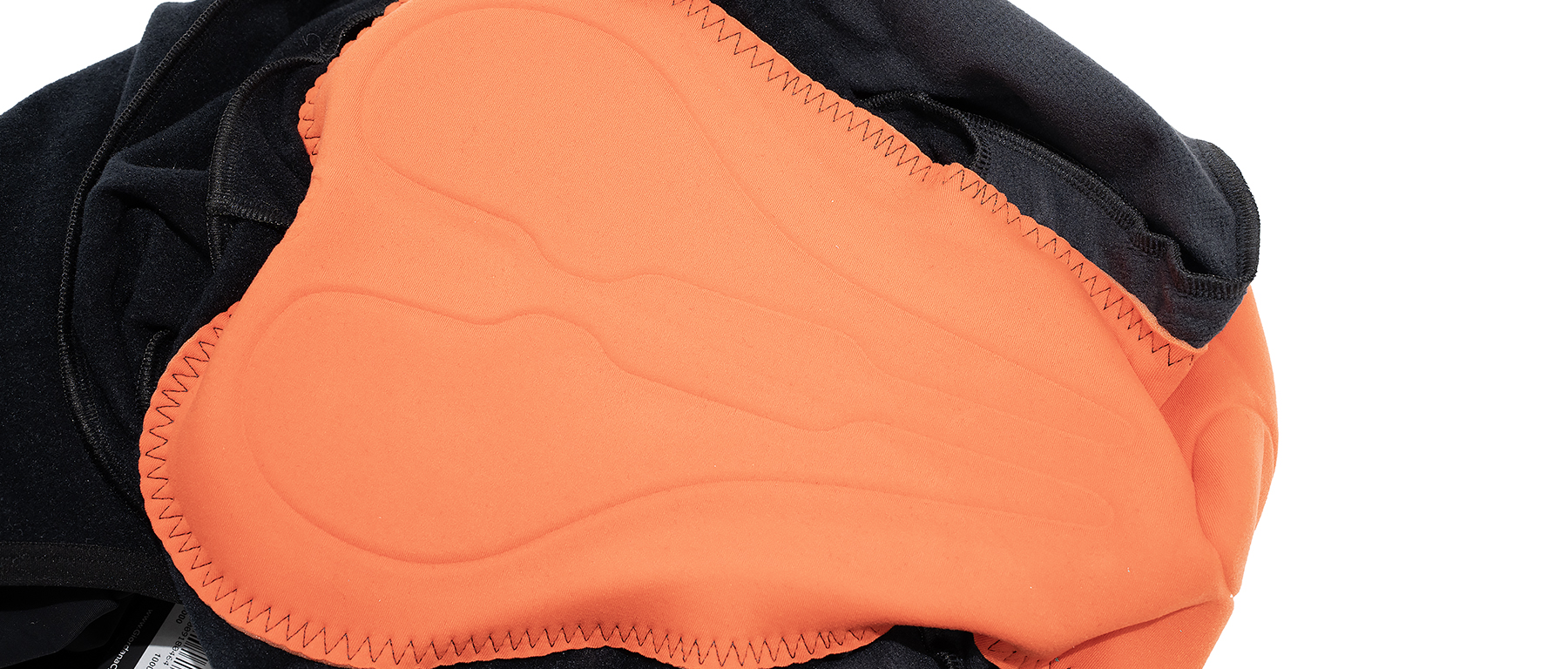
Zippered cuffs at the ankles allow easy on/off over shoes and create a clean seal against cold air infiltration. Reflective stripe accents on the lower legs add visibility for early morning or late evening rides. The Cirro S chamois features aloe vera infusion and multi-layer construction designed for longer cold-weather rides. Giordana rates these tights for temperatures from the high 40s down into the low 20s Fahrenheit, depending on your output level and layering choices.