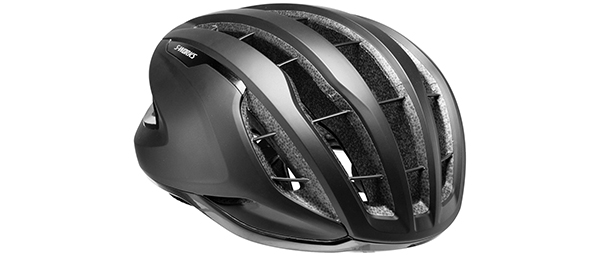
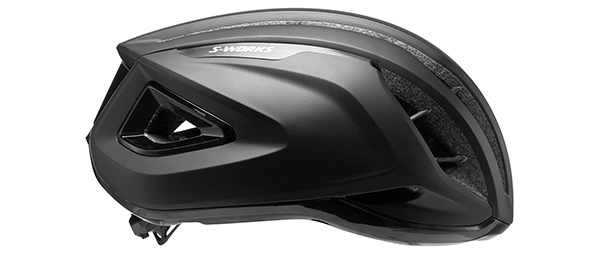
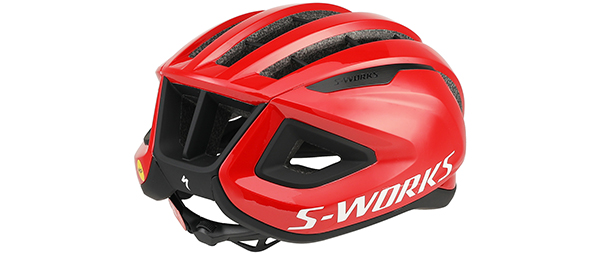
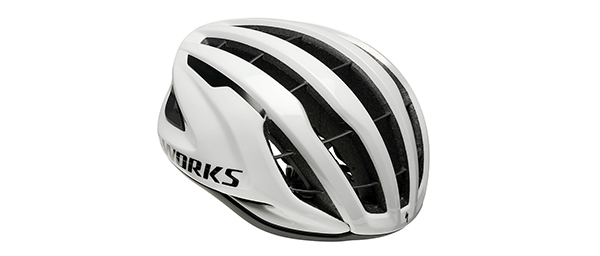
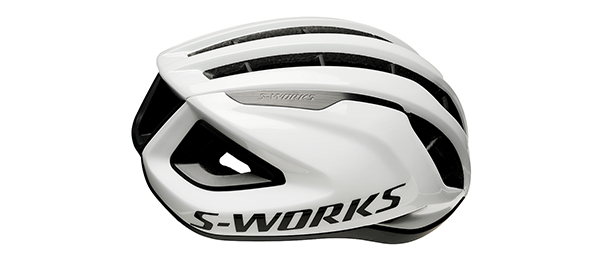
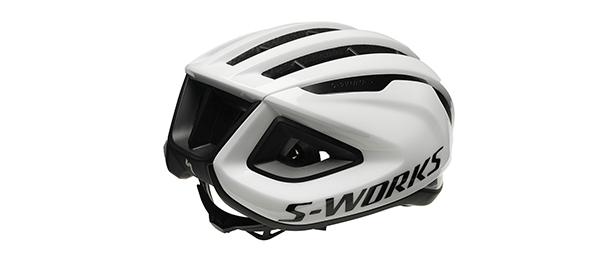
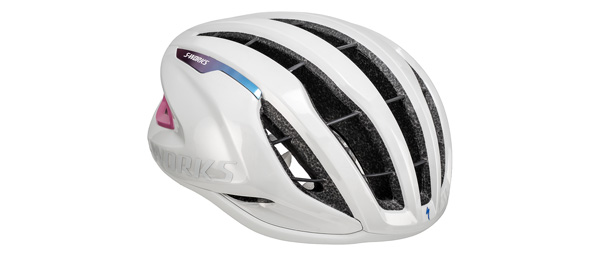
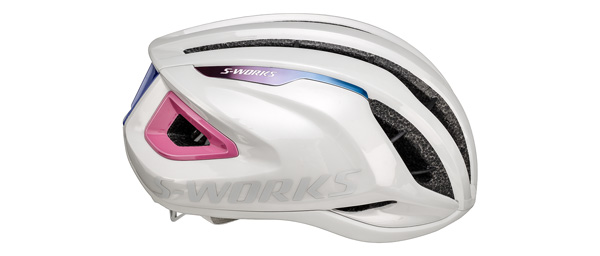
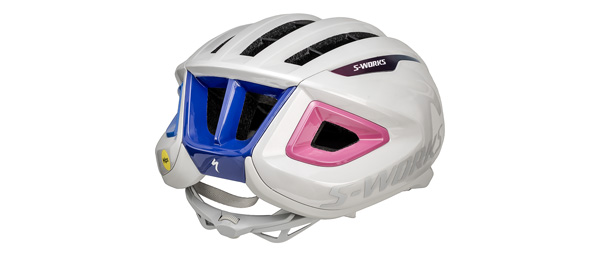
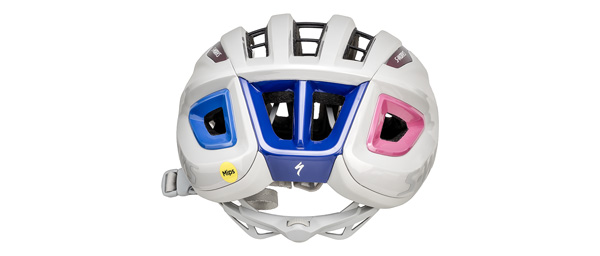
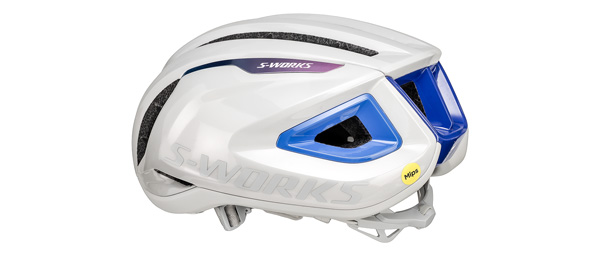
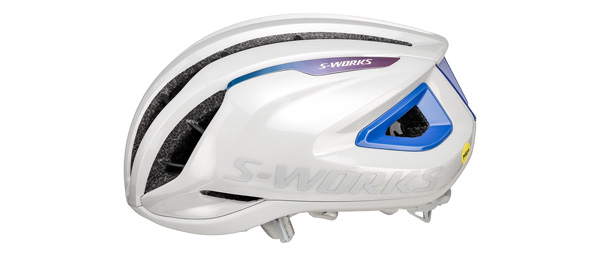
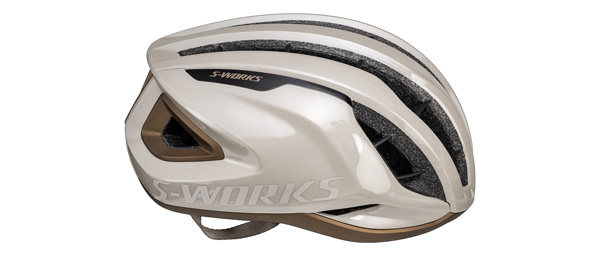
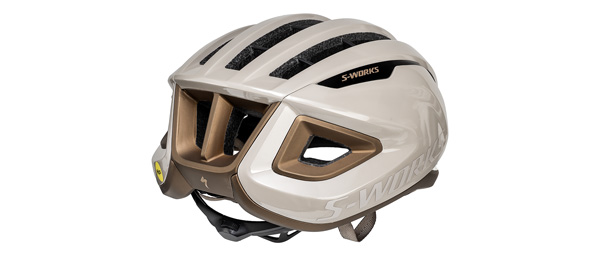
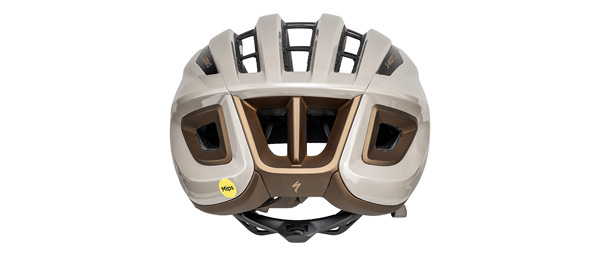
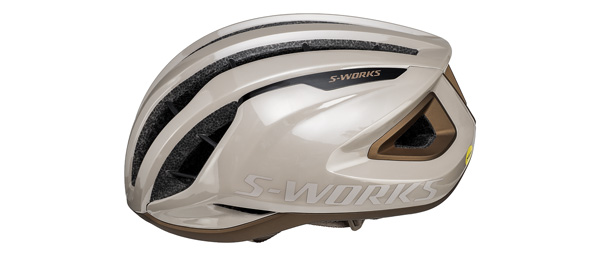
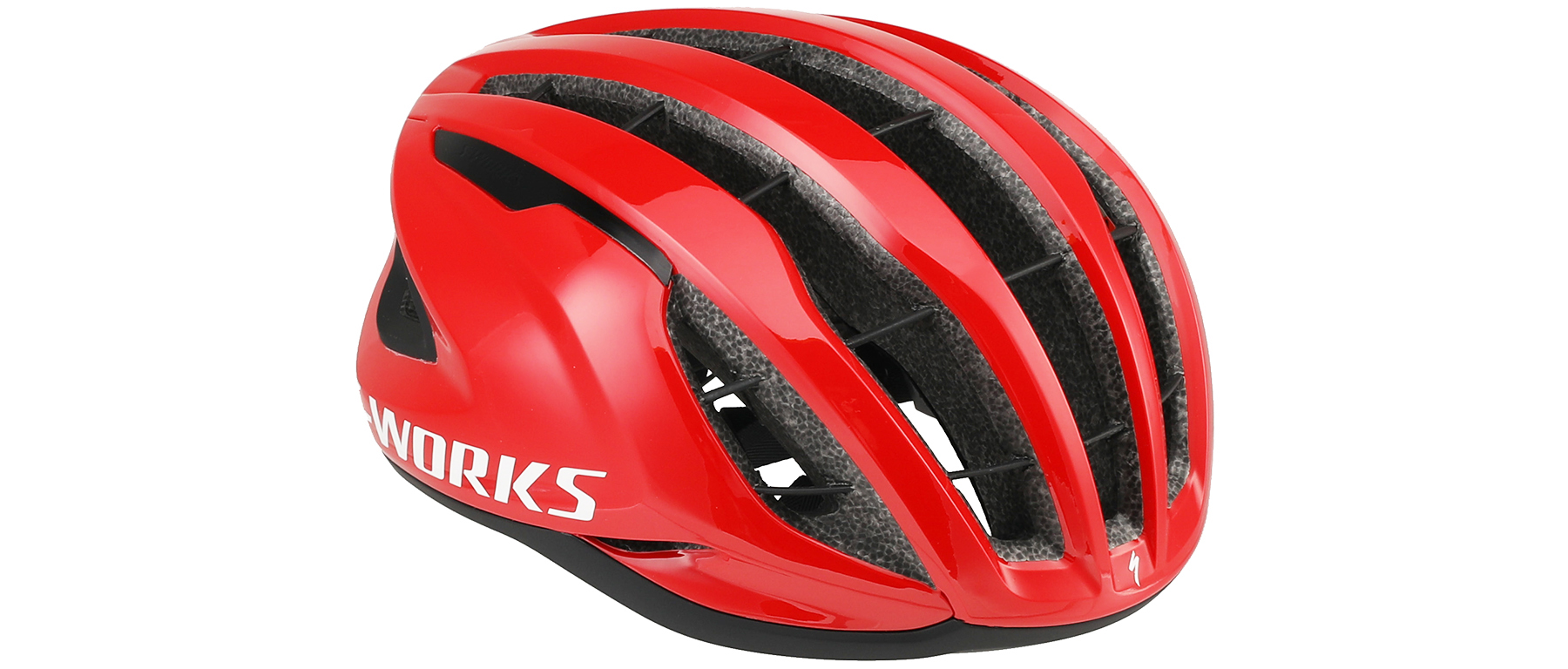
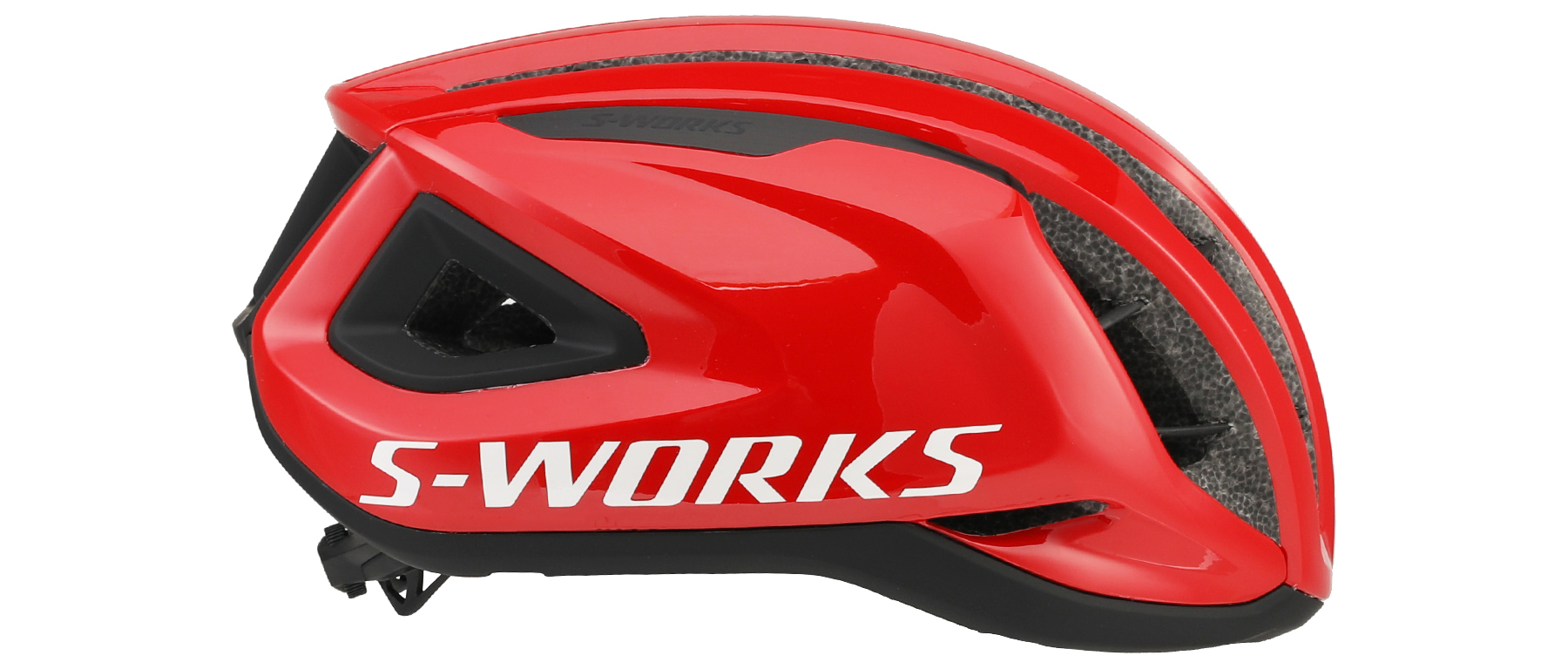
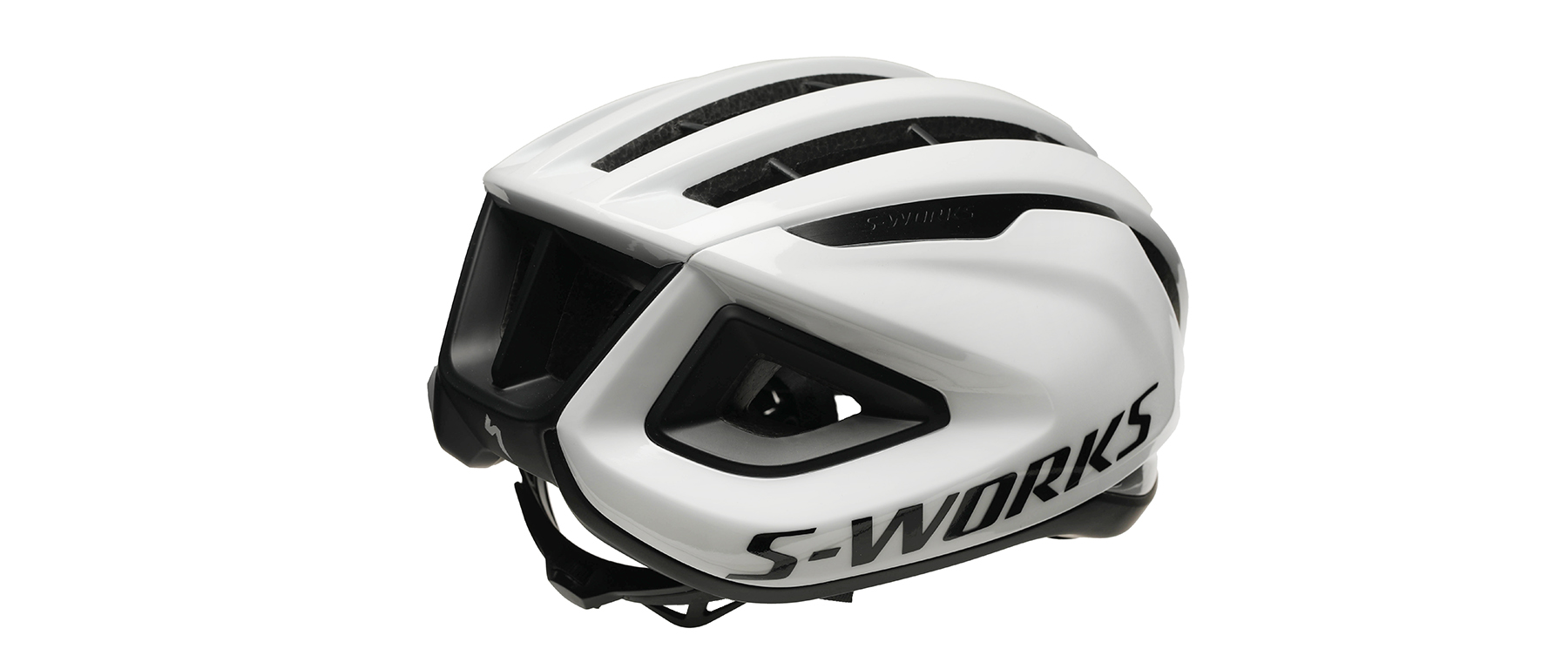
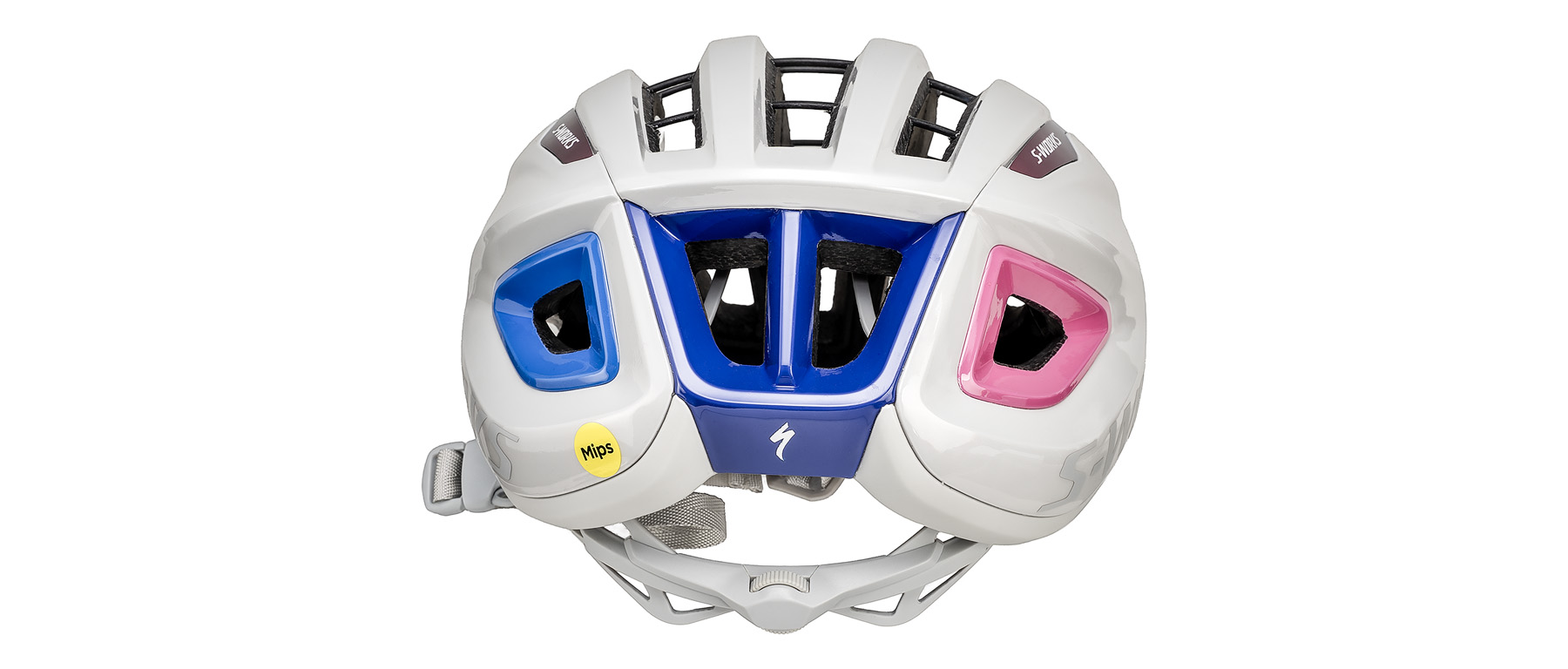
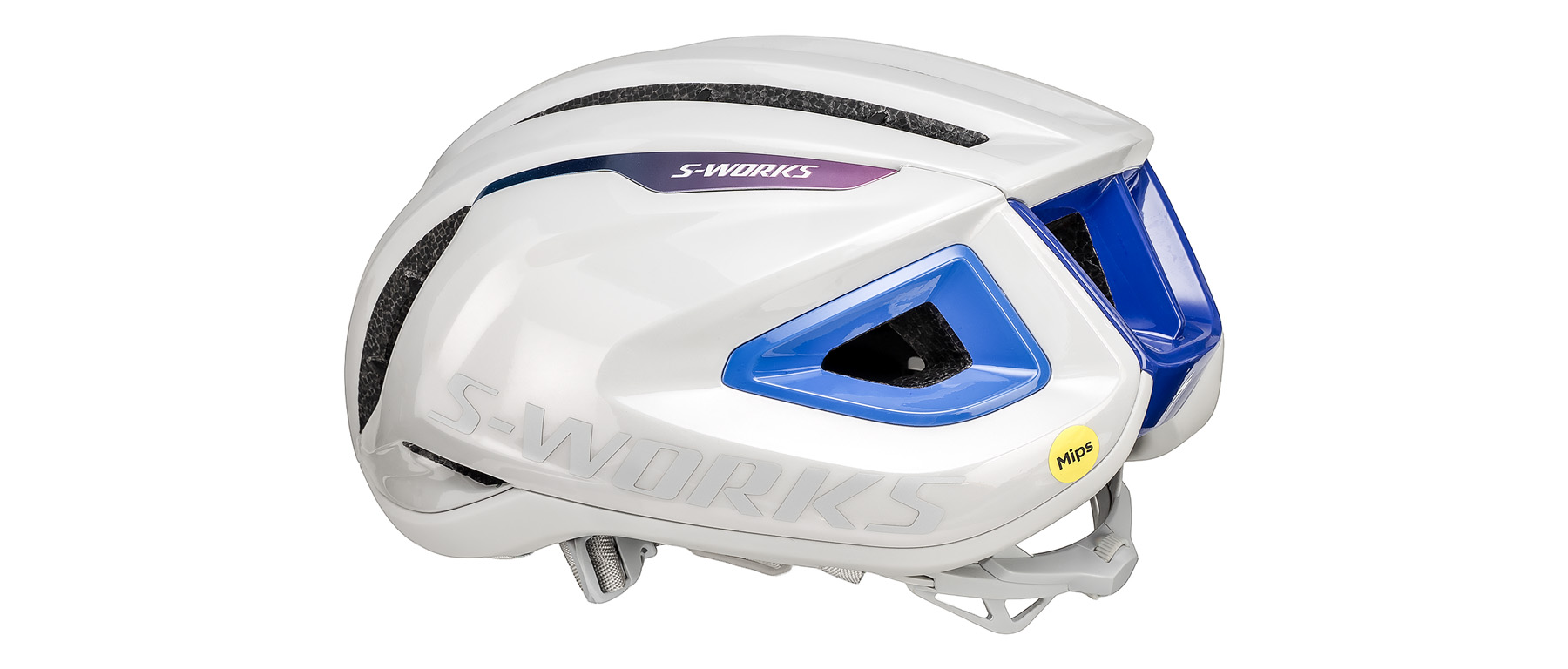
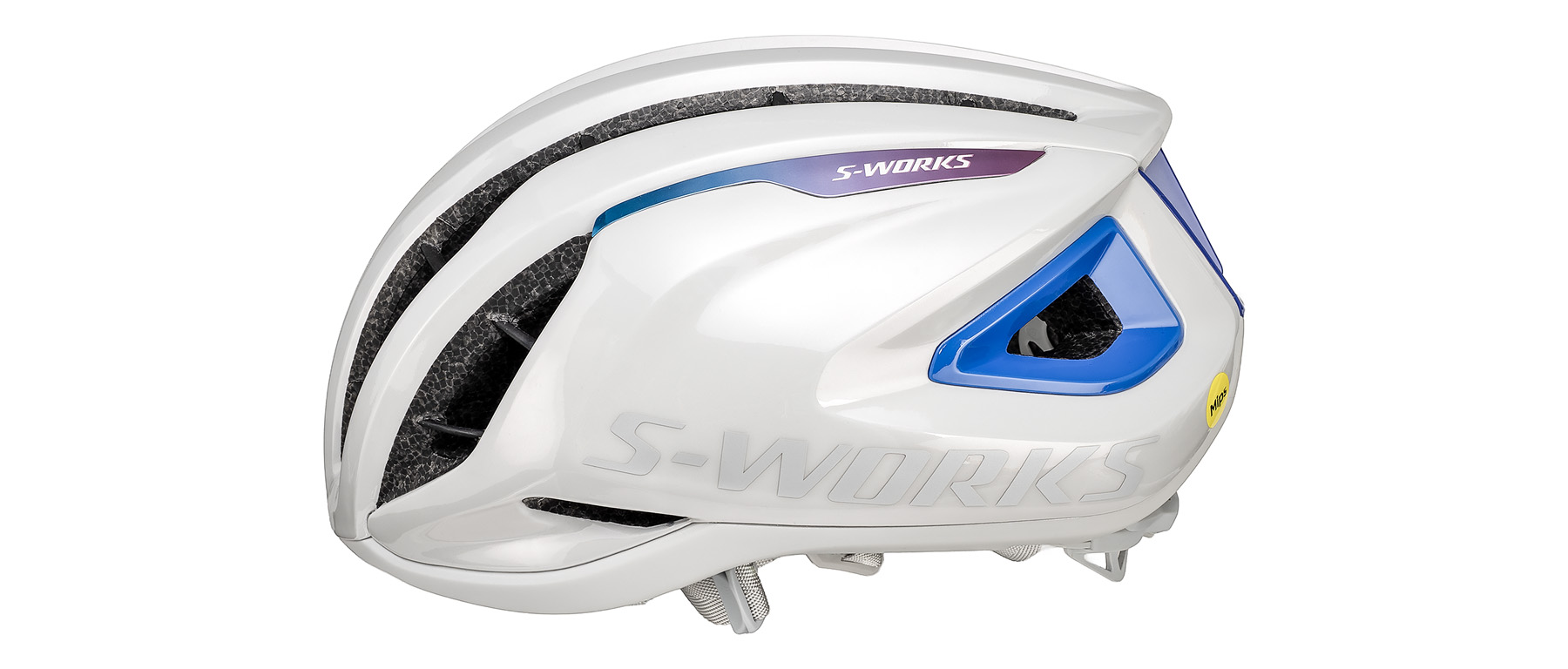
When summer efforts stretch into hours and the road tilts upward, ventilation stops being a nice-to-have and becomes the whole point. That's the brief Specialized handed the S-Works Prevail 3, and the engineering answer was to stop treating foam as the default building block.
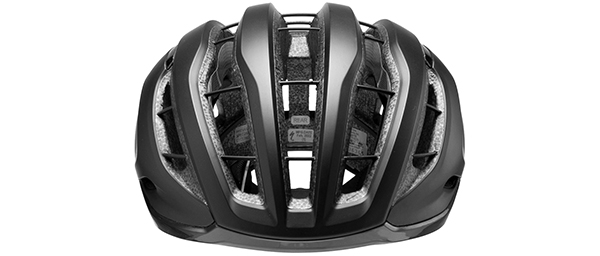
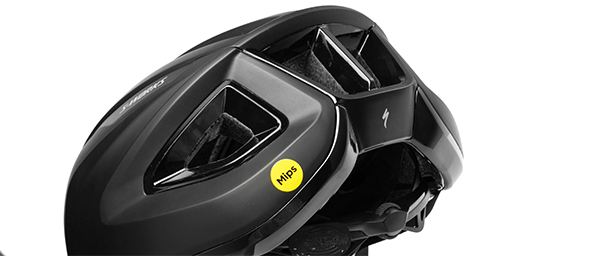
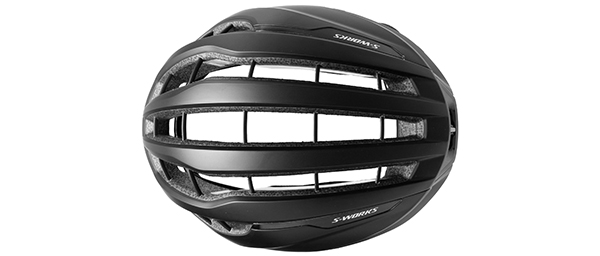
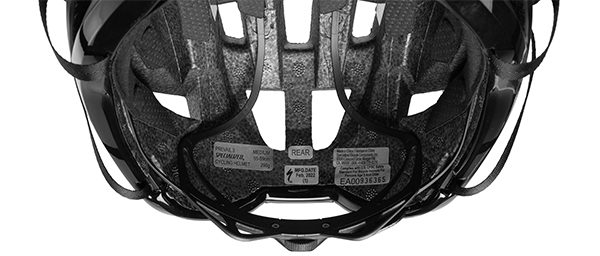
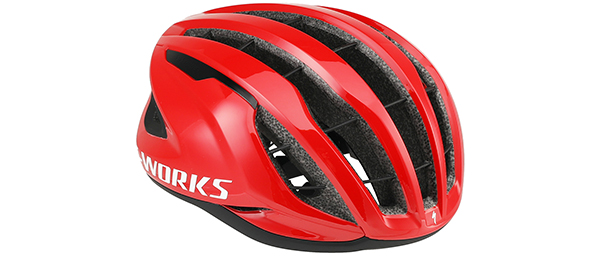
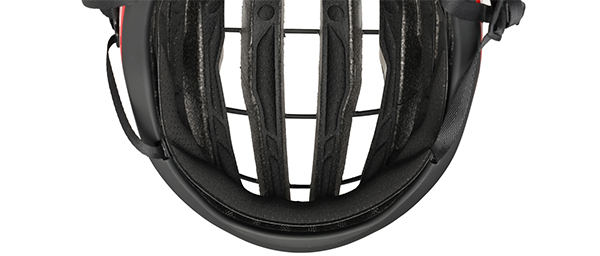
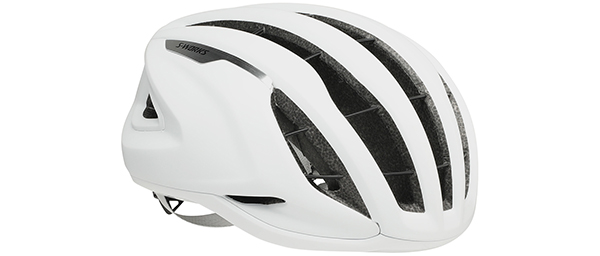
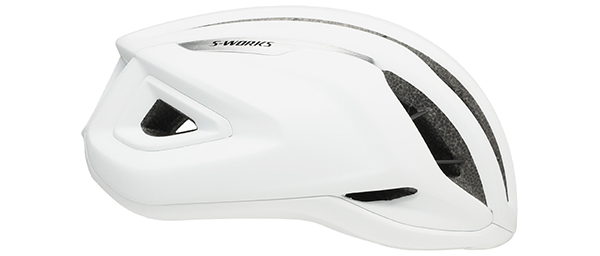
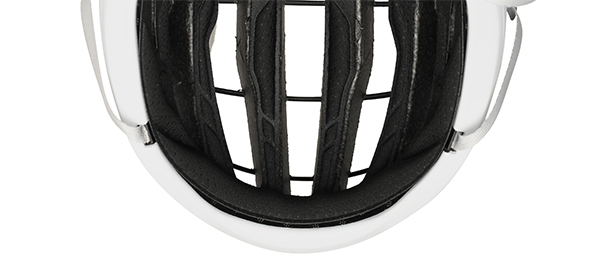
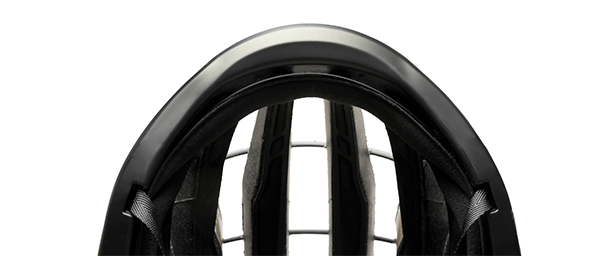
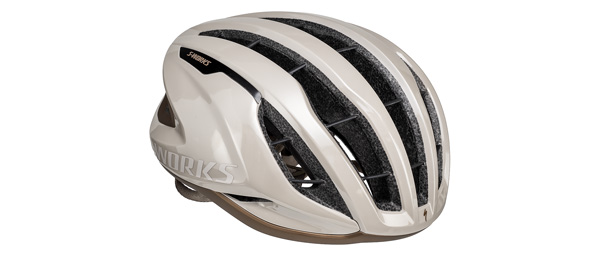
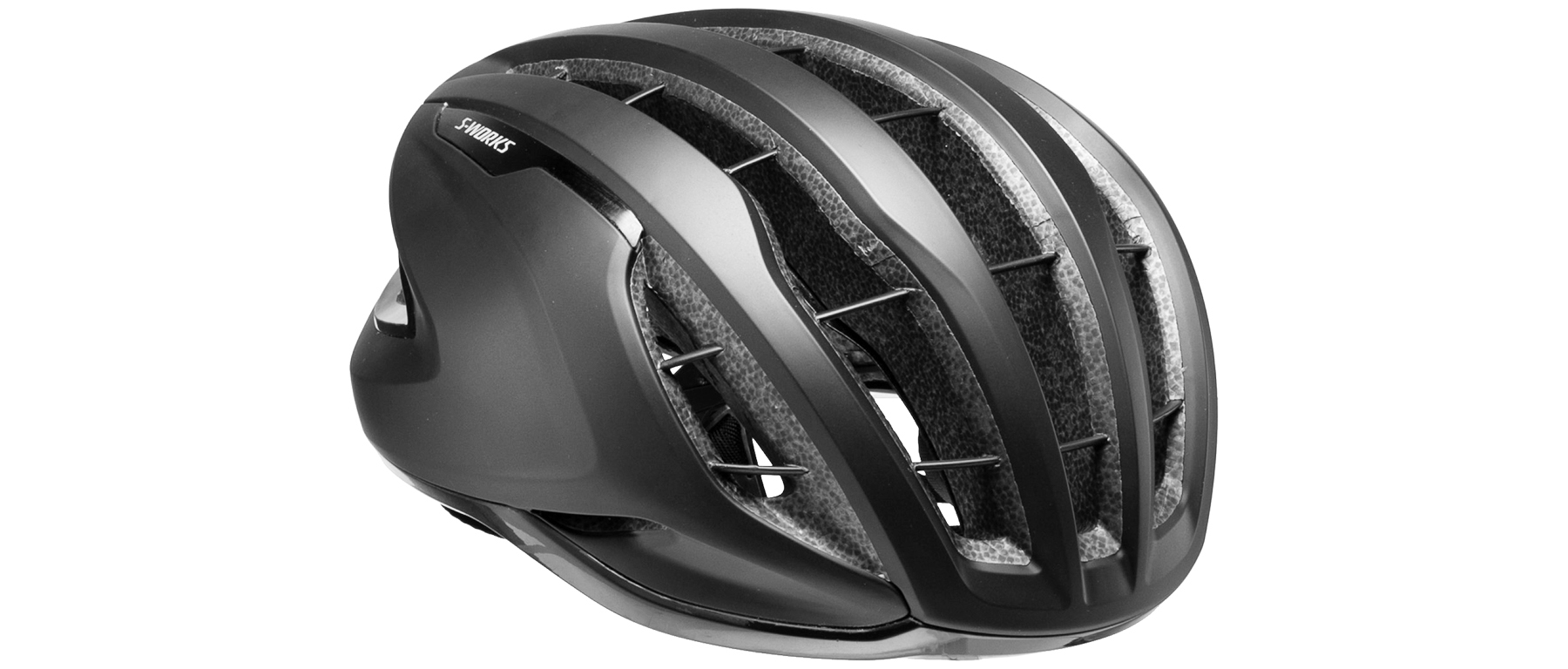
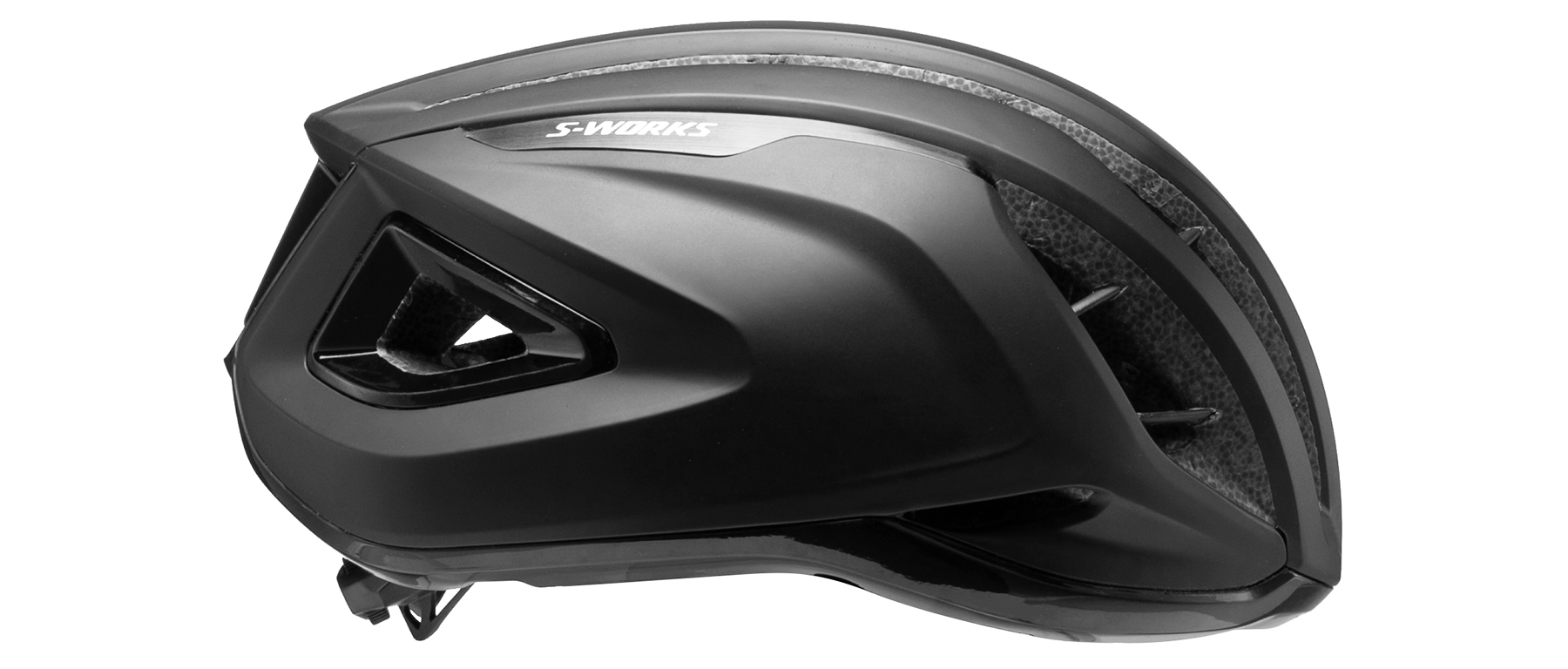
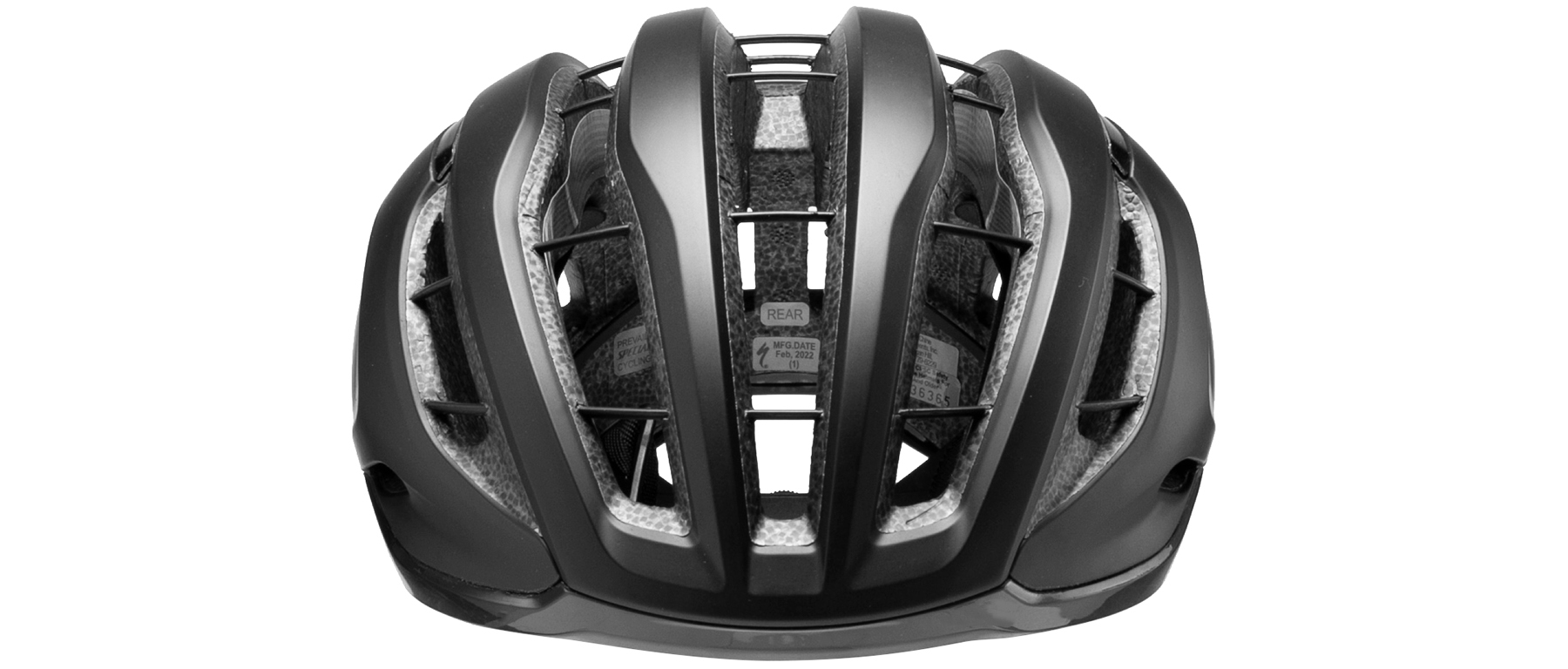
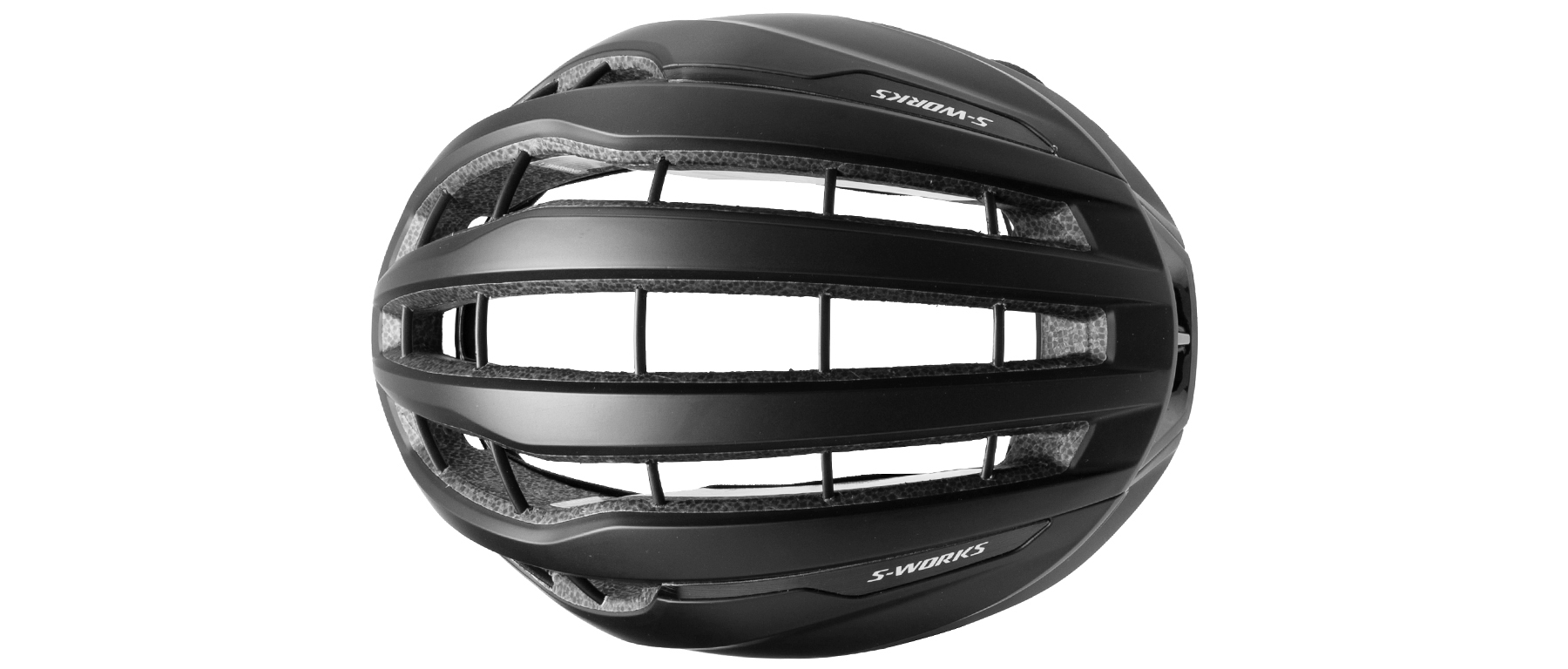
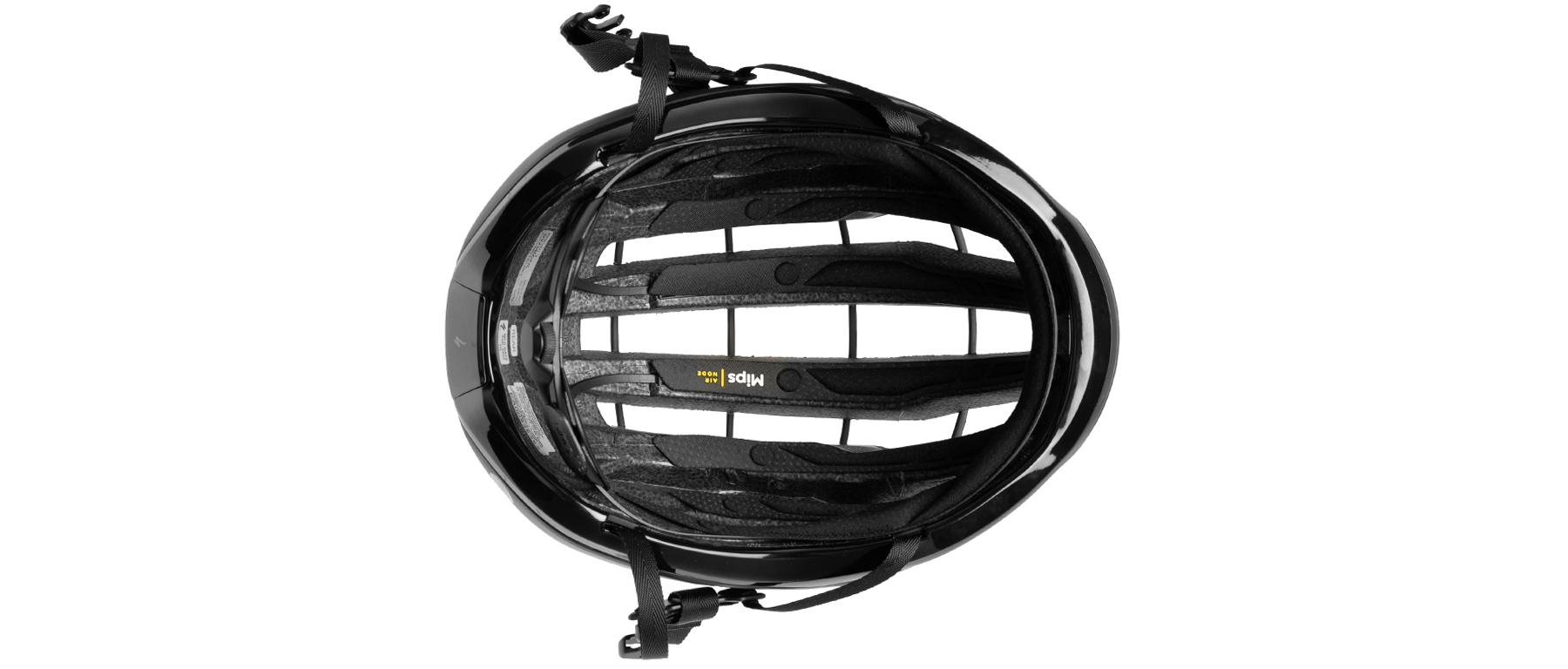
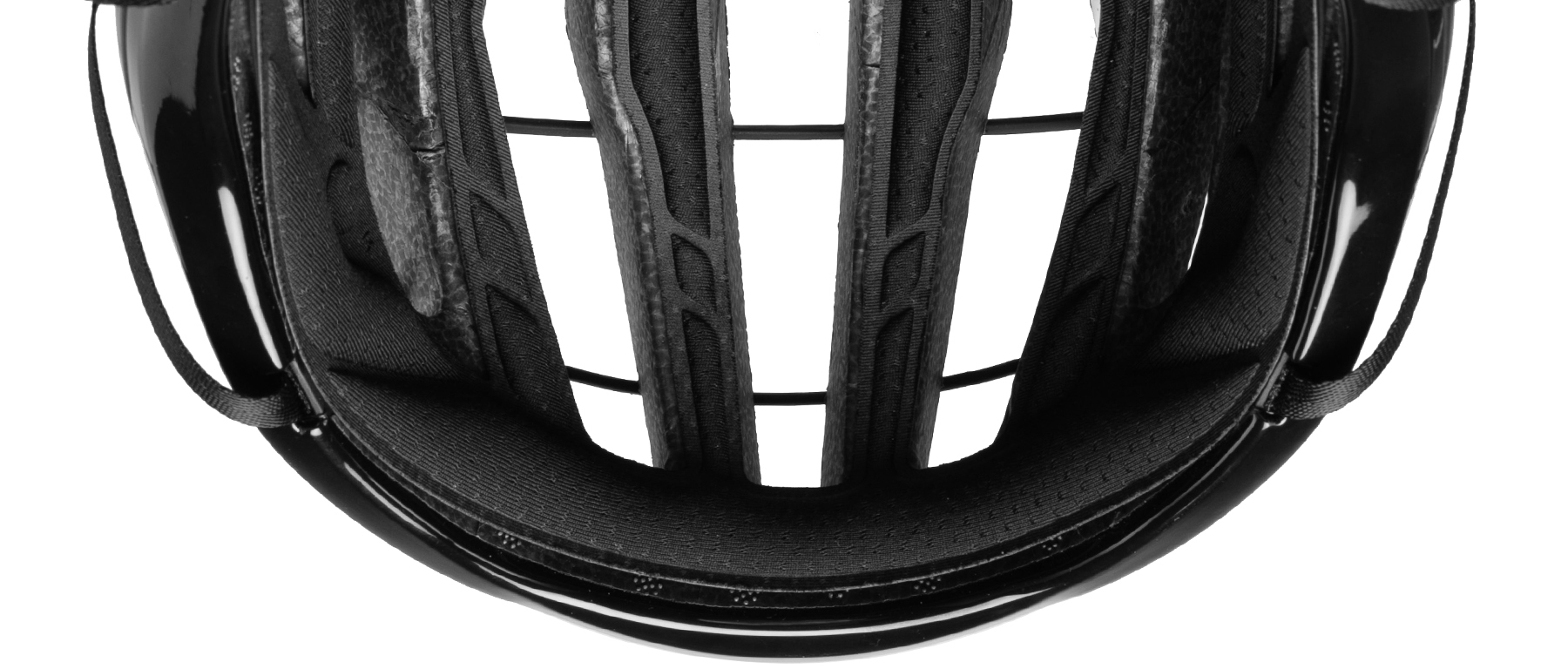
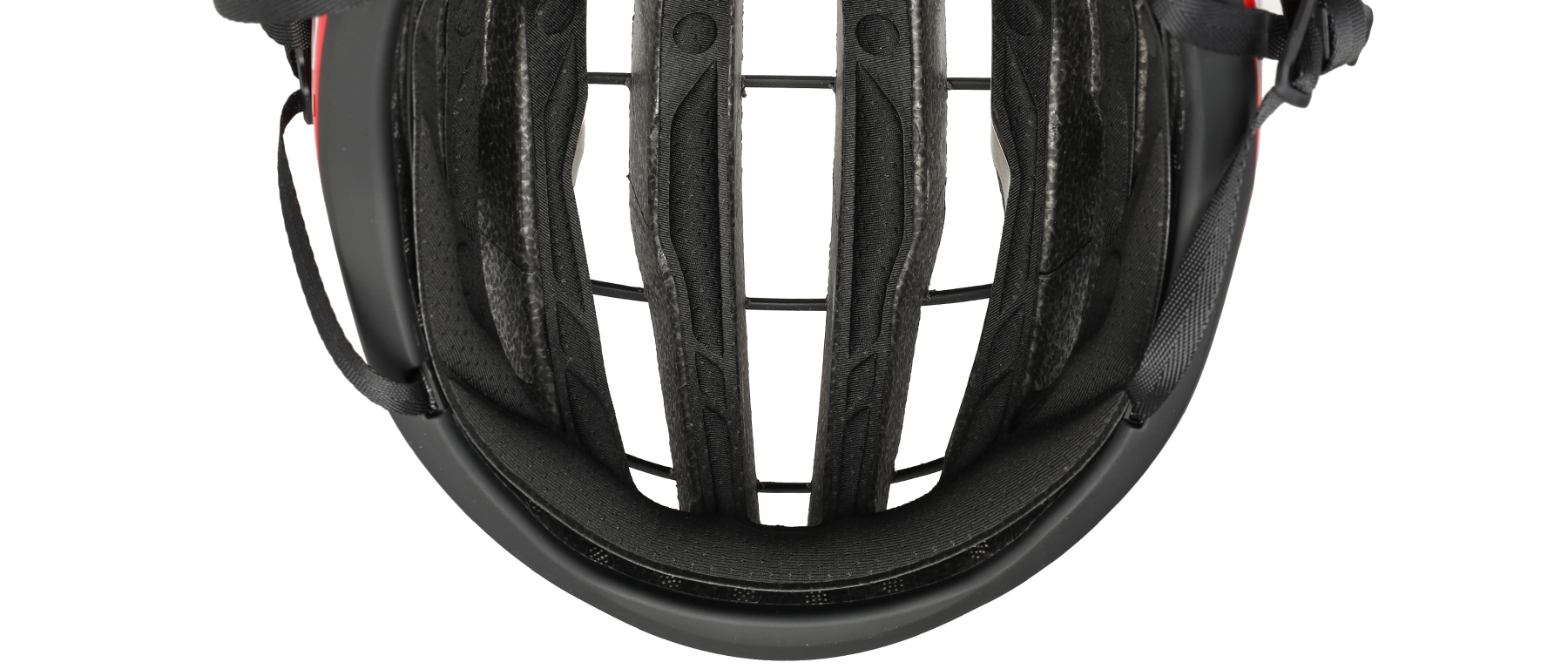
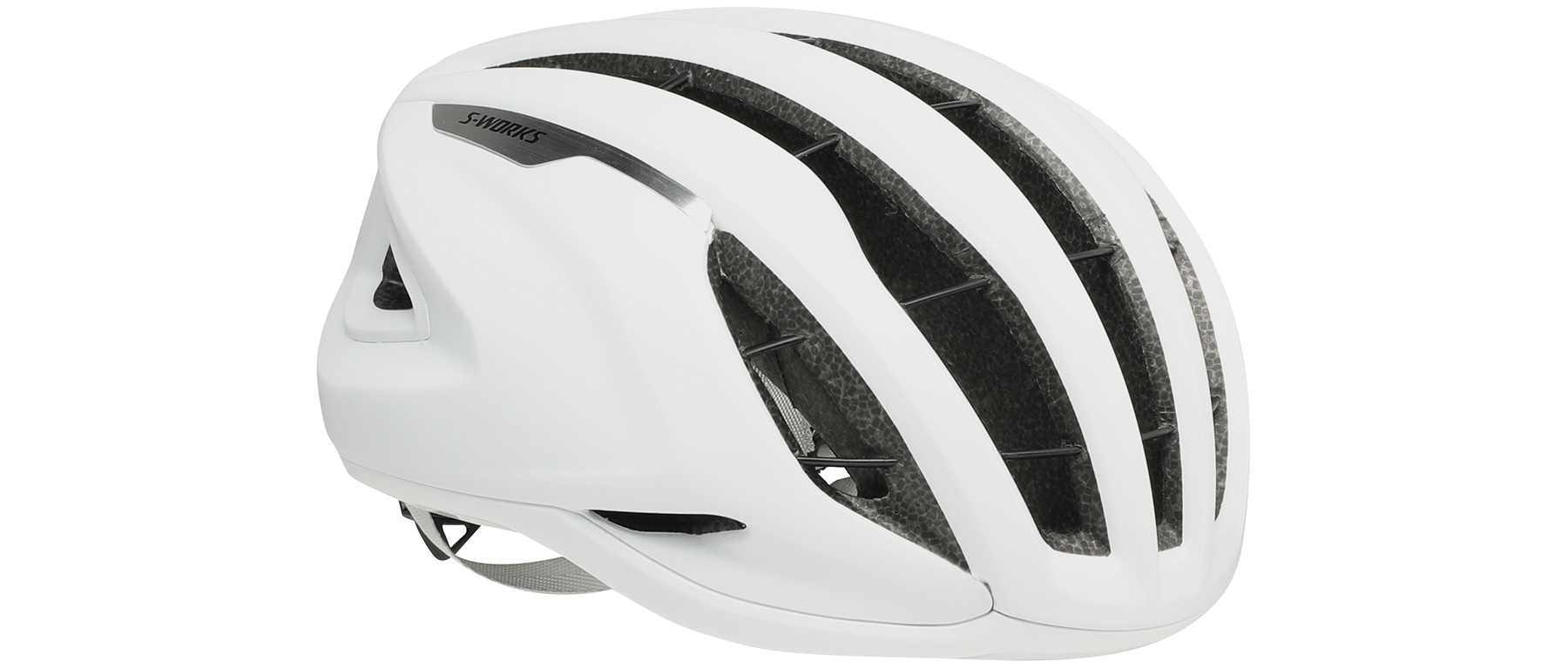
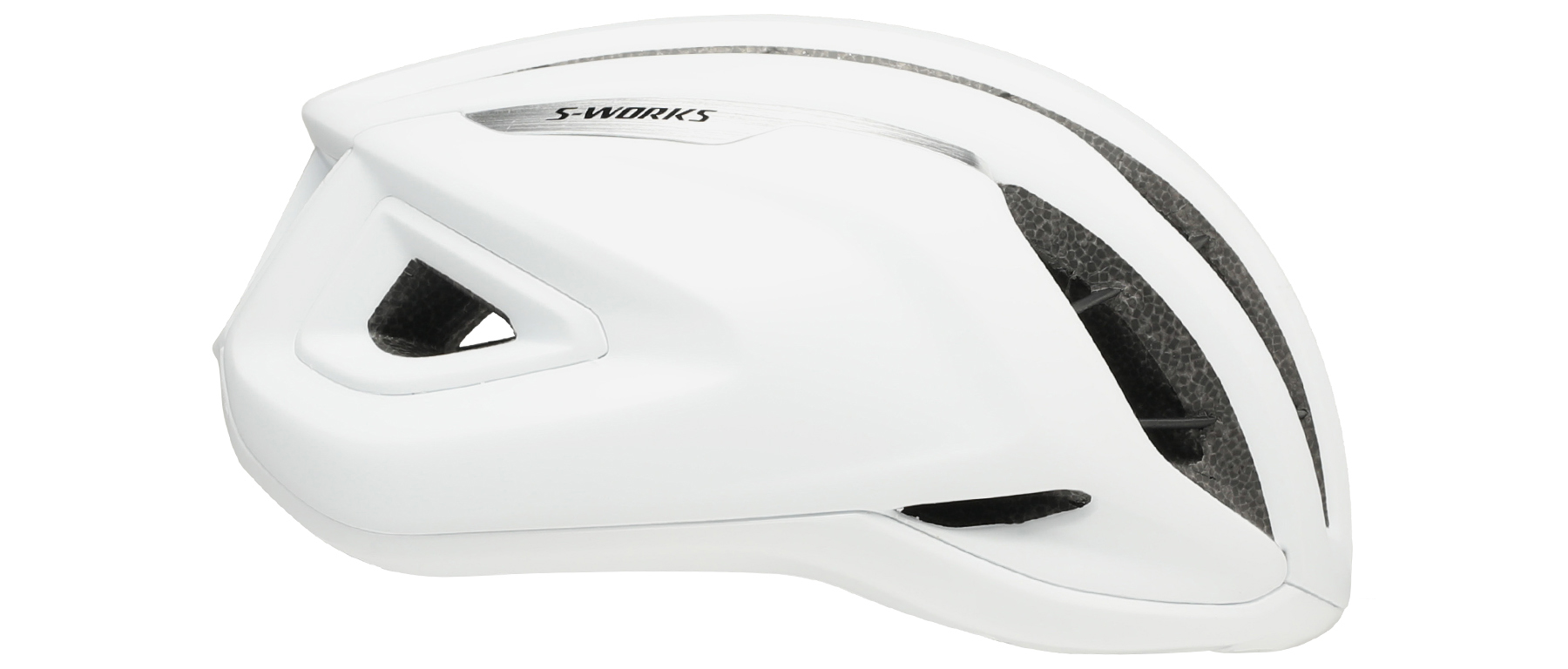
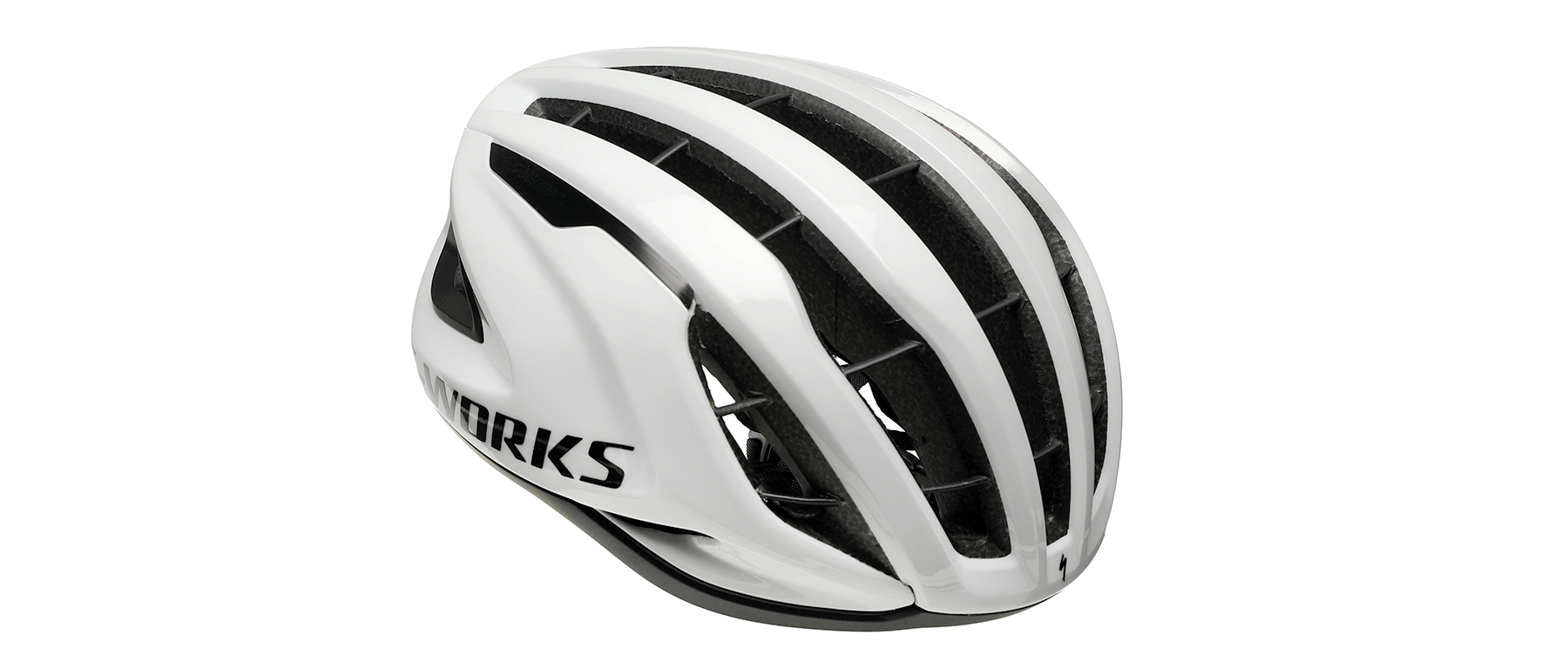
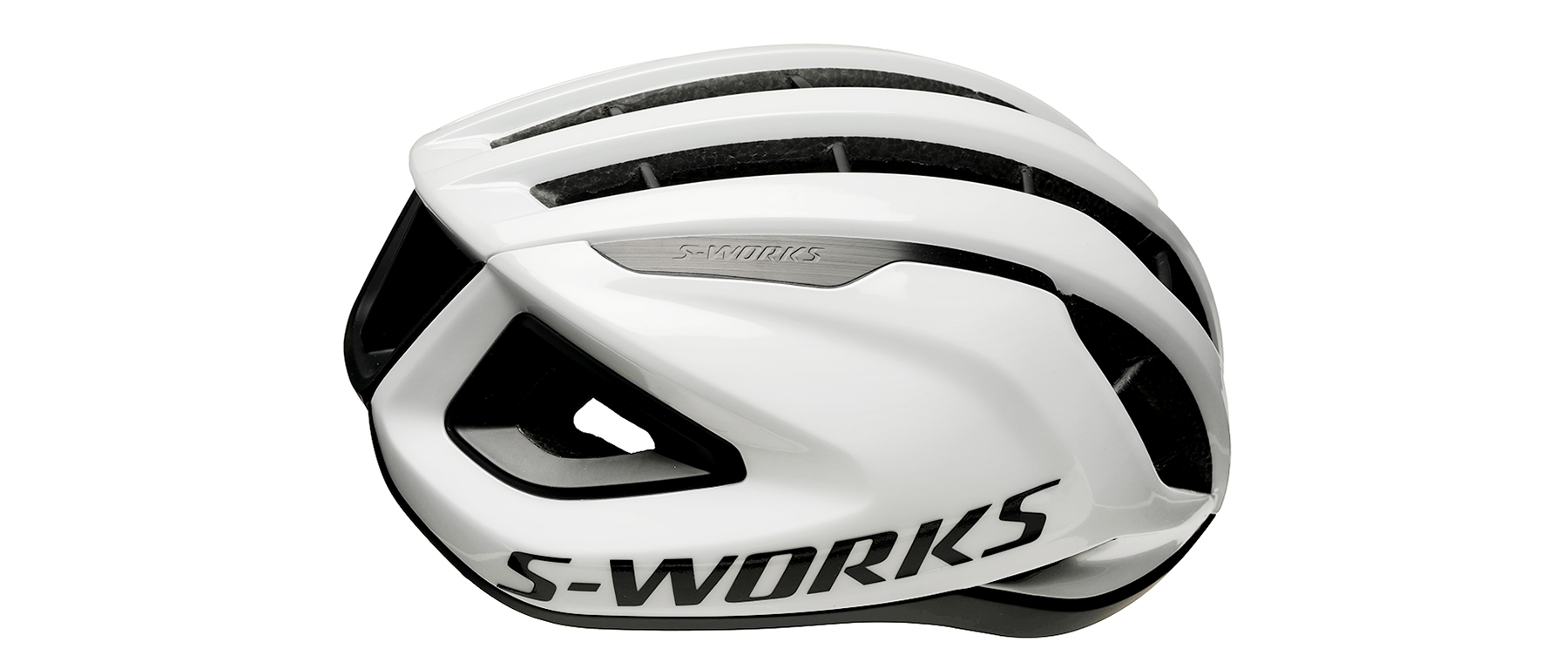
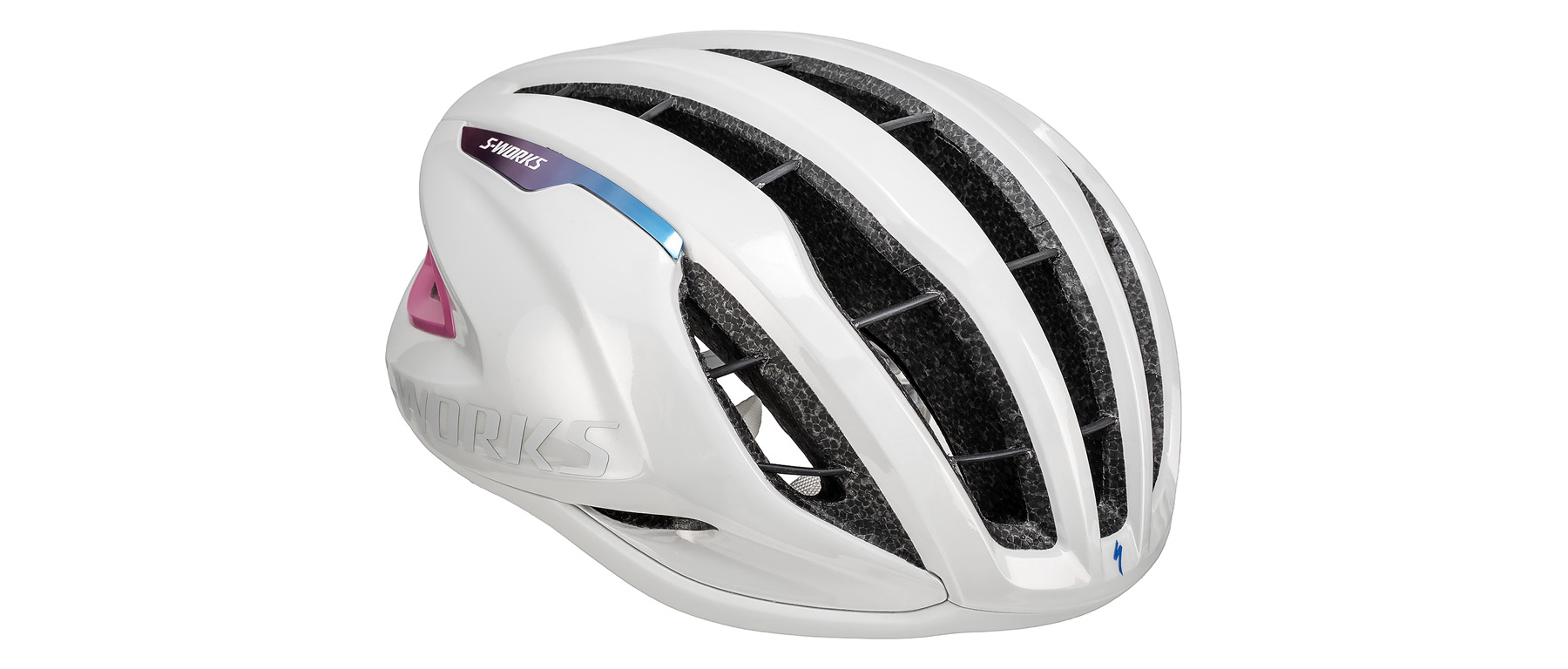
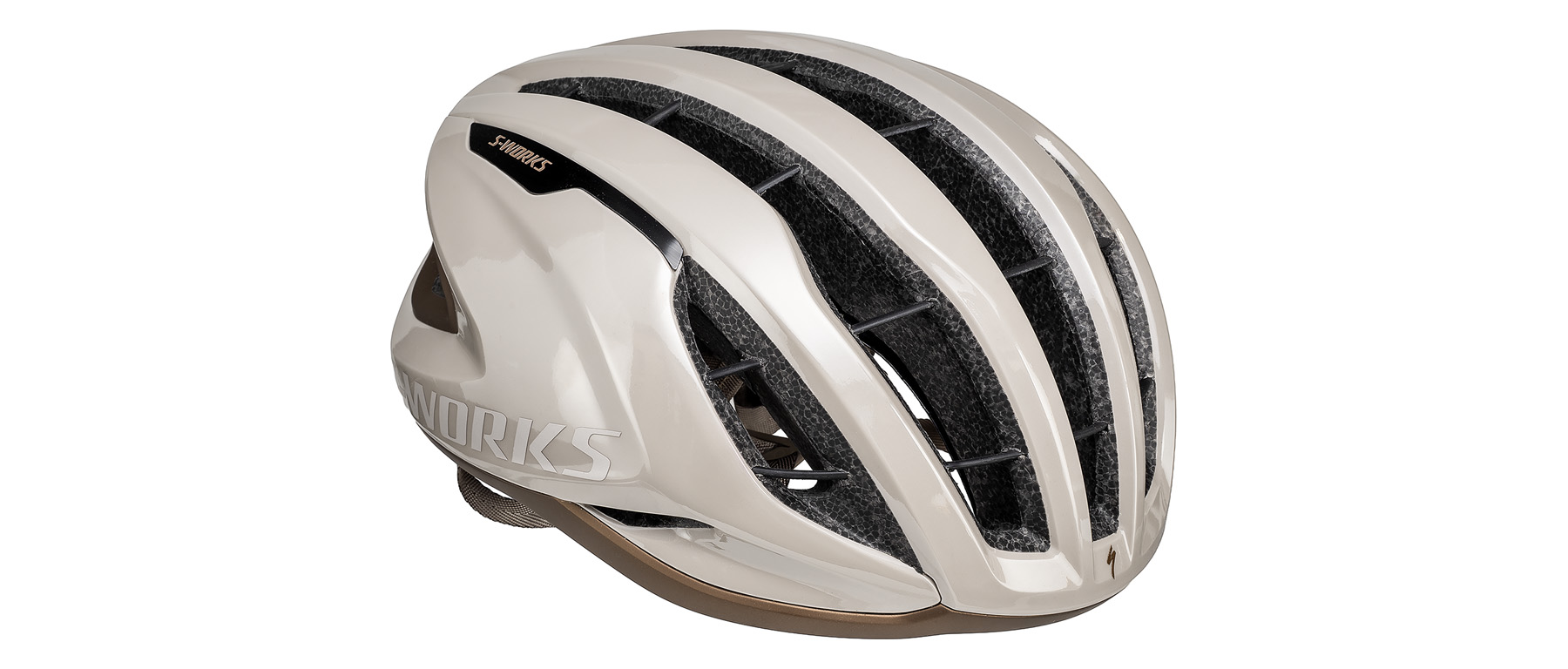
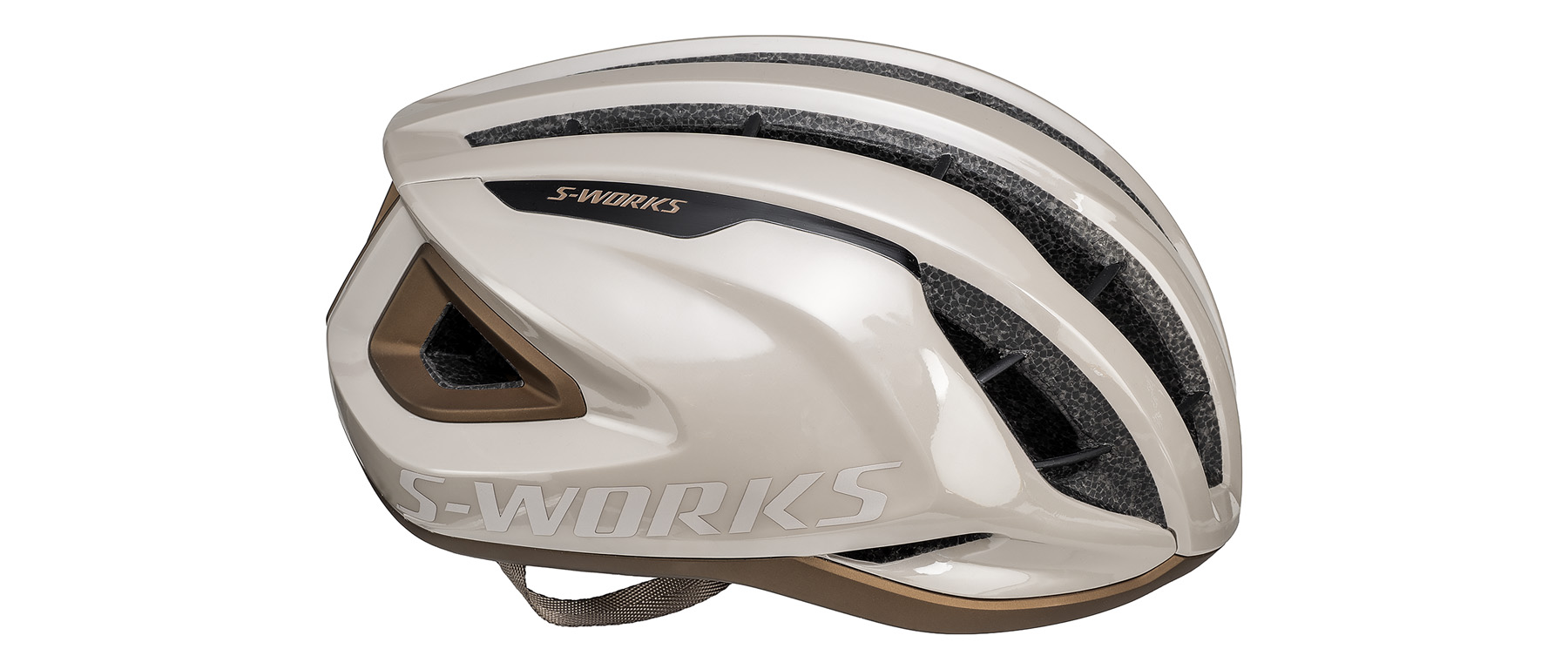
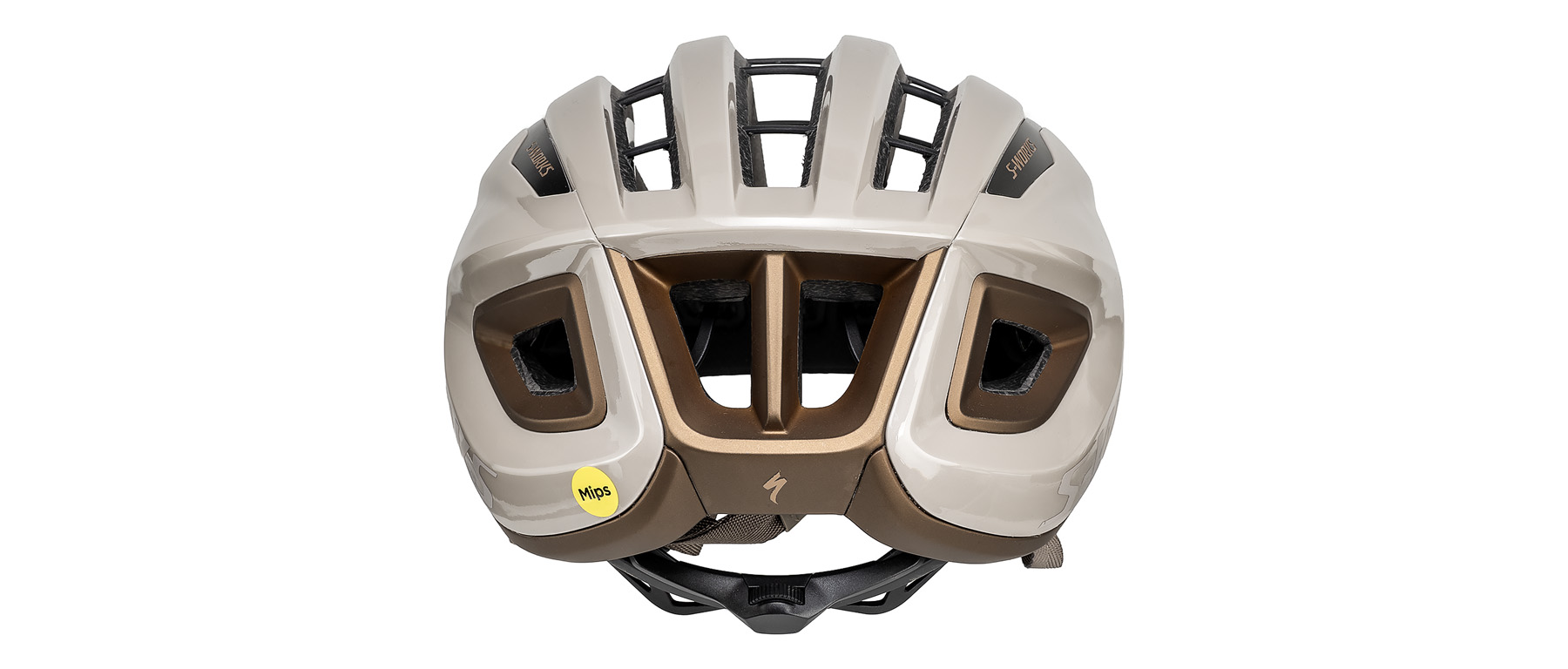
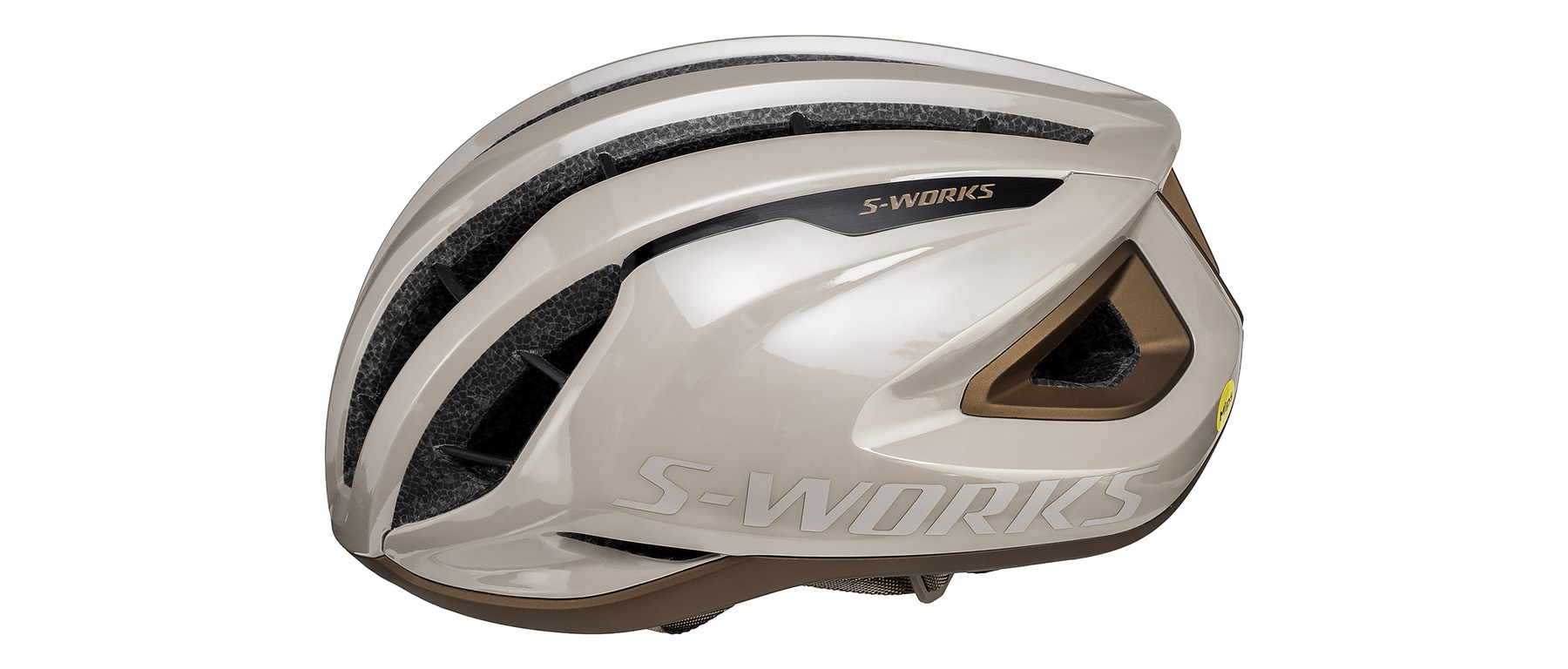
Eliminating the air-blocking foam bridges from the center created thru-air channels that increase the surface area of ventilation by 24.5% compared to the S-Works Prevail II Vent, and the all-new Prevail 3 has the most ventilation area of any helmet Specialized has ever made.
The clever part is how the helmet stays protective while giving up all that foam.
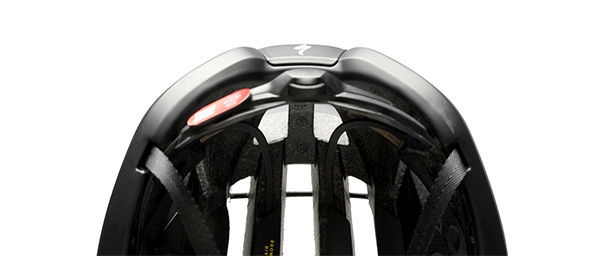
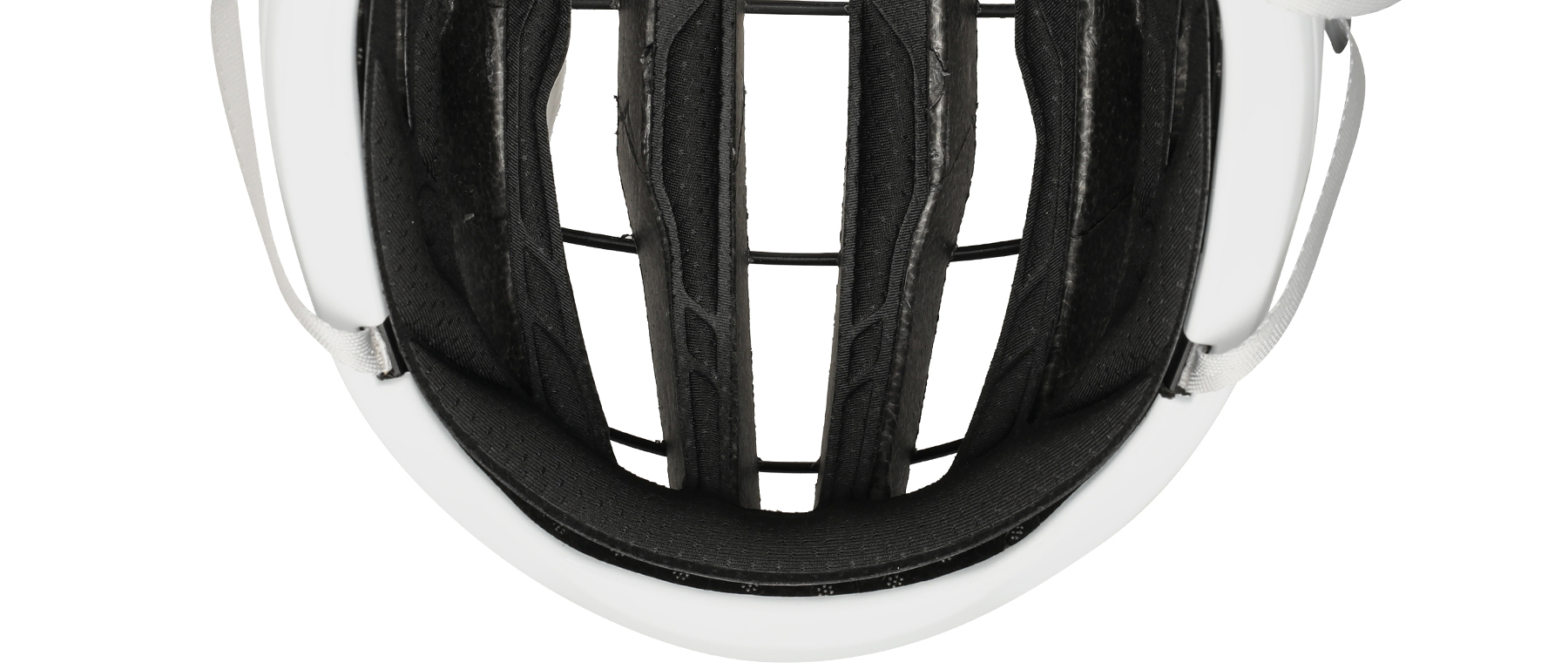
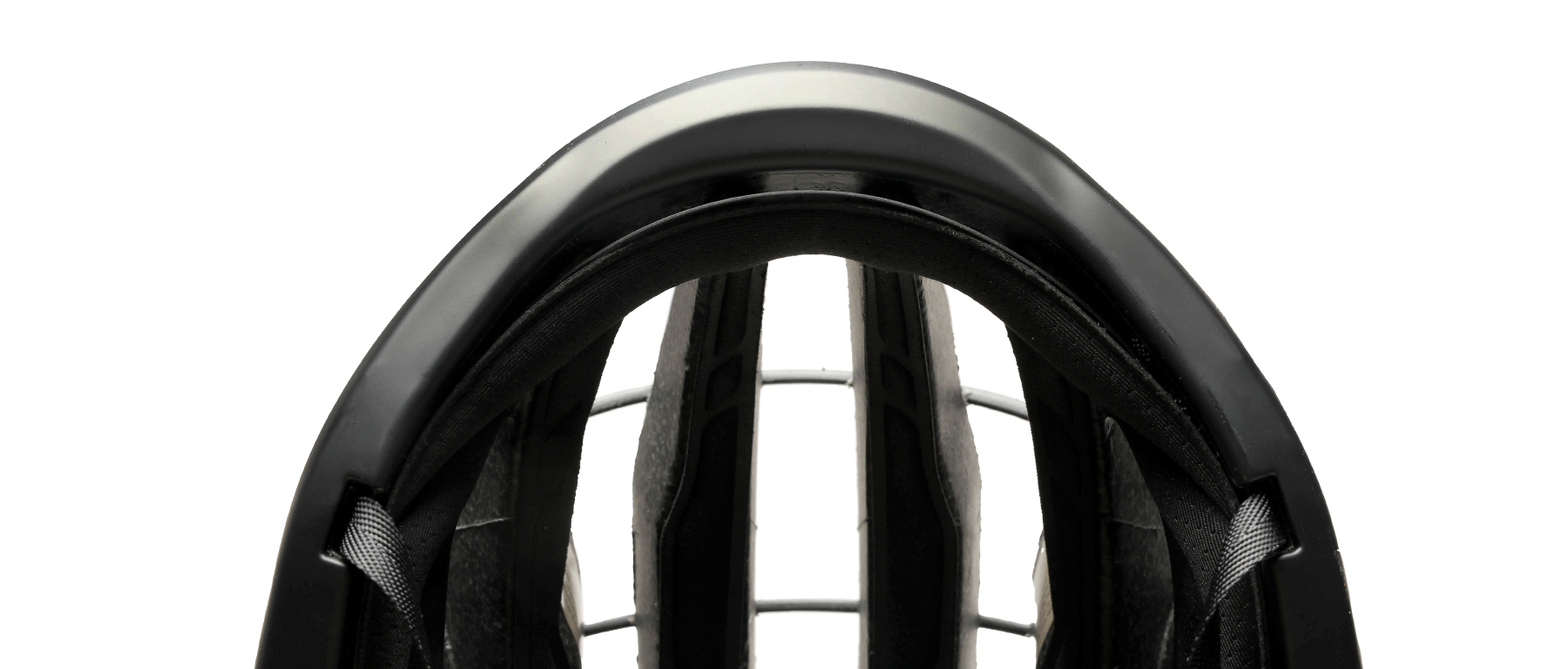
AirCage technology incorporates woven aramid cables that traverse the helmet and are connected to carbon side panels, and when impact occurs, AirCage acts like a suspension bridge, effectively distributing force.
By one review's count there are five of these cables, where most brands would typically use more EPS foam instead.
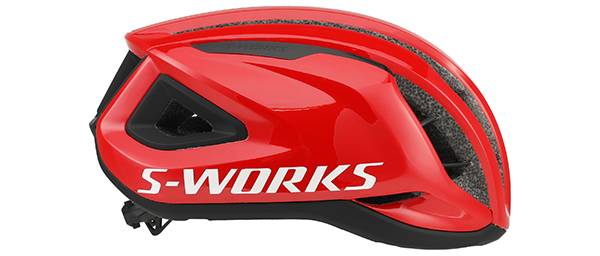
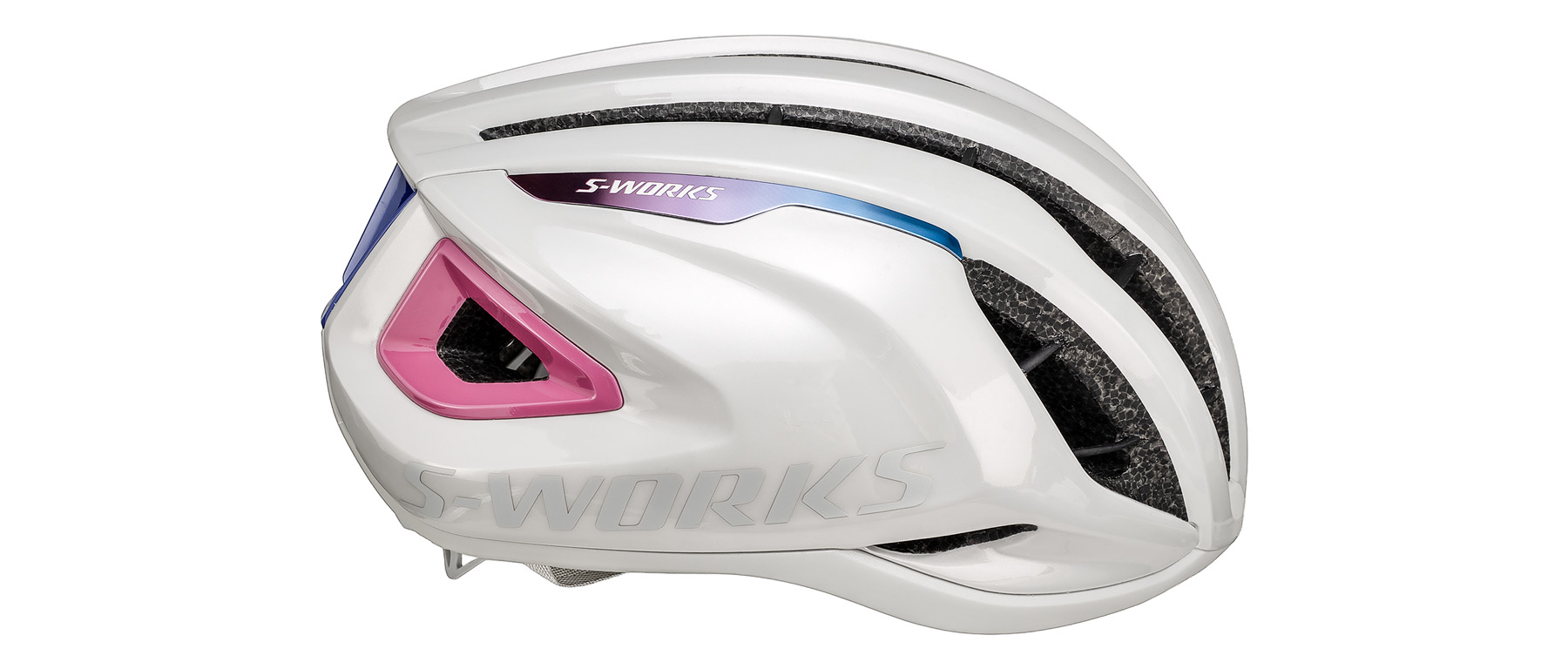
A precision, full-wrap polycarbonate shell adds durability and a clean finish.
The whole structure earned a
5-Star Virginia Tech Helmet Rating from the internationally renowned Virginia Polytechnic Institute and State University.
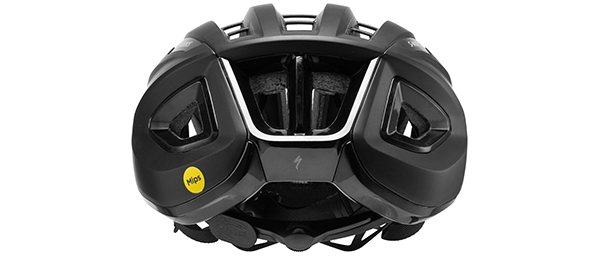
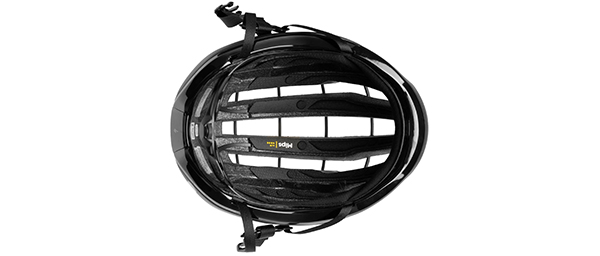
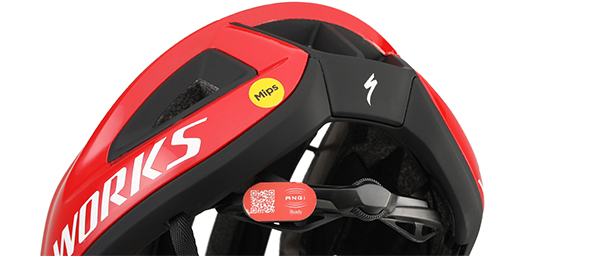
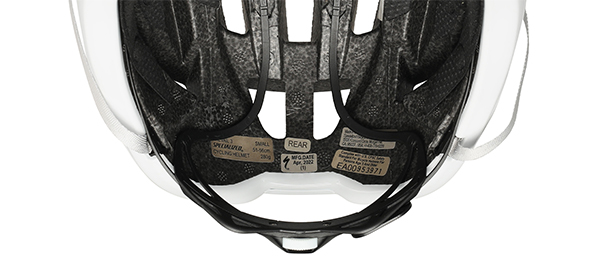
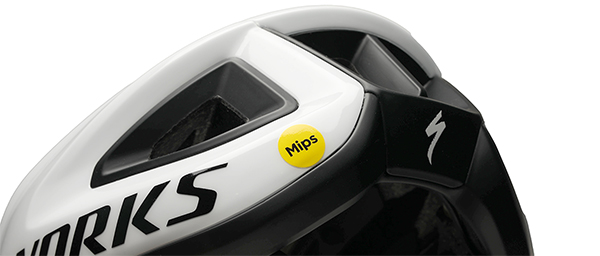
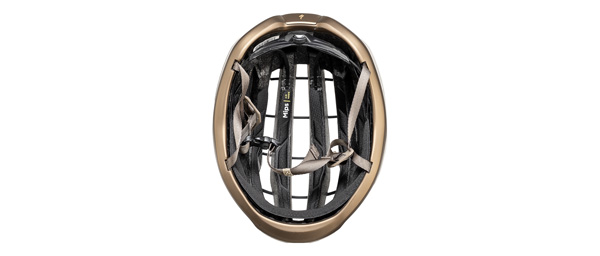
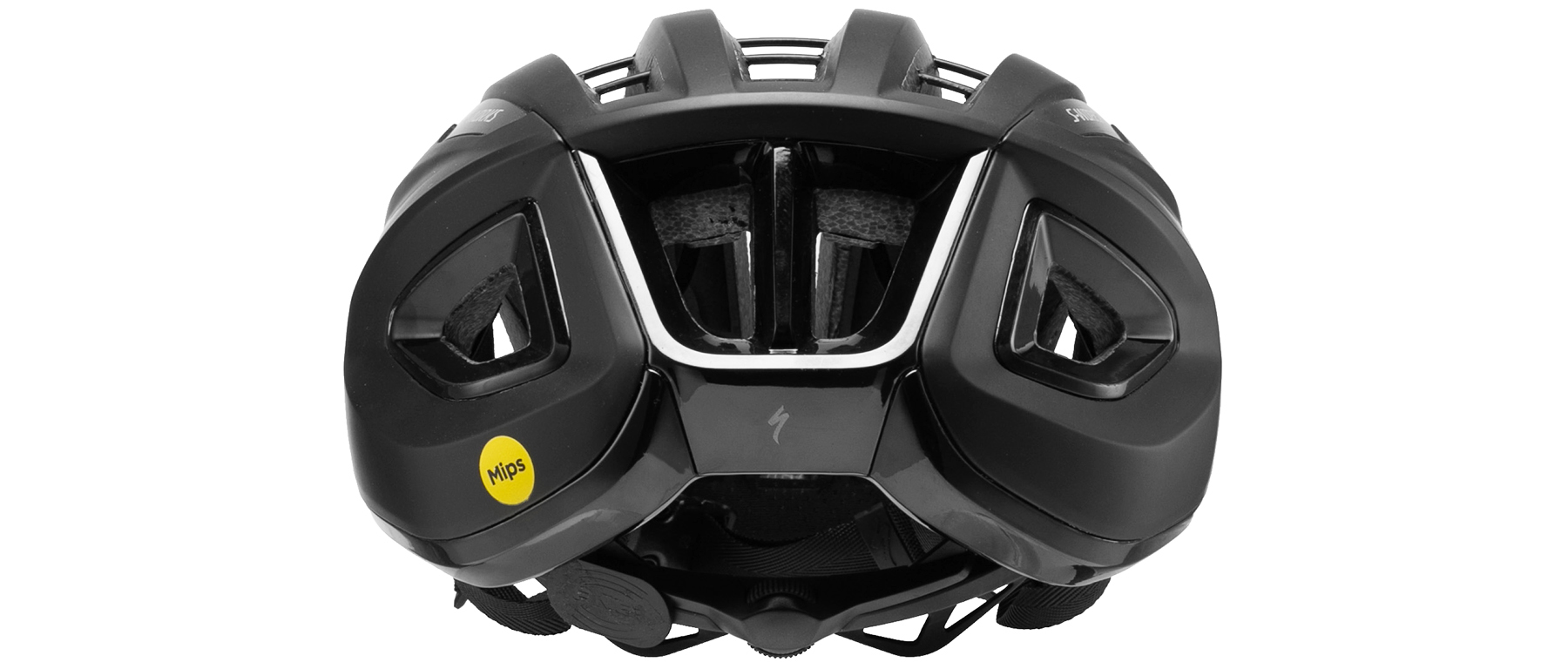
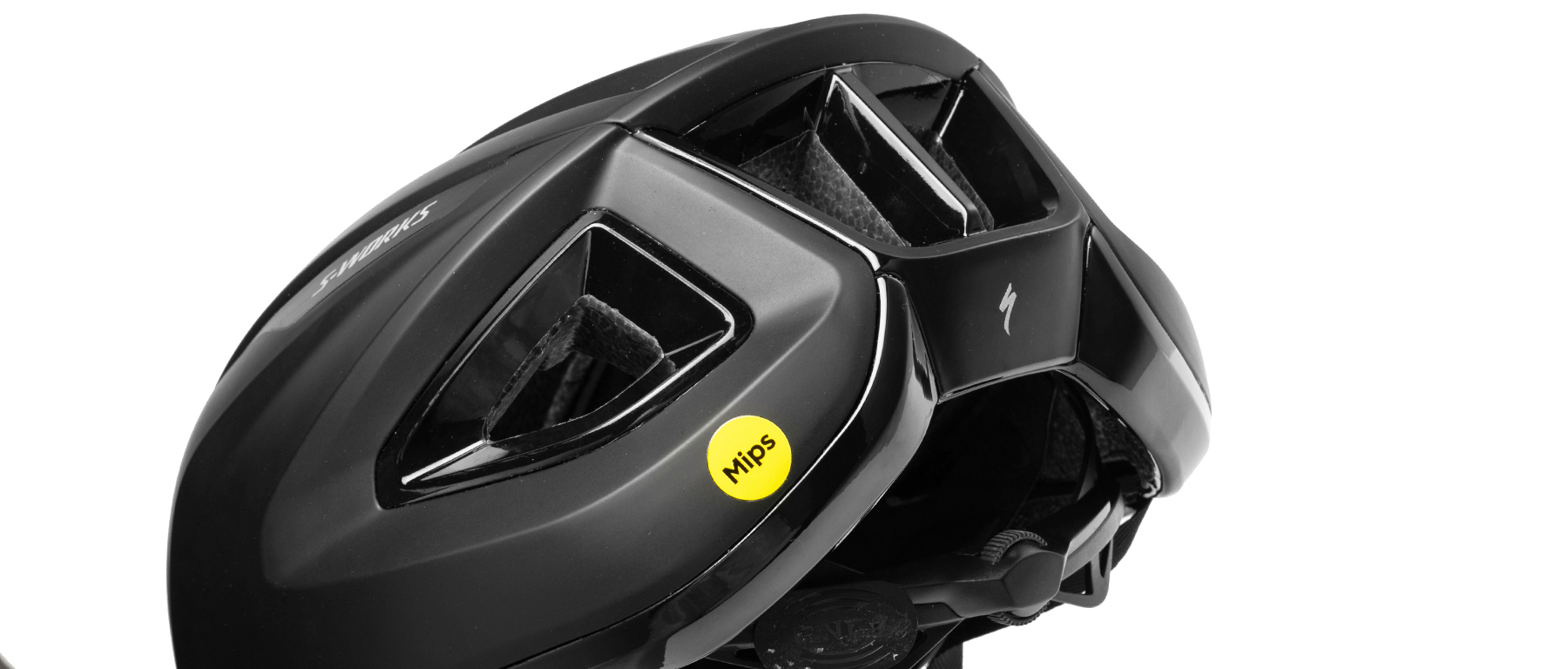
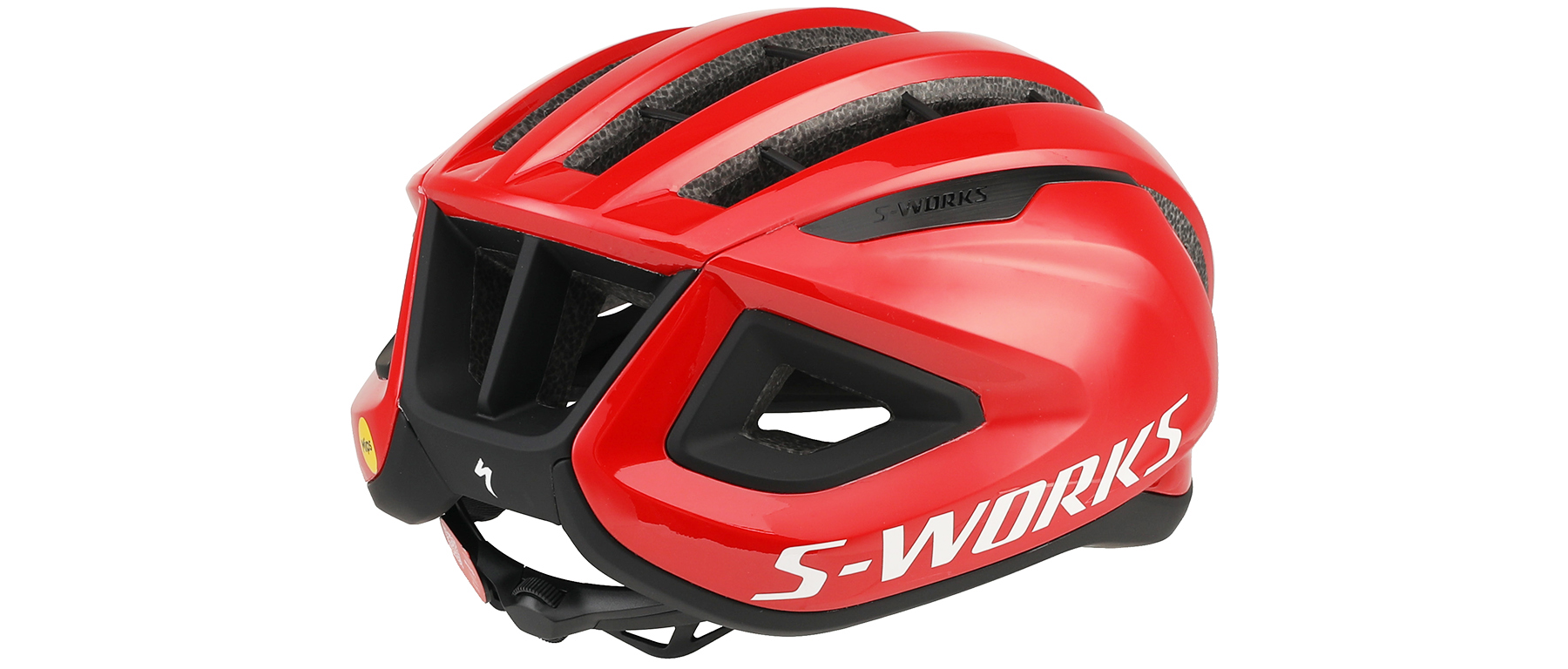
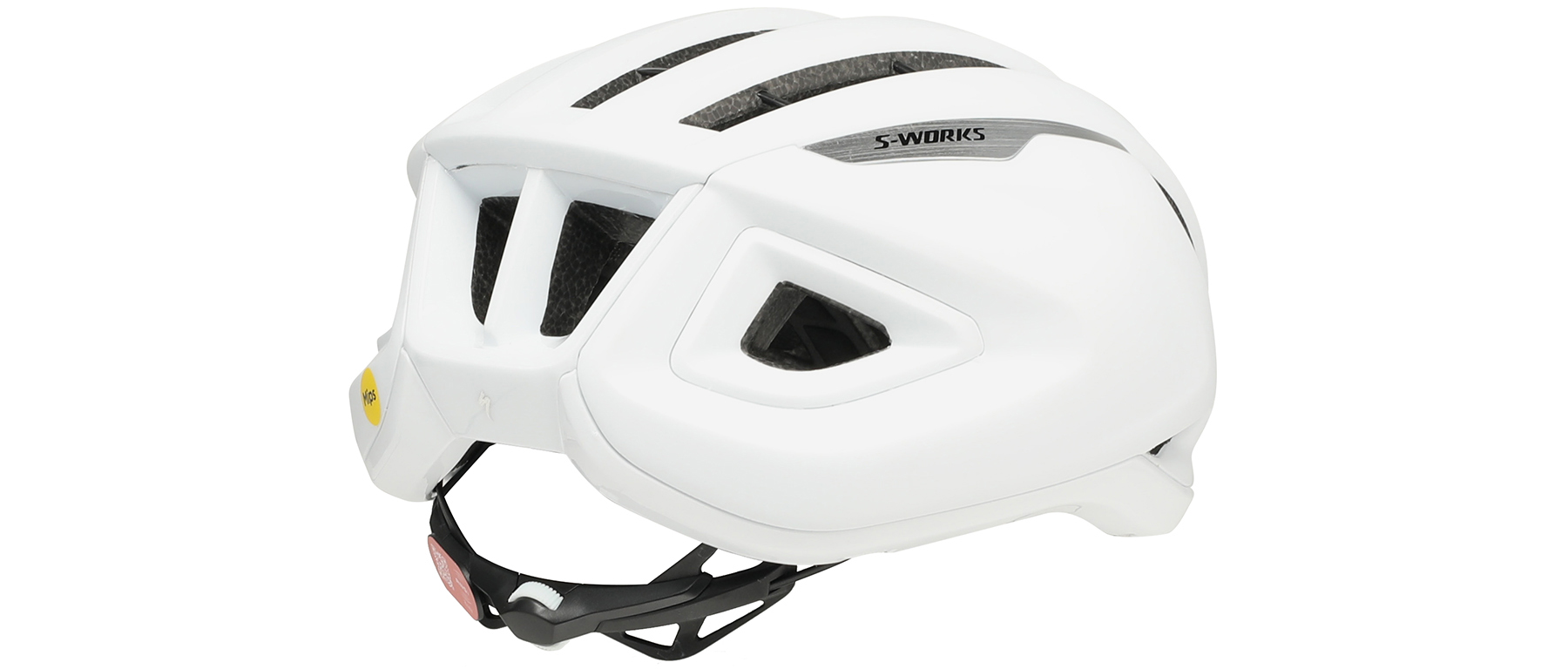
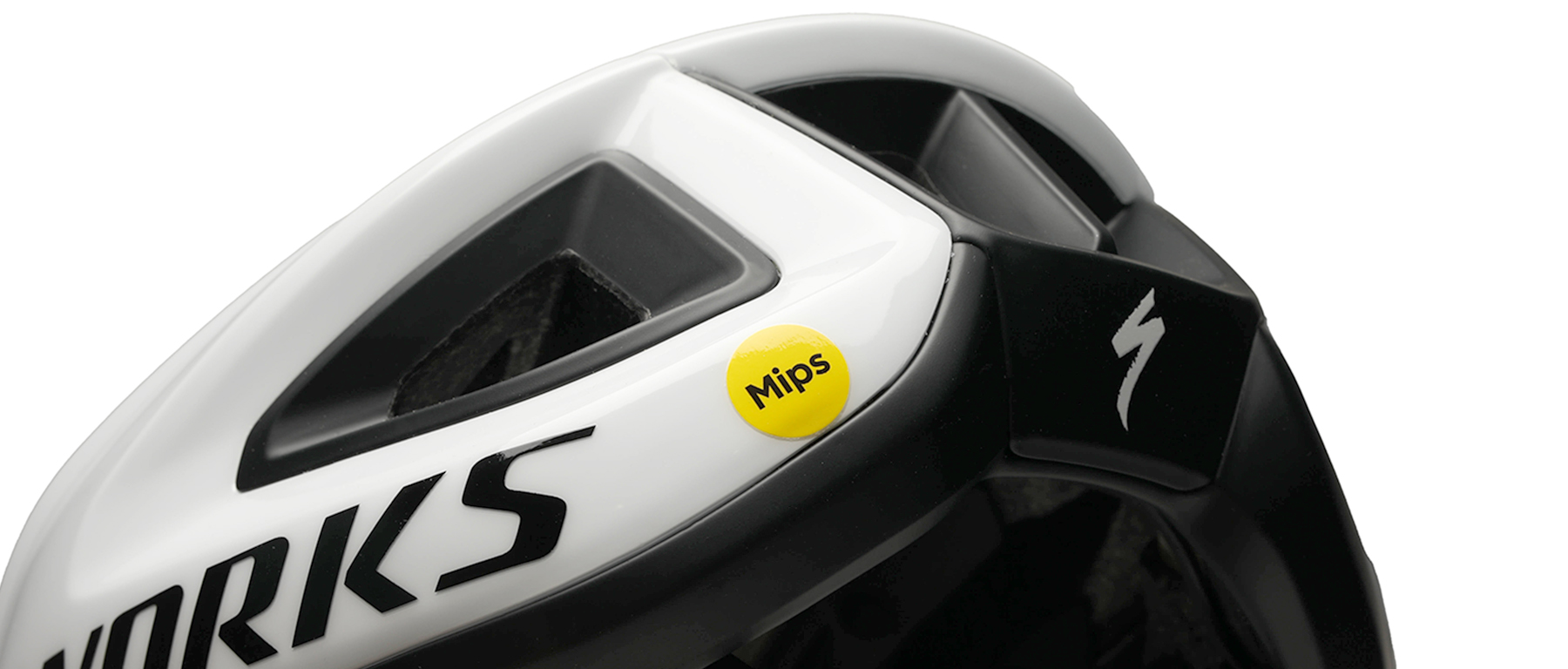
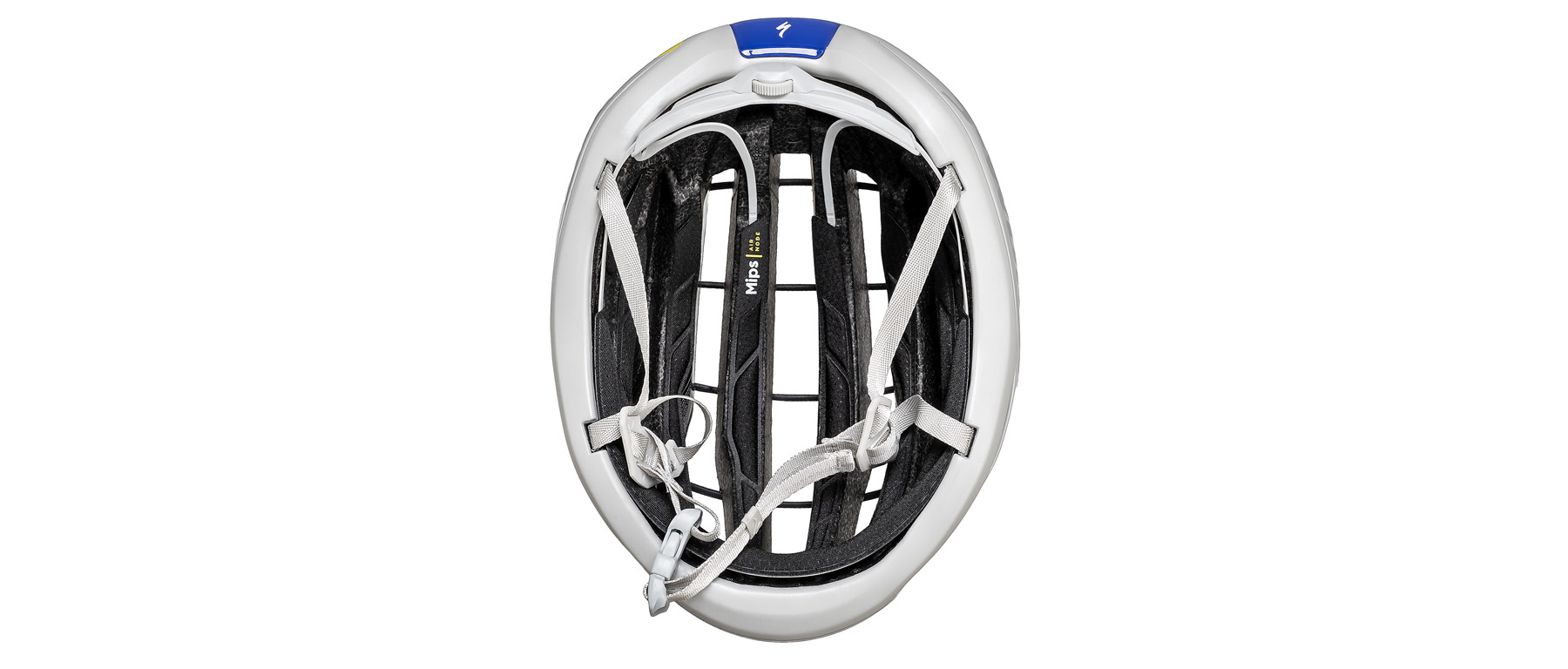
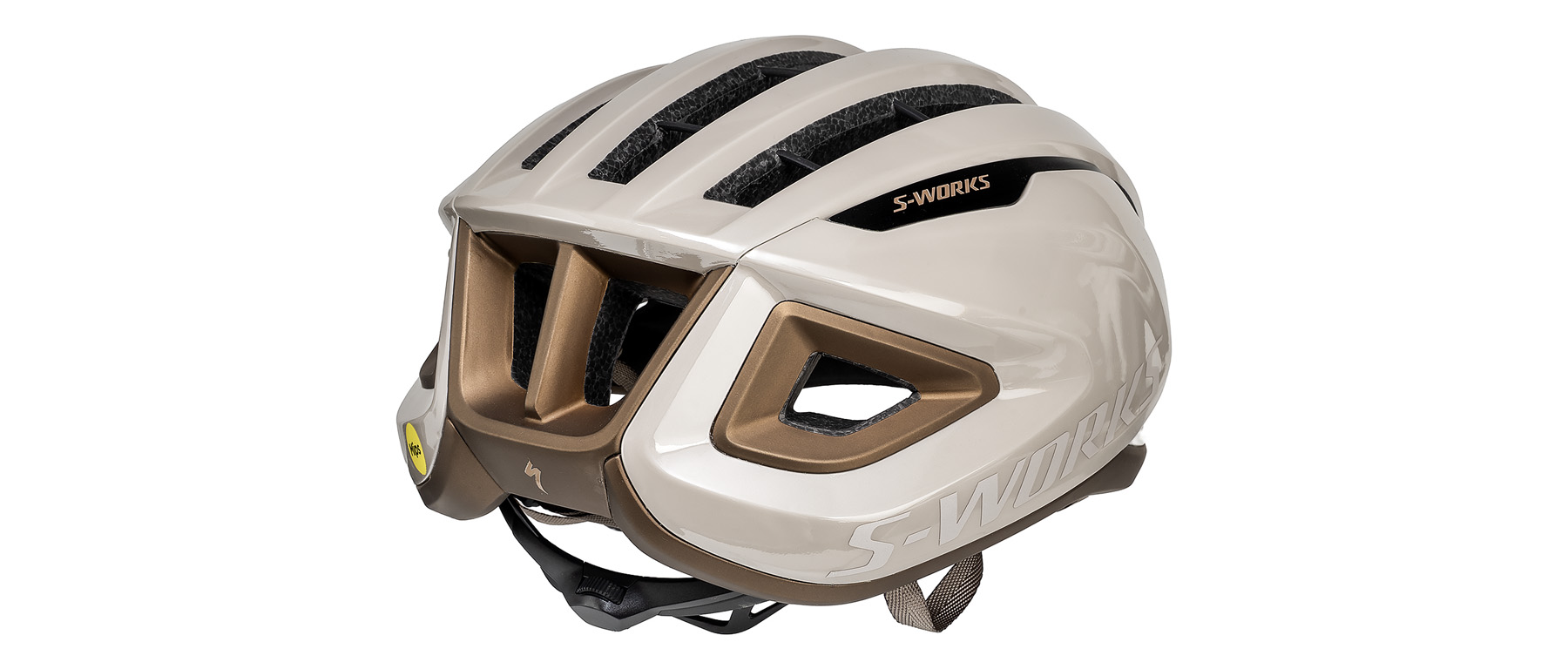
Rotational impact protection comes from MIPS Air Node.
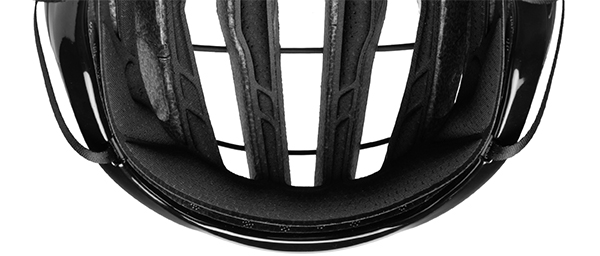
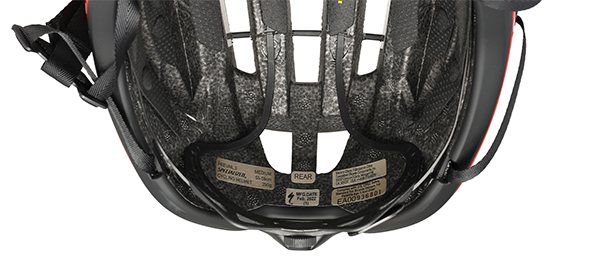
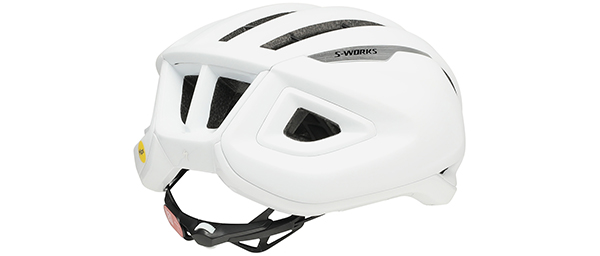
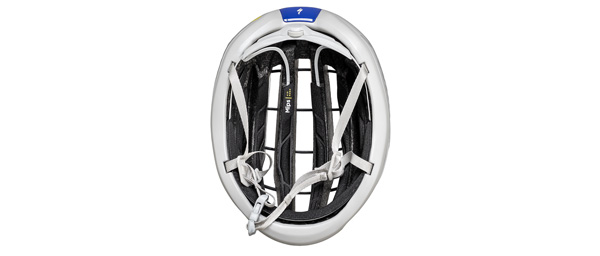
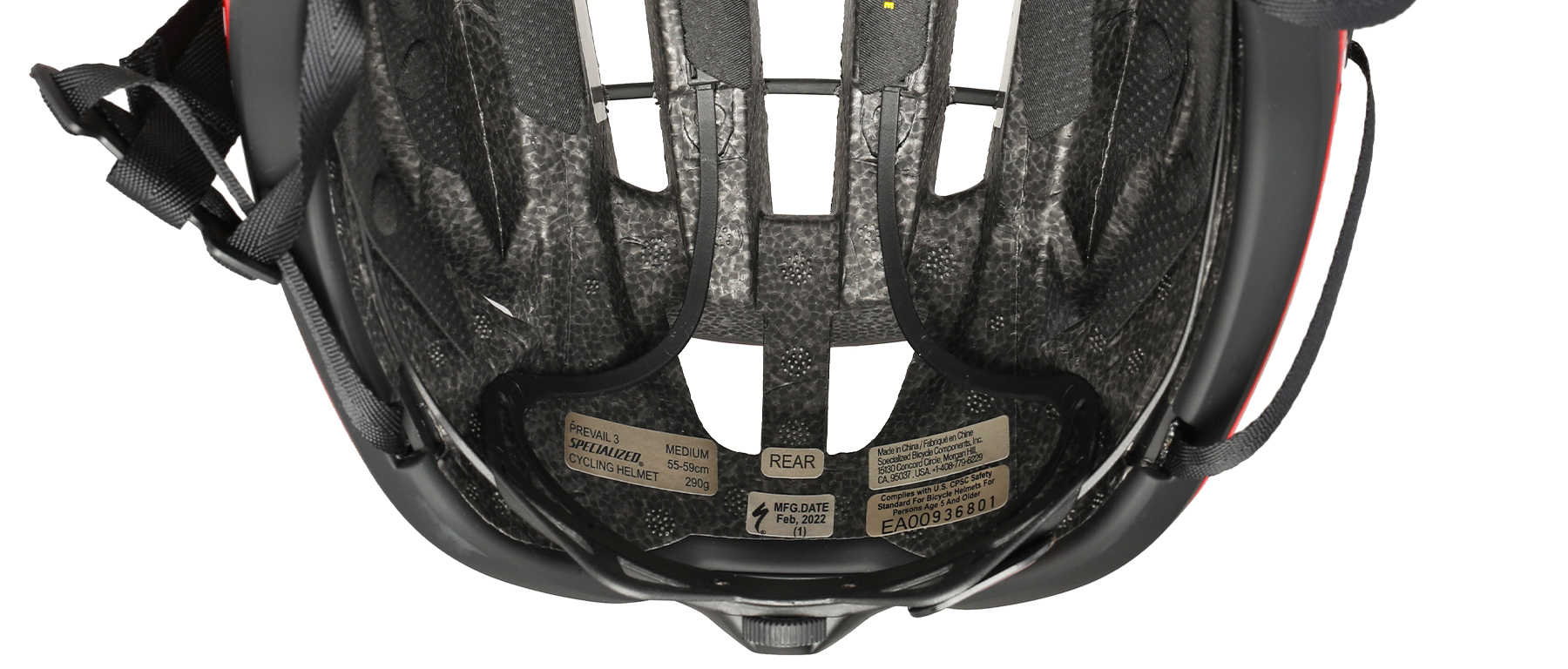
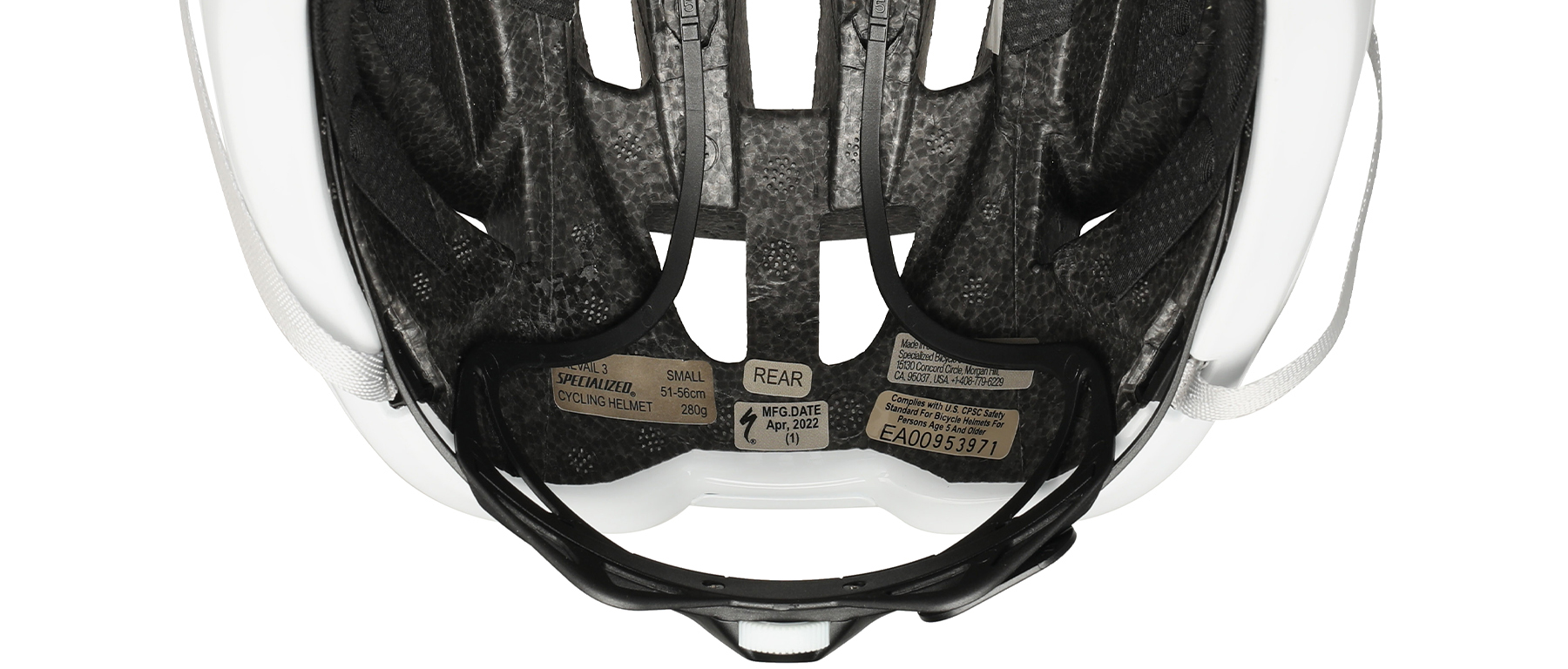
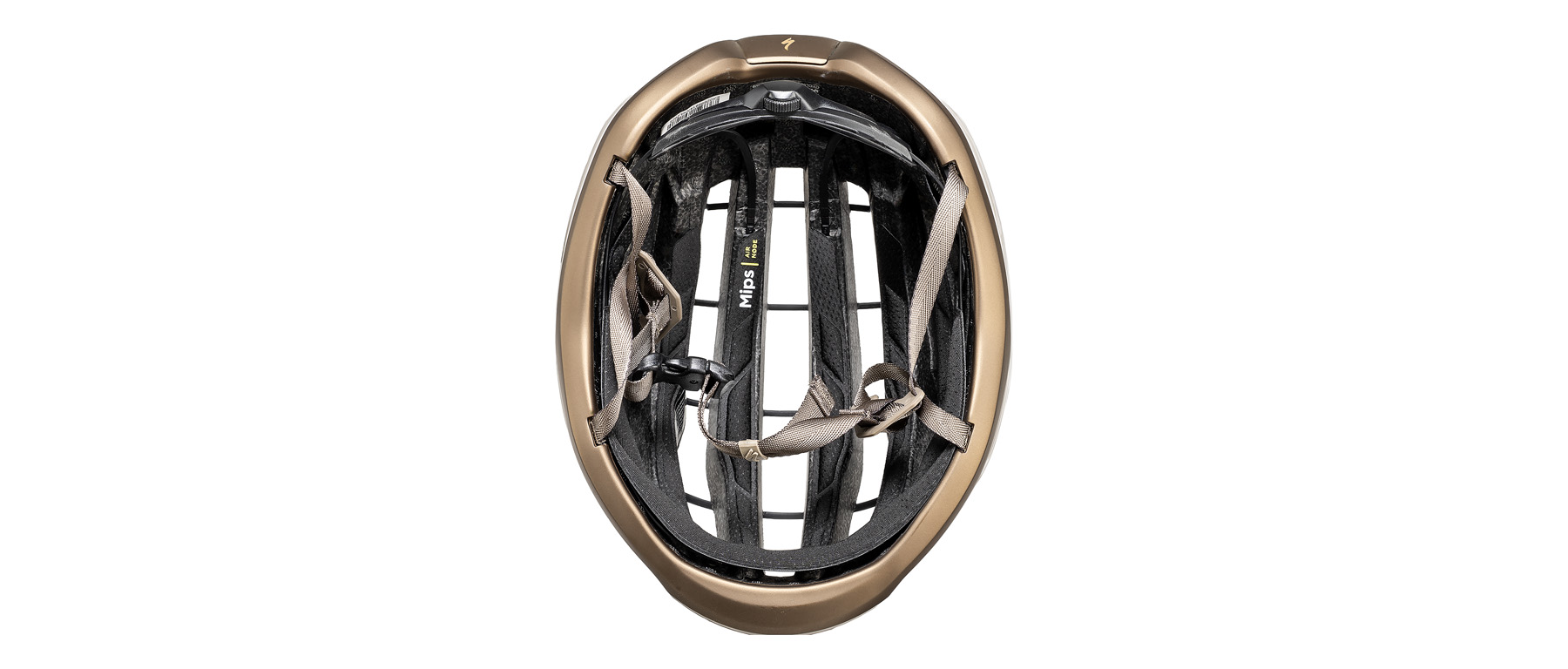
Rather than the usual thin plastic cradle inside the helmet, Air Node integrates the MIPS system directly into the helmet padding to keep things cool while riding.
Nodes of hook-and-loop fasteners attach the narrower-than-usual comfort liner to the helmet, and these nodes break free in the affected local area to dissipate rotational force. This method adds practically no weight and doesn't interfere with airflow like the usual yellow liner.
If crash detection is part of your setup, the good news is you're covered here too.... Read More
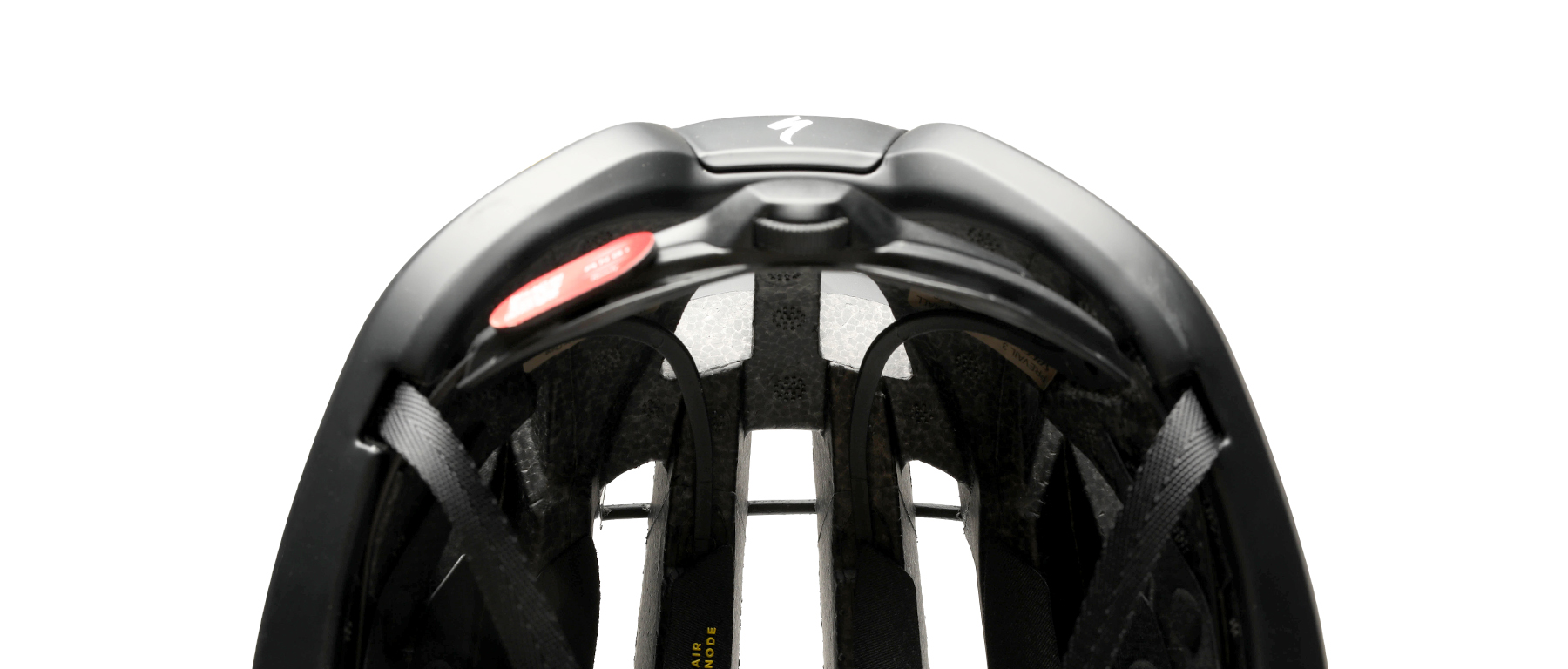
Fit runs through the ultralight Mindset micro-dial system with height adjustability, and it's worth knowing that
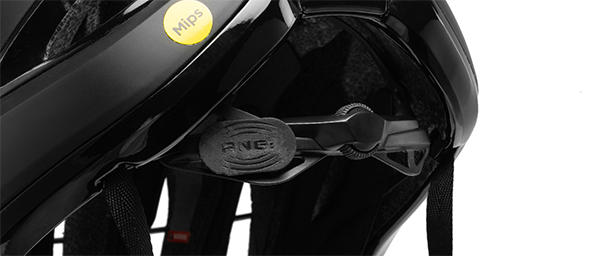
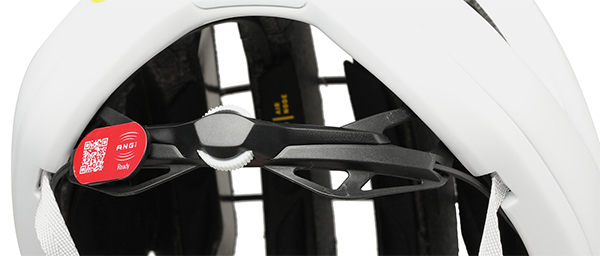
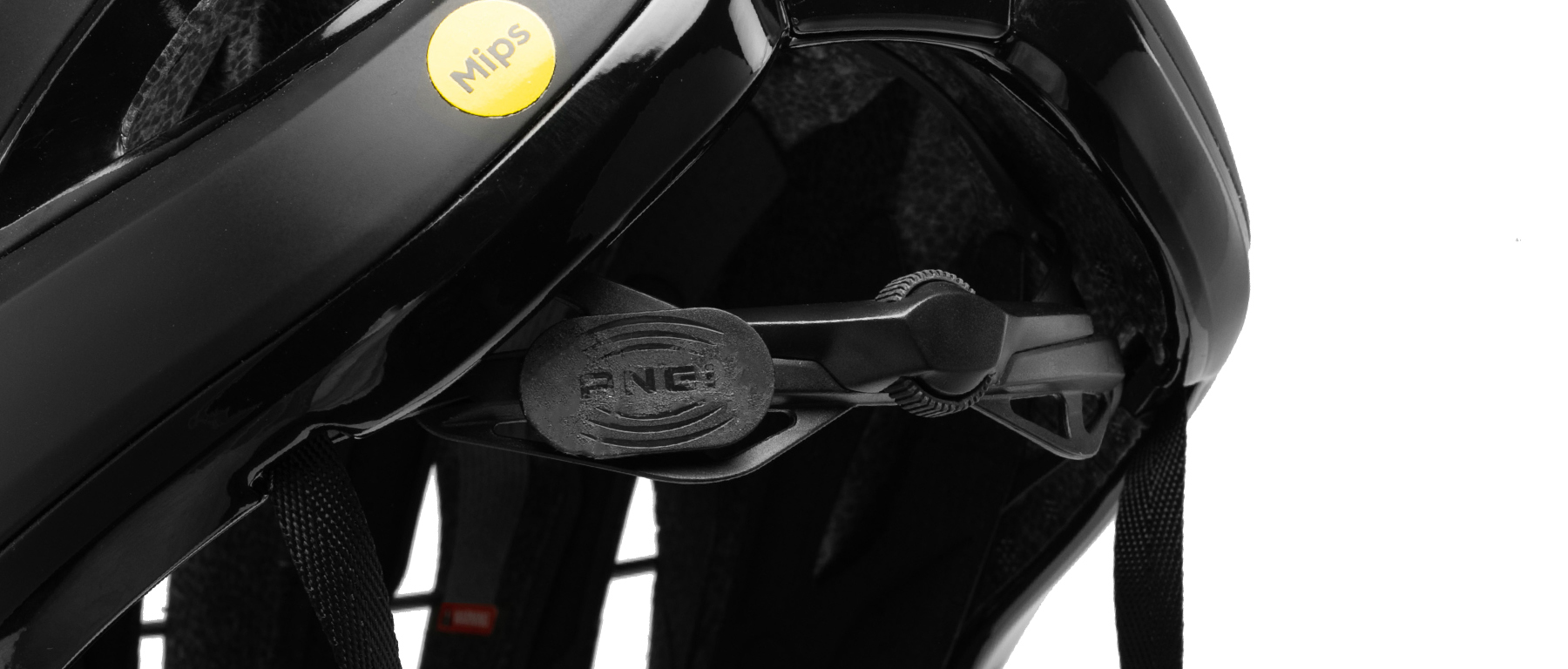
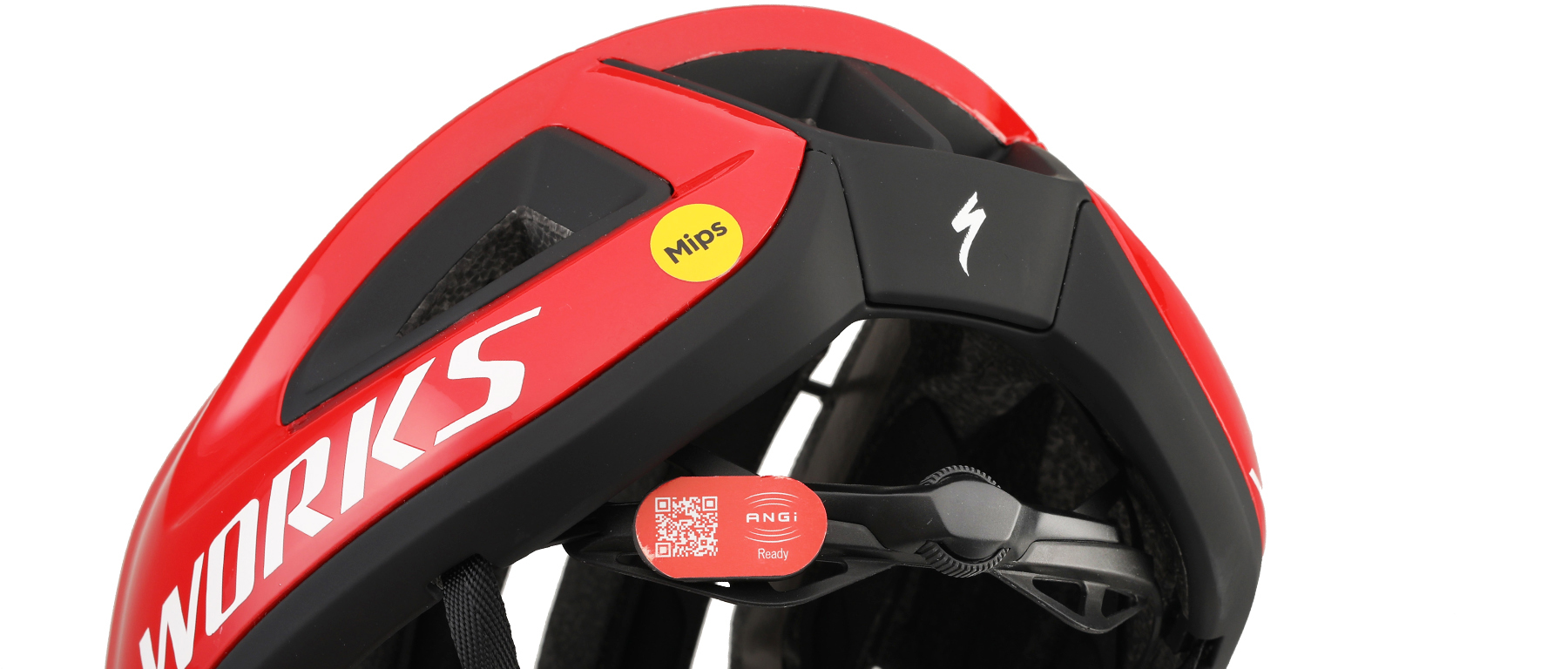
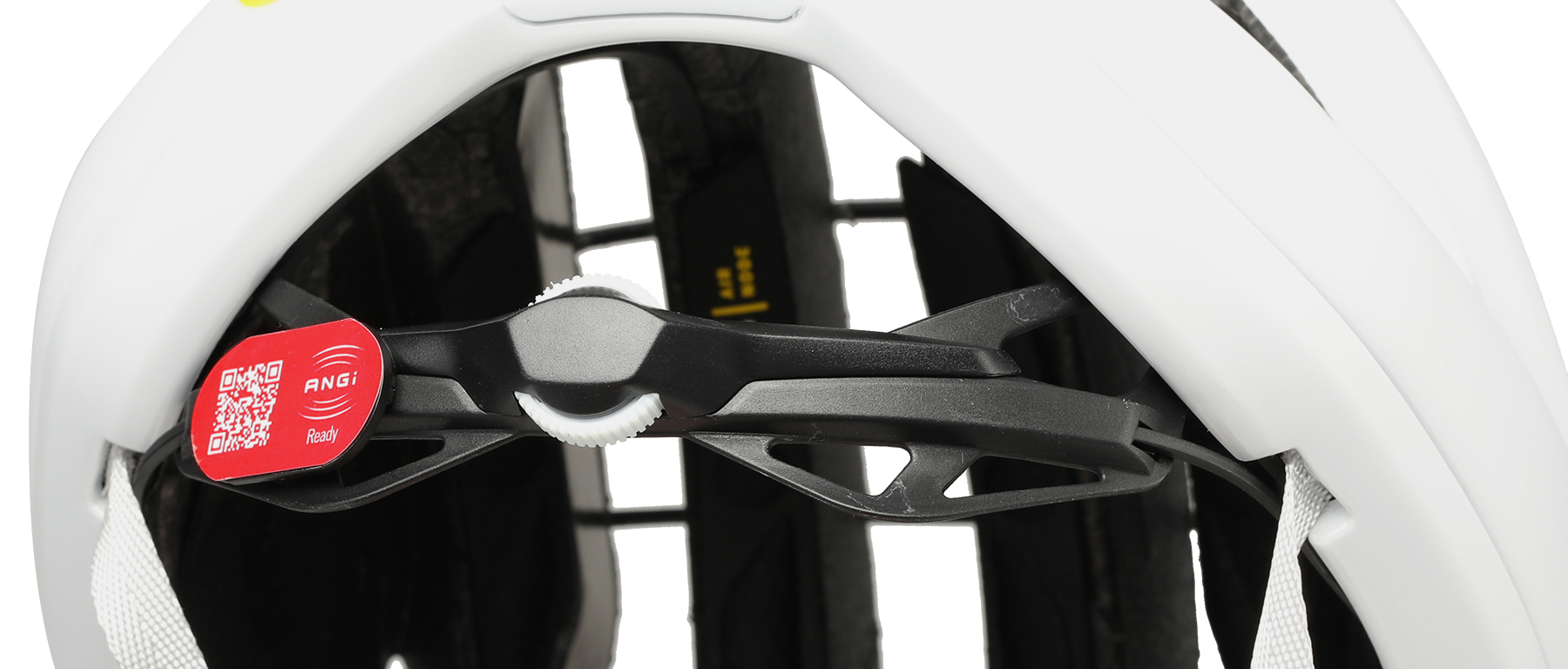
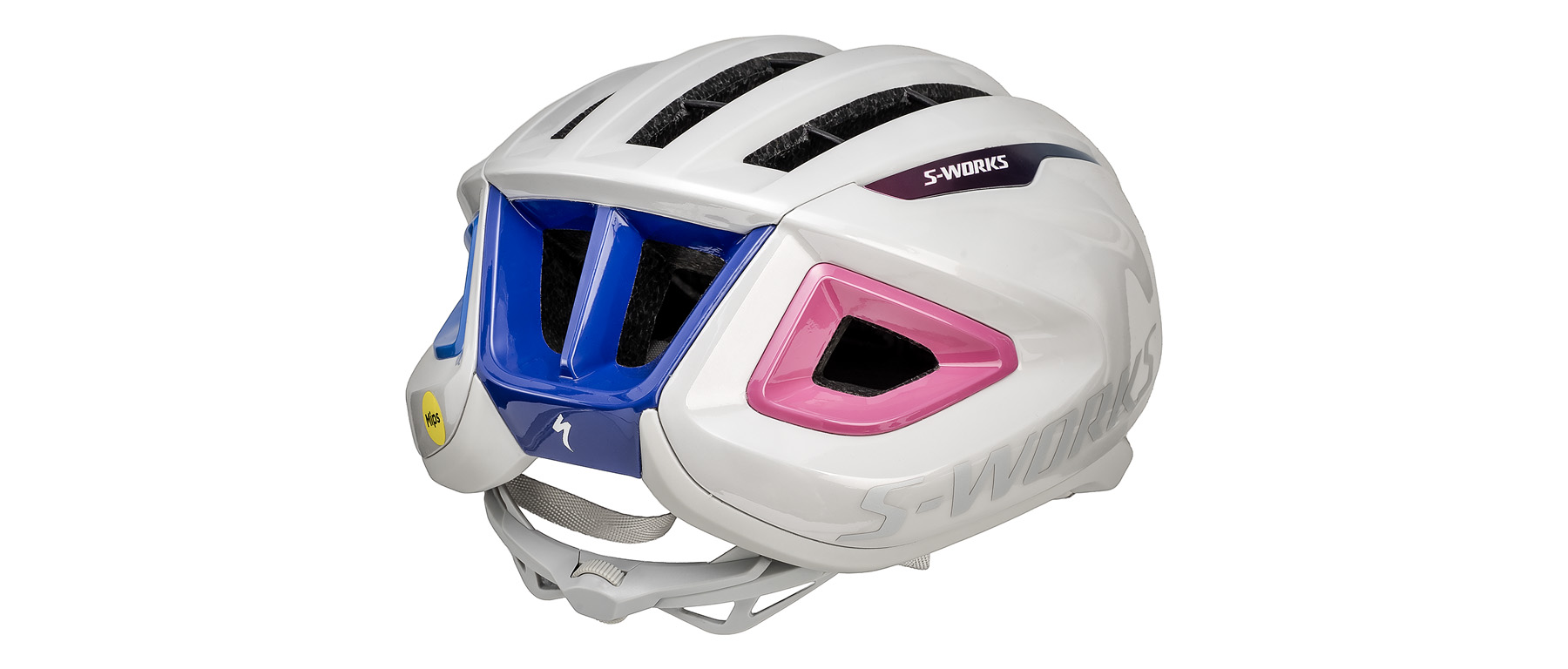
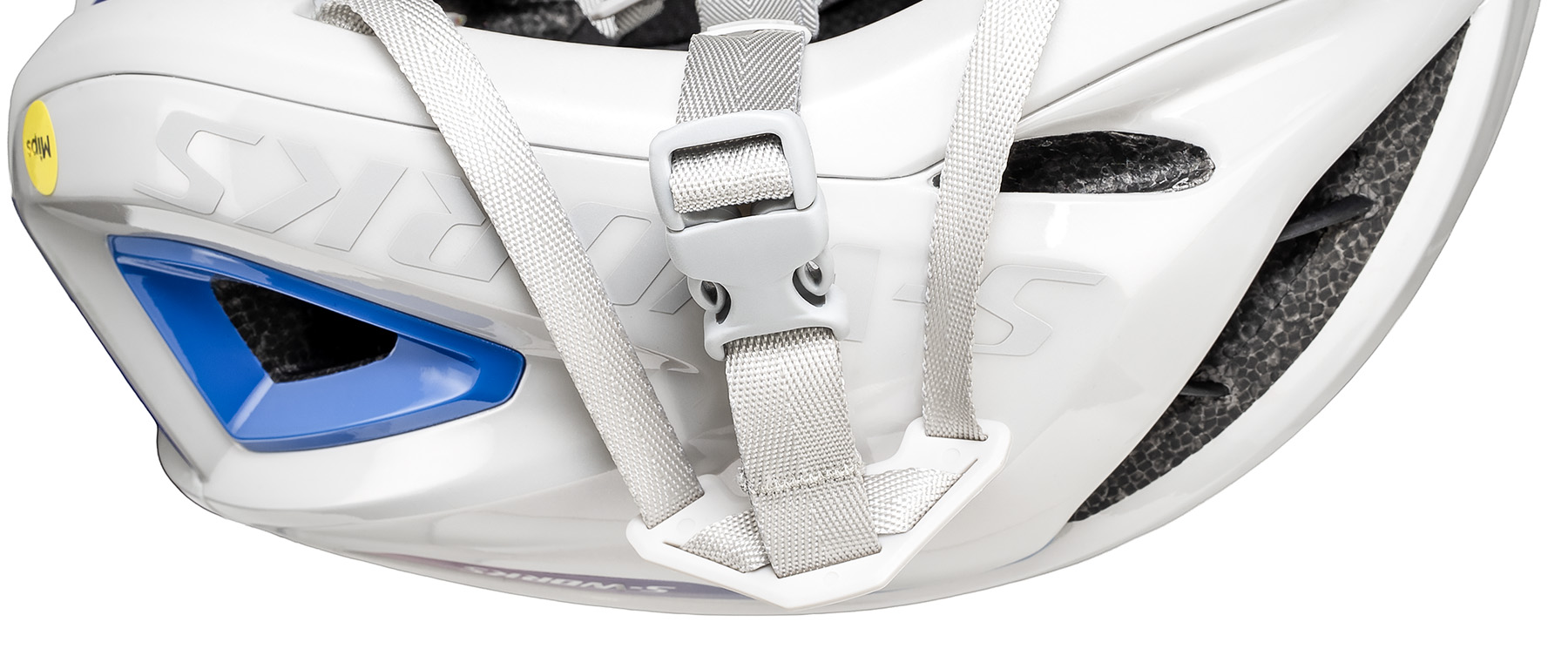
the Prevail 3 is compatible with the Specialized ANGi Crash Sensor, with the Occipital Base Adjustment rear cranial support strap carrying a dedicated mounting point for the ANGi.
That sensor is a small node that fits to the back of the helmet and sends an alert to a pre-designated contact should you experience an impact, sold separately as an add-on.
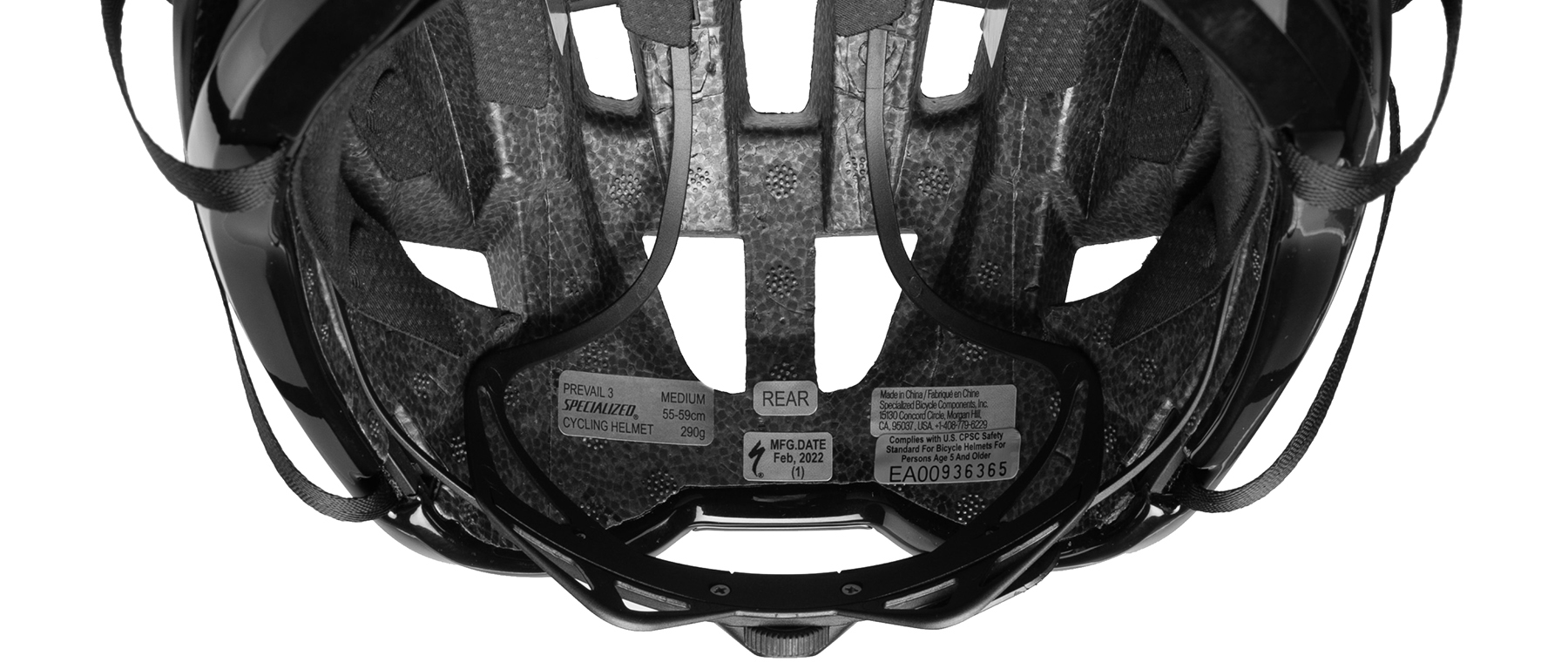
The Occipital Base Adjustment personalizes fit to your head shape, and helmet angle can be adjusted for compatibility with glasses.
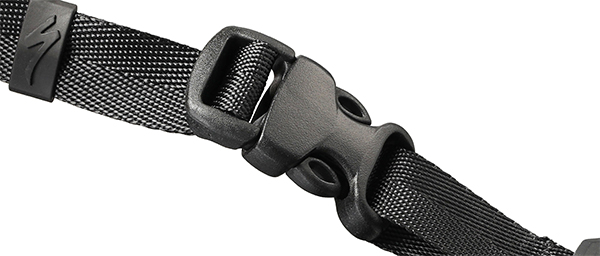
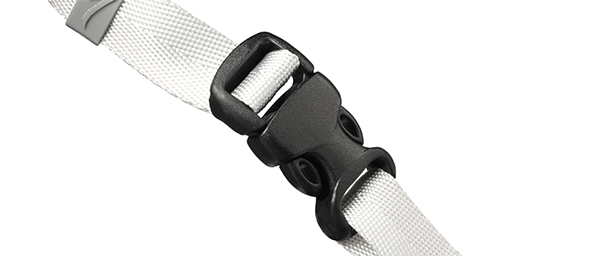
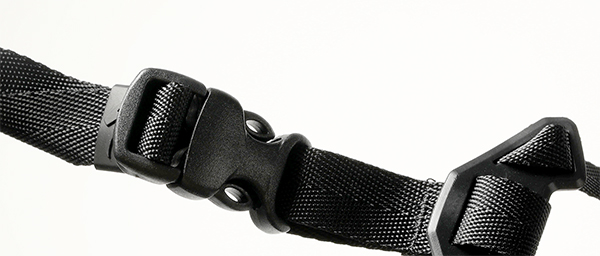
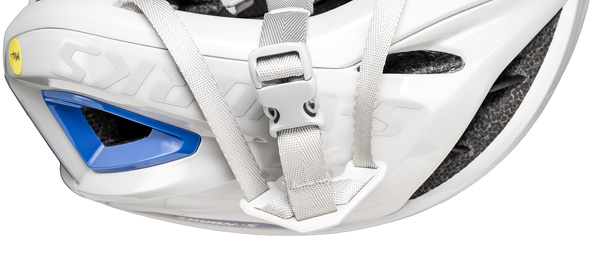
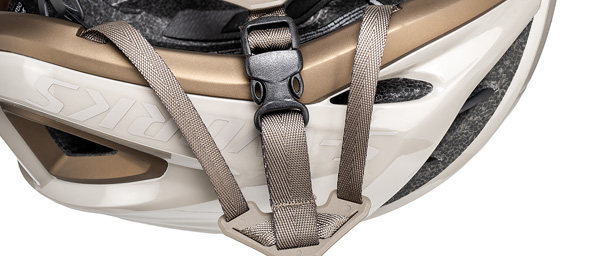
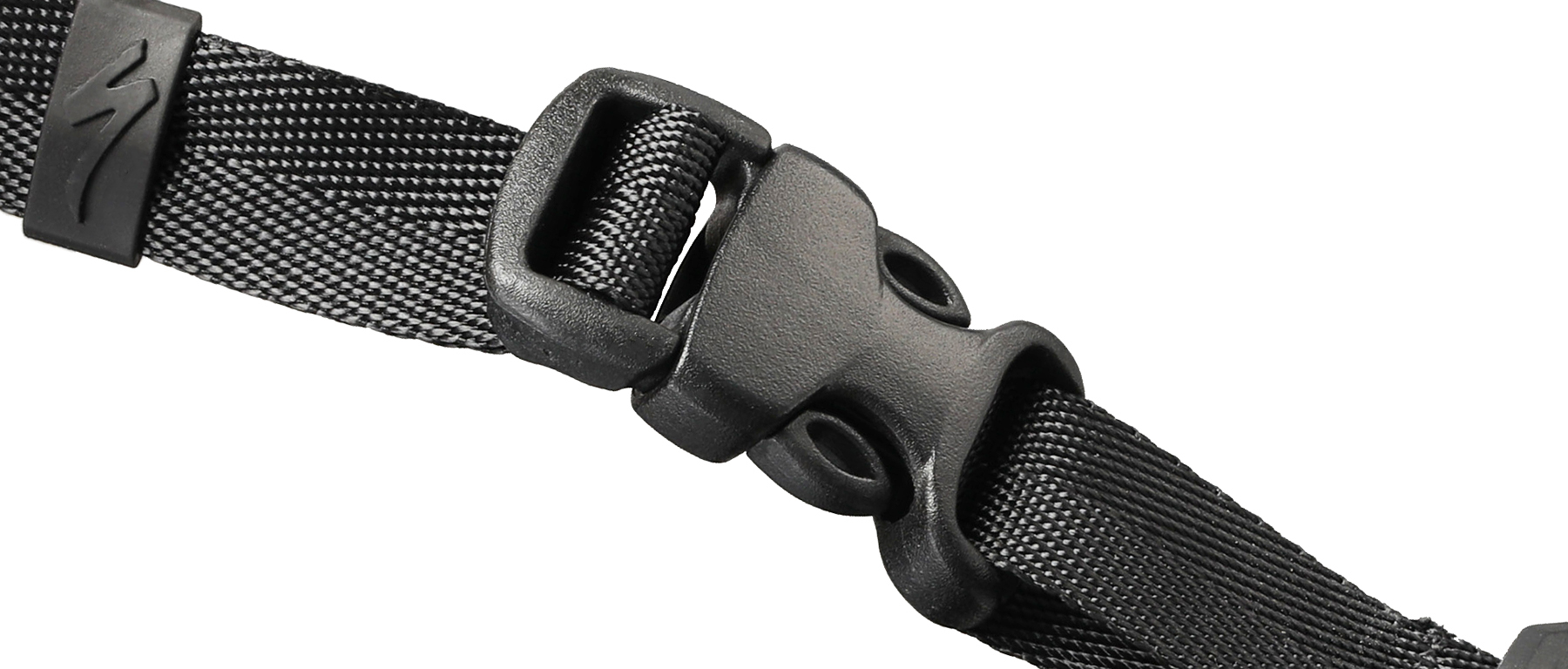
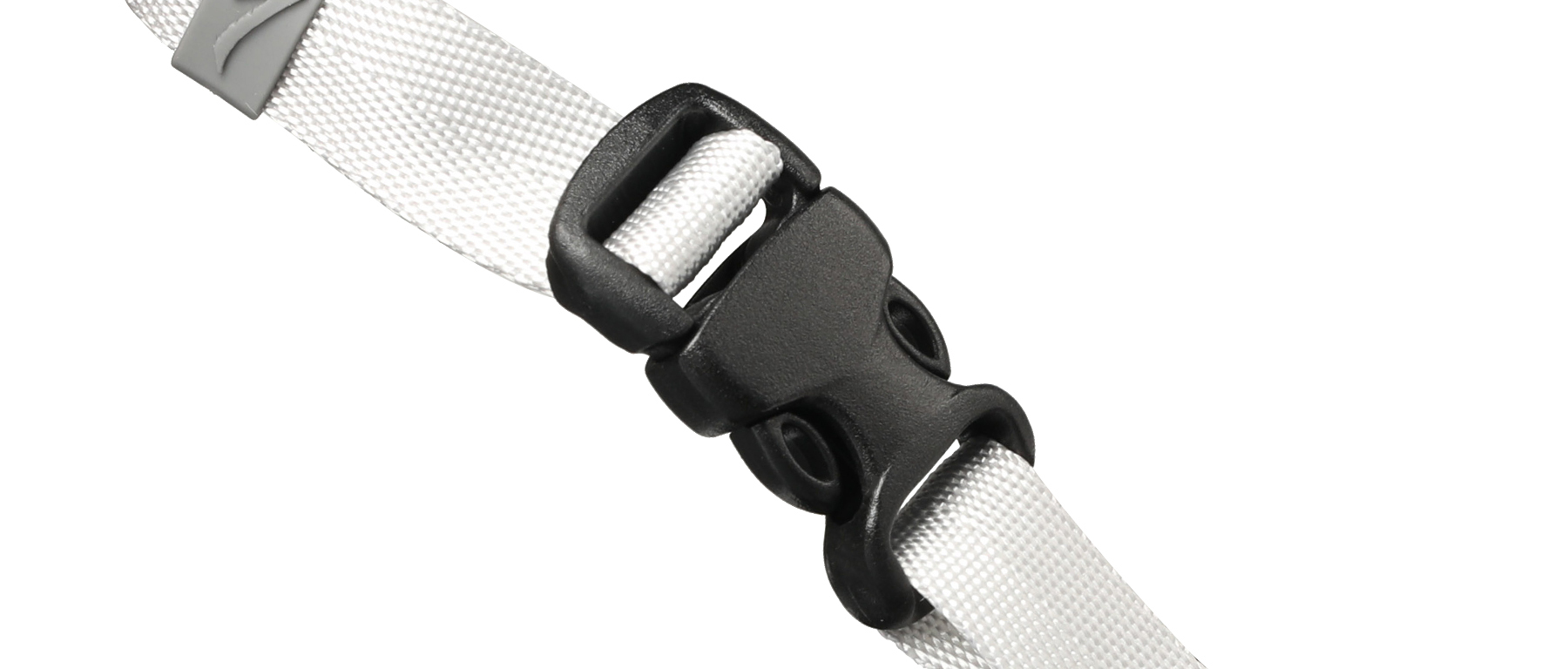
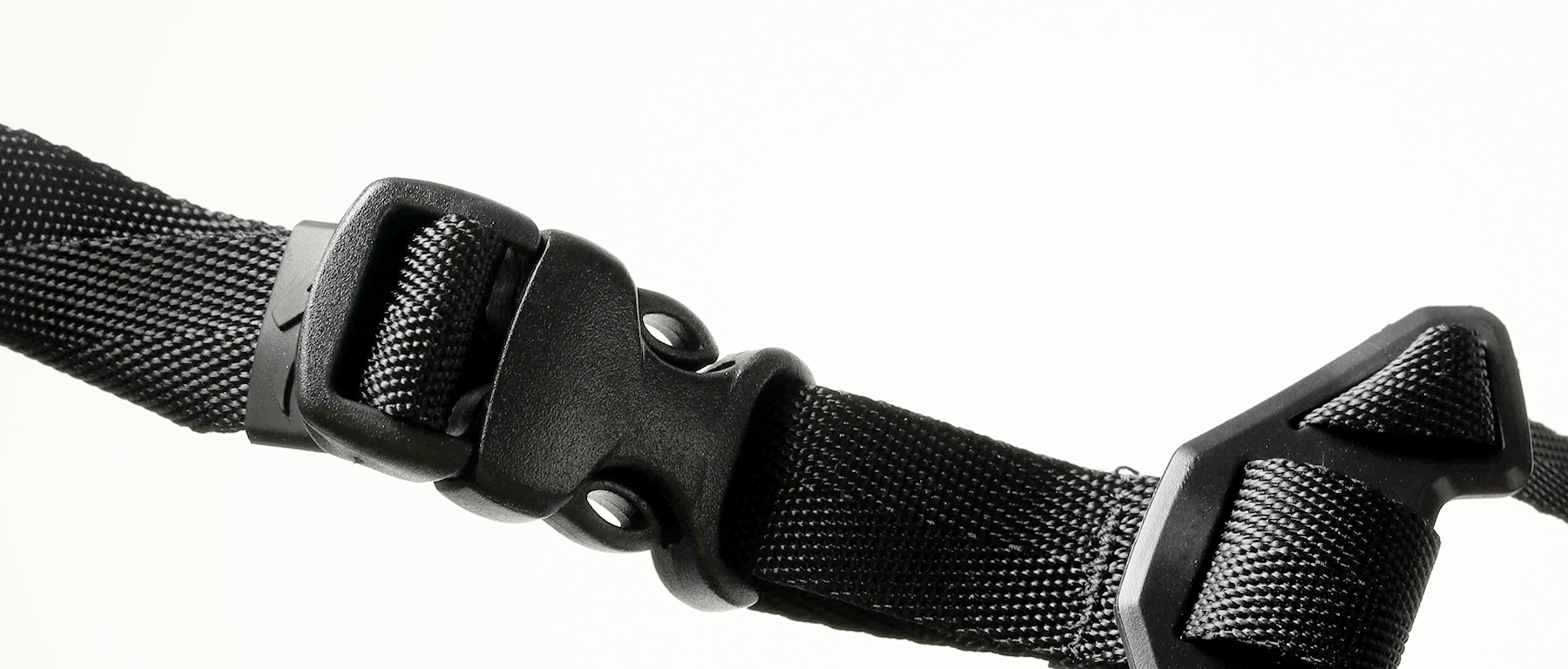
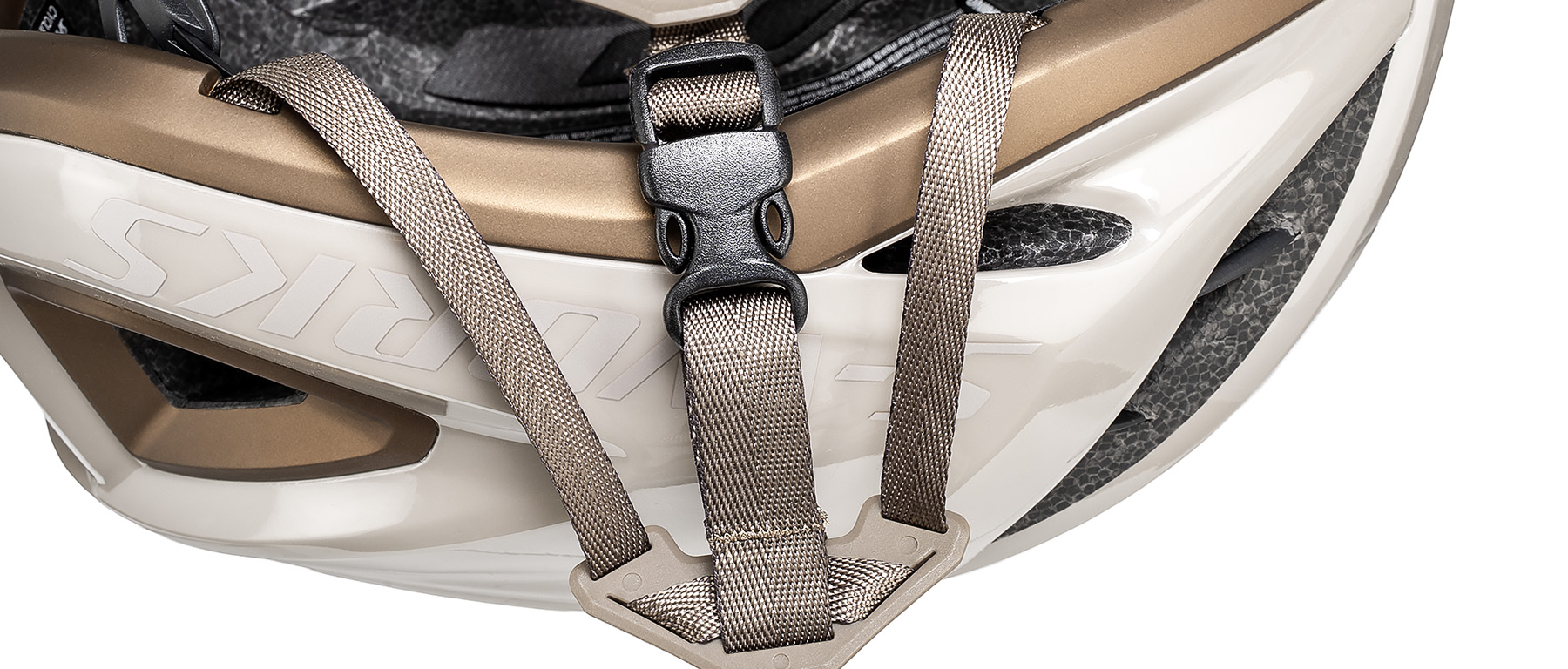
The adjustable Tri-Fix web system uses thinner 10mm webbing that minimizes strap noise.
One thing worth flagging before you buy: the shape runs long and narrow.
One year-long tester found it fit an oval head well but noted it has a more exaggerated elongated shape front to back than any other cycling helmet in his collection, so if your head isn't oval, try it on first.
Specialized gives a claimed weight of 250 grams for the small and 260 grams for the medium,
though tested weights climb depending on size and certification version, with
one review's size scaling in at 320 grams.
It sits at the top of Specialized's road range alongside the aero-focused Evade 3, and it's the pick whenever heat and climbing are the priority.