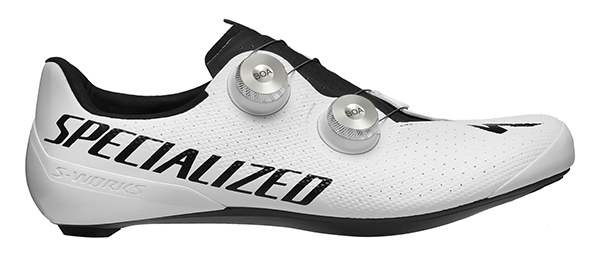
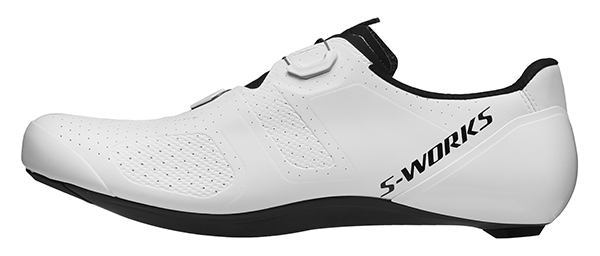
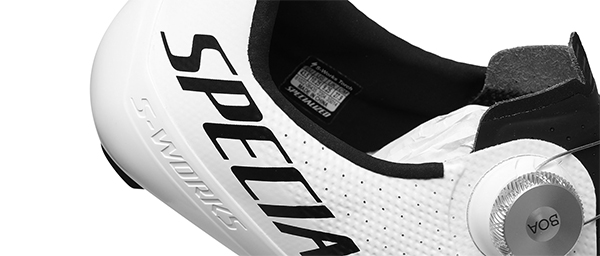
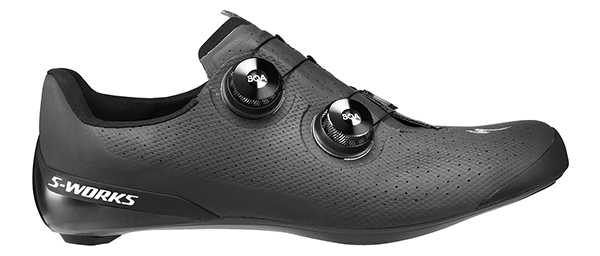
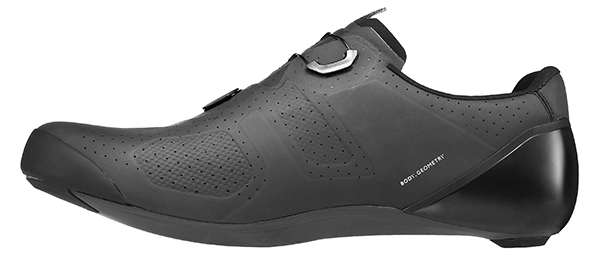
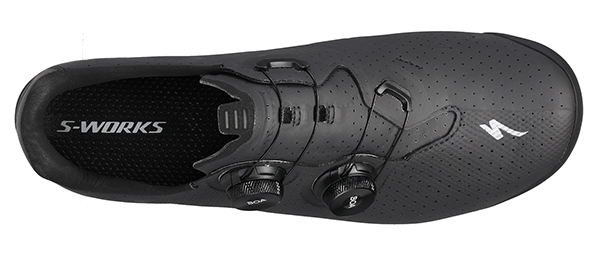
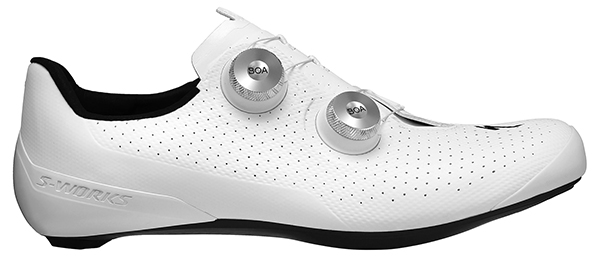
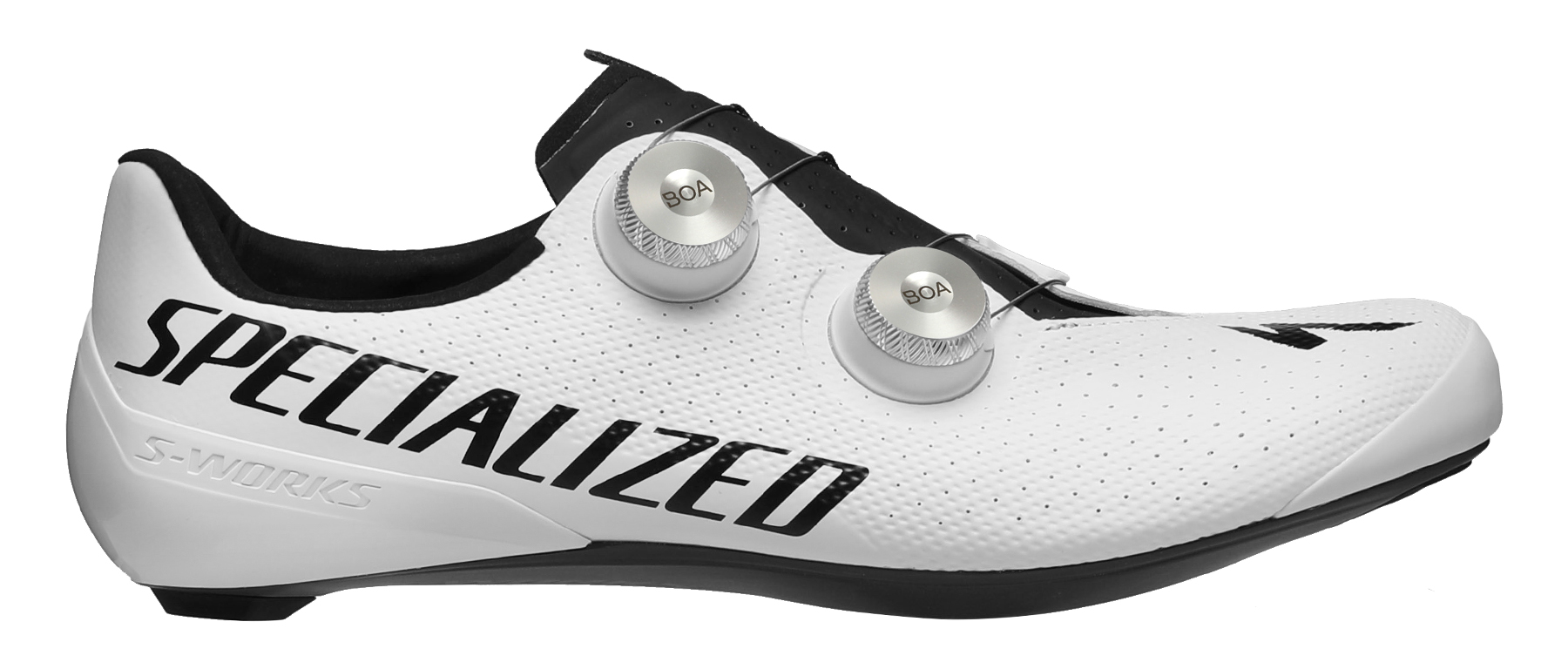
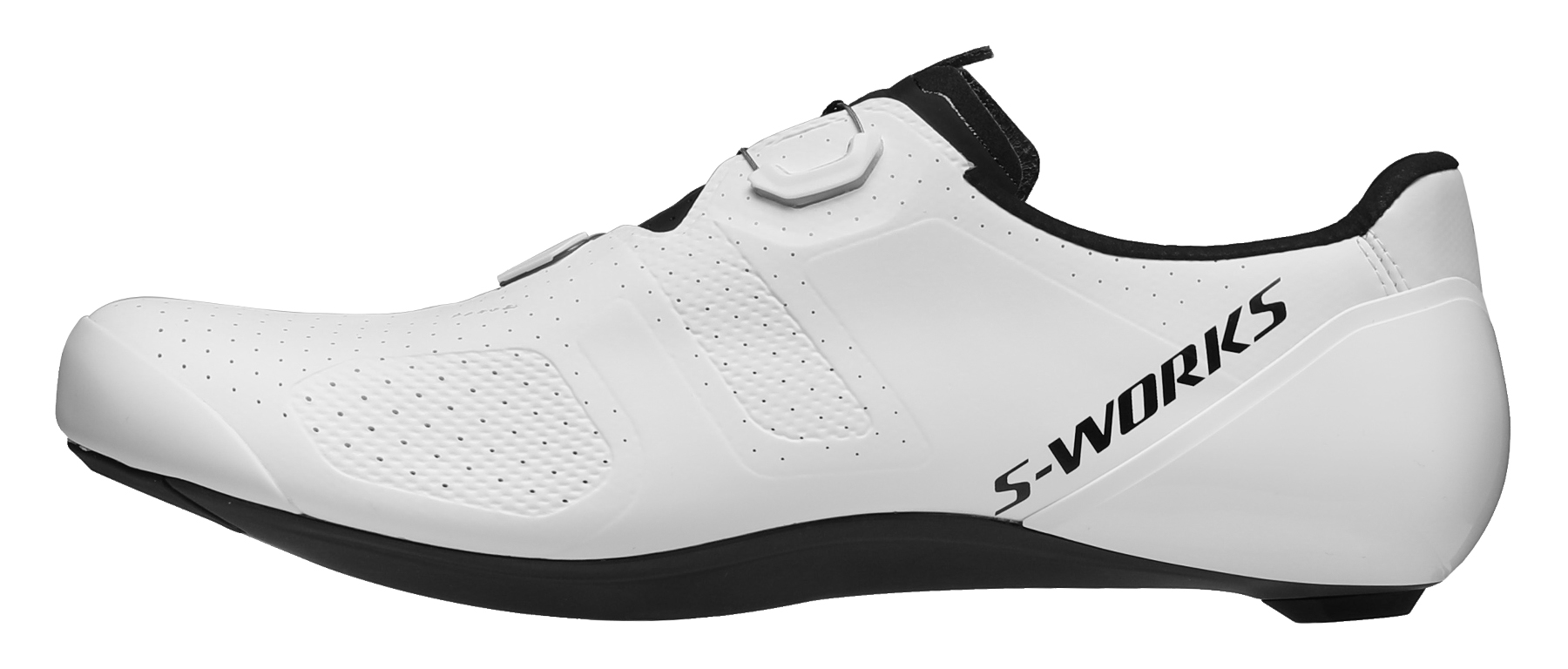
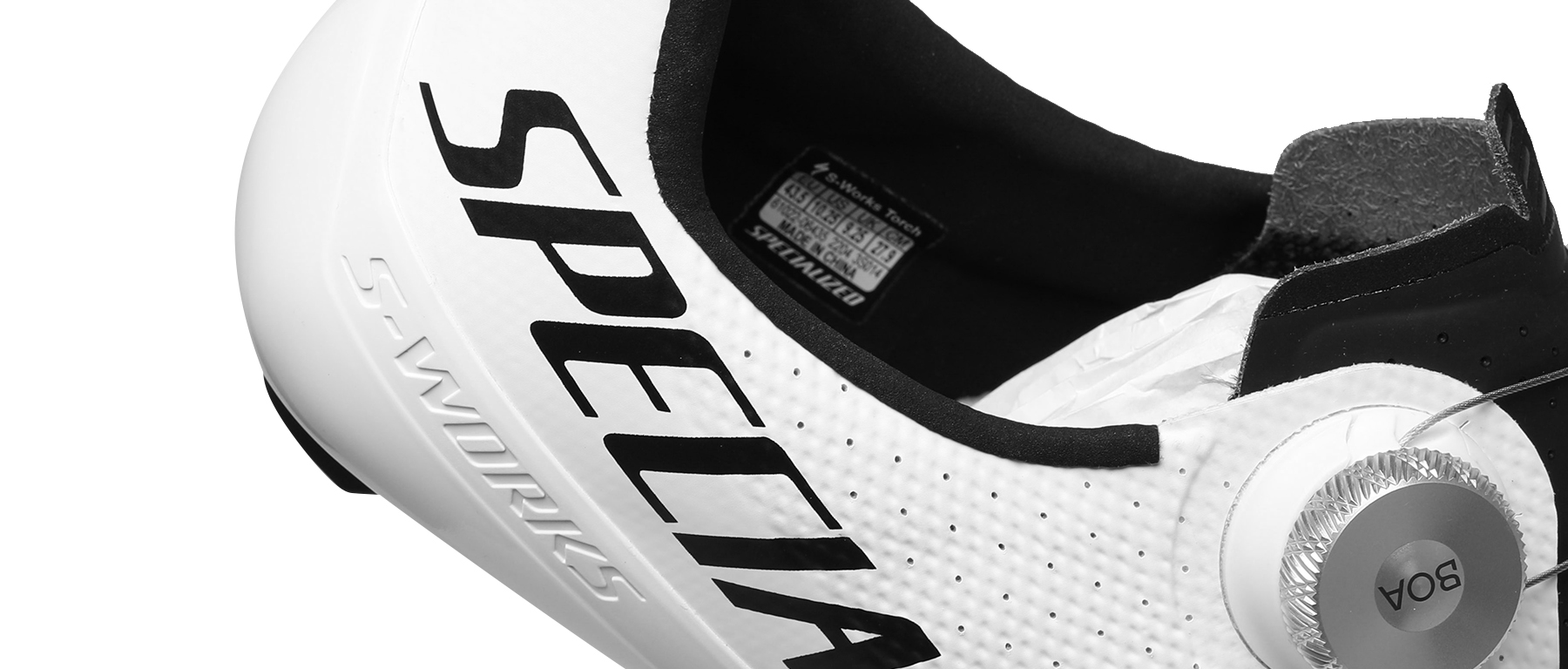
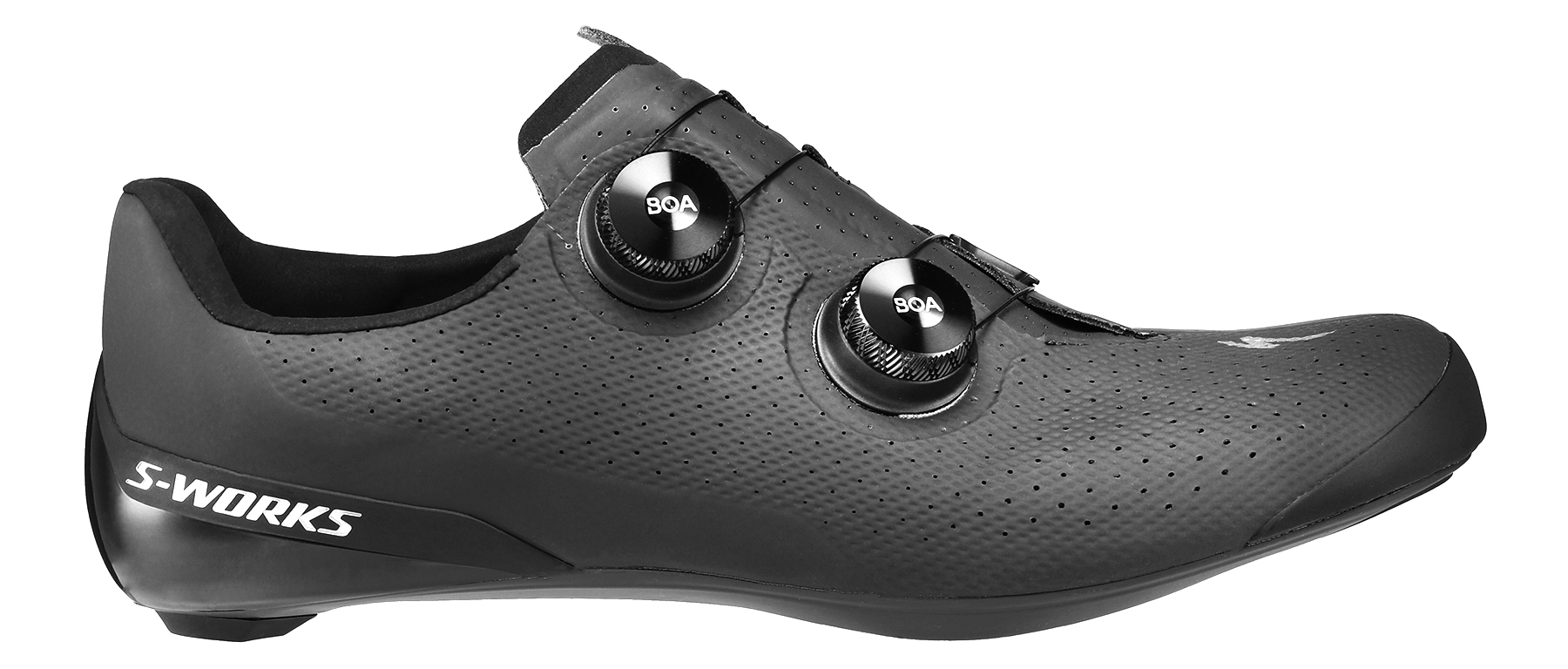
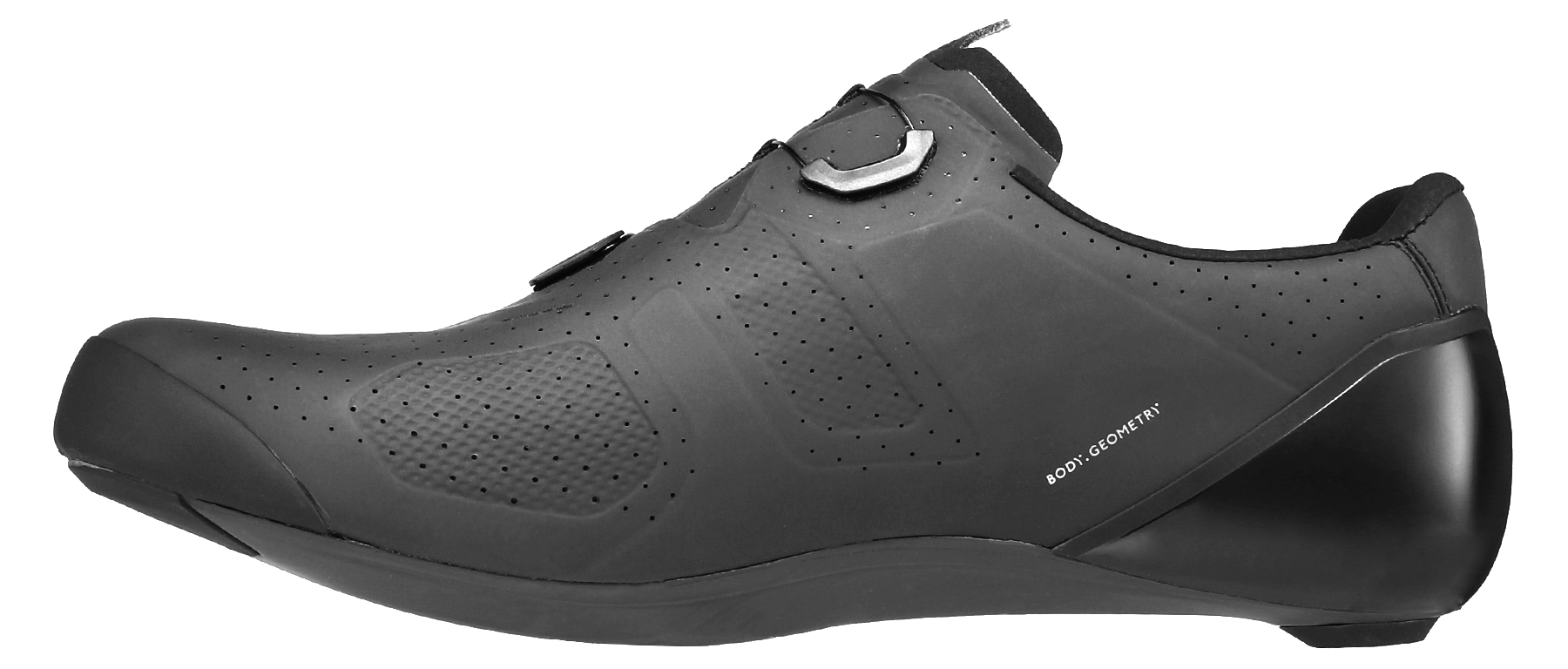
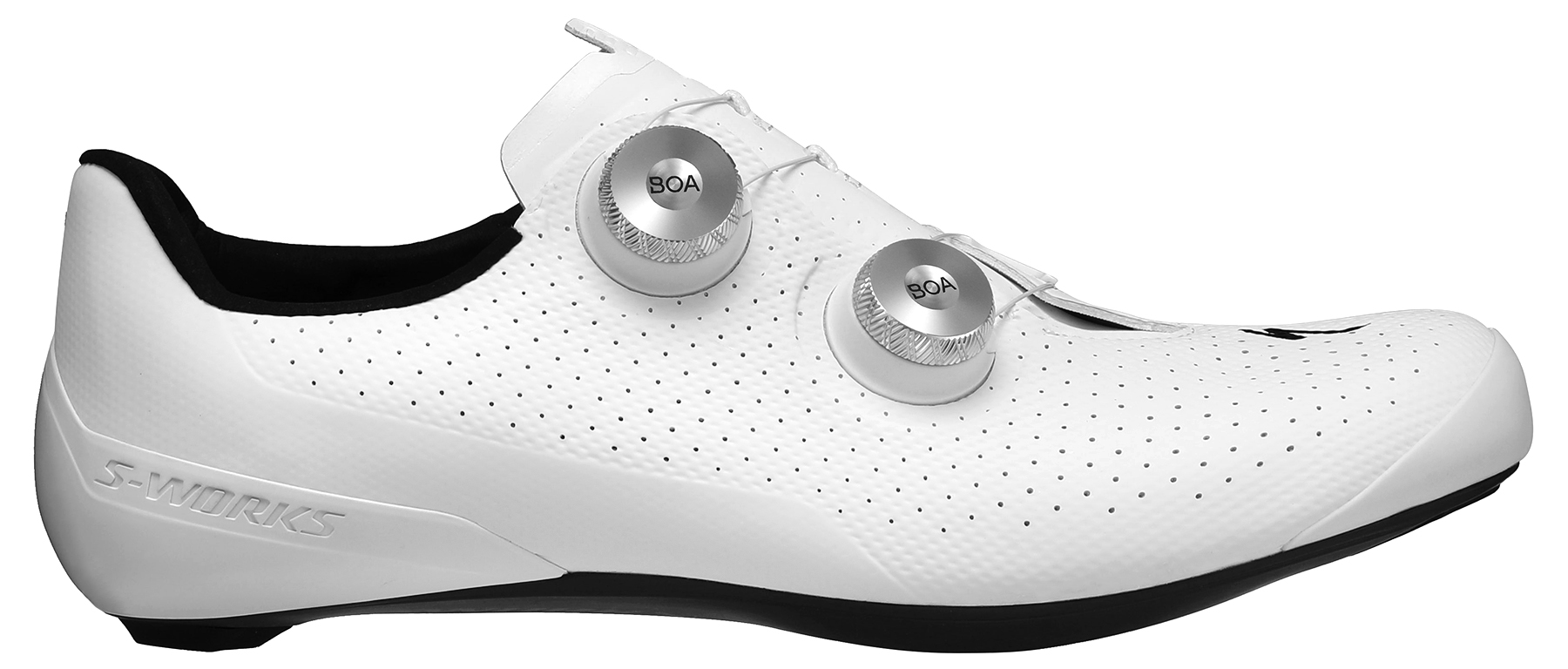
The S-Works Torch is the shoe Specialized puts on the feet of their World Tour roster, including Red Bull-Bora-Hansgrohe, and it represents the brand's current thinking on what a race shoe should be — stiff enough to transfer power without wasting watts, light enough that you're not hauling unnecessary grams up every climb, and shaped around the anatomical reality that feet swell, flex, and generate heat during hard efforts. The shoe replaces the long-serving S-Works 7 in the lineup and builds on the Body Geometry platform Specialized has refined through more than 100,000 RETÜL foot scans, applying that data to a last that runs 4mm wider than the S-Works 7 (7mm wider in the wide-fit version).
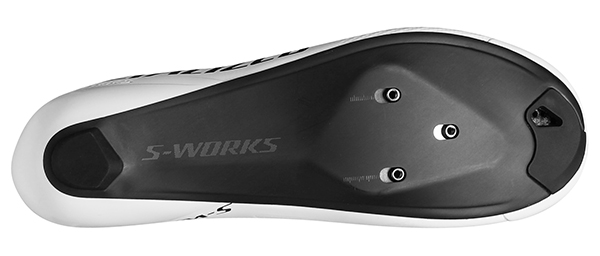
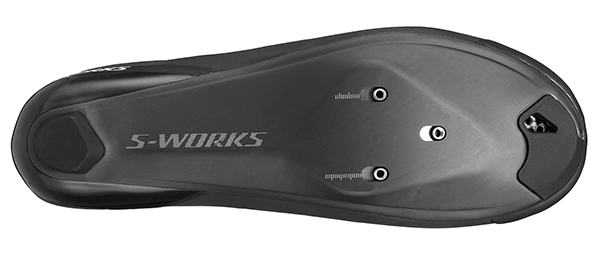
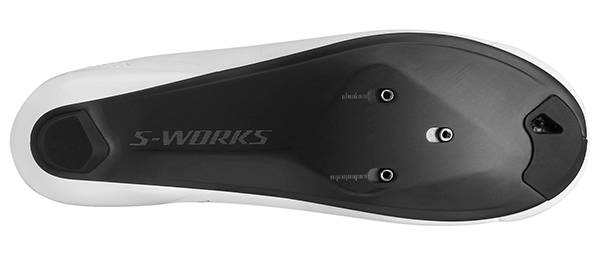
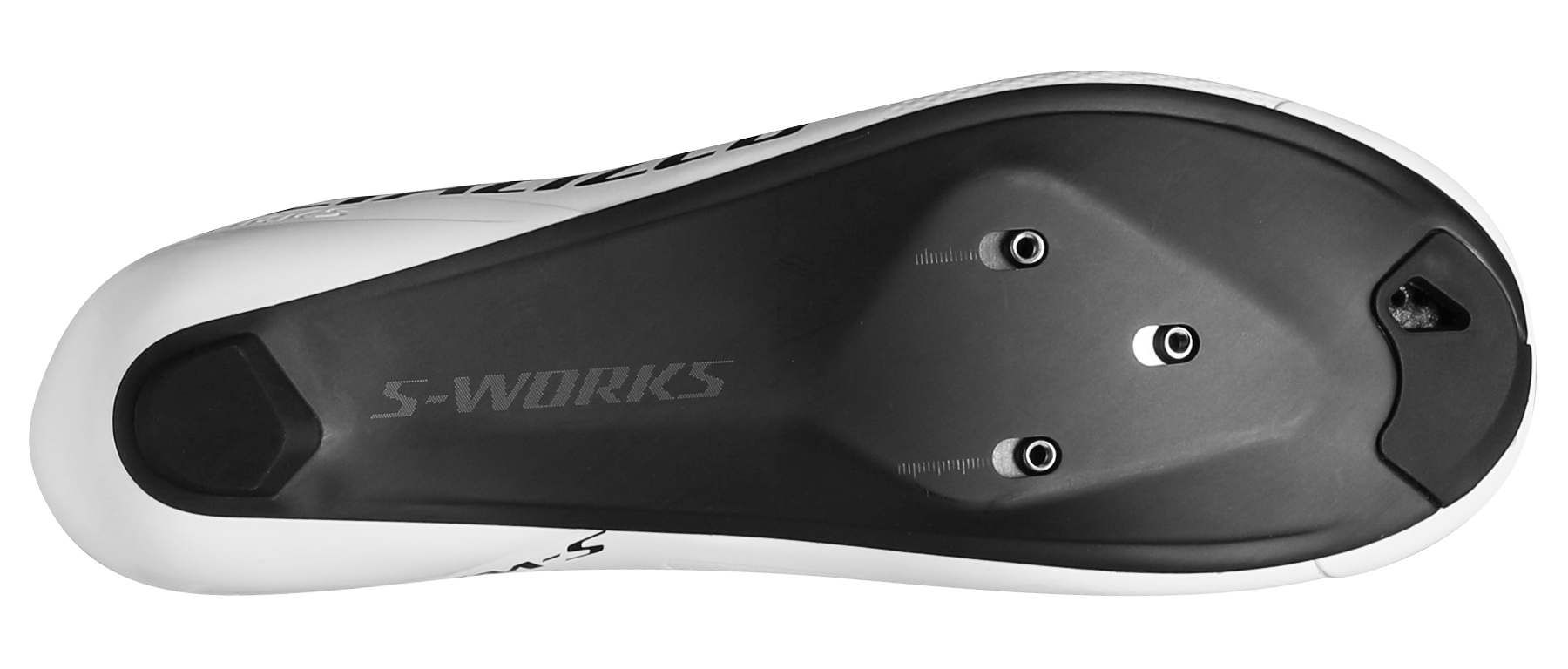
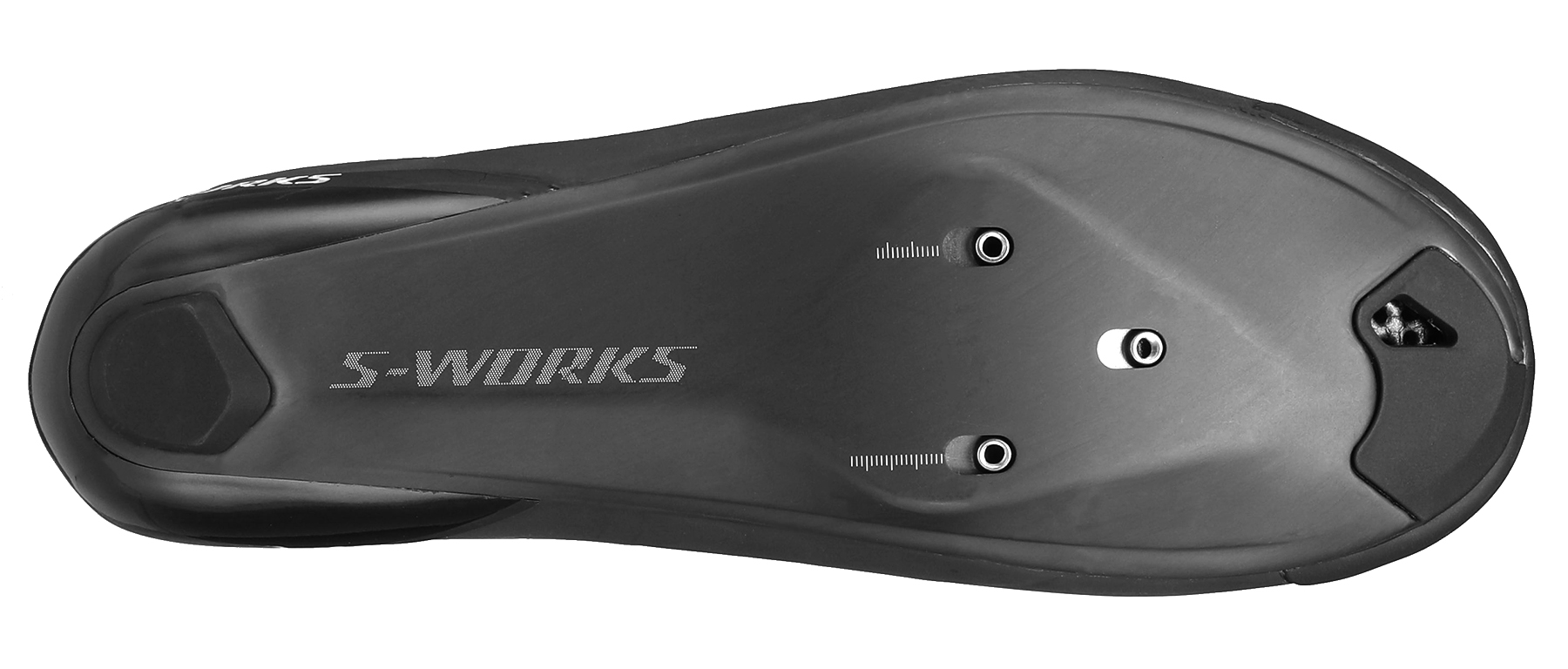
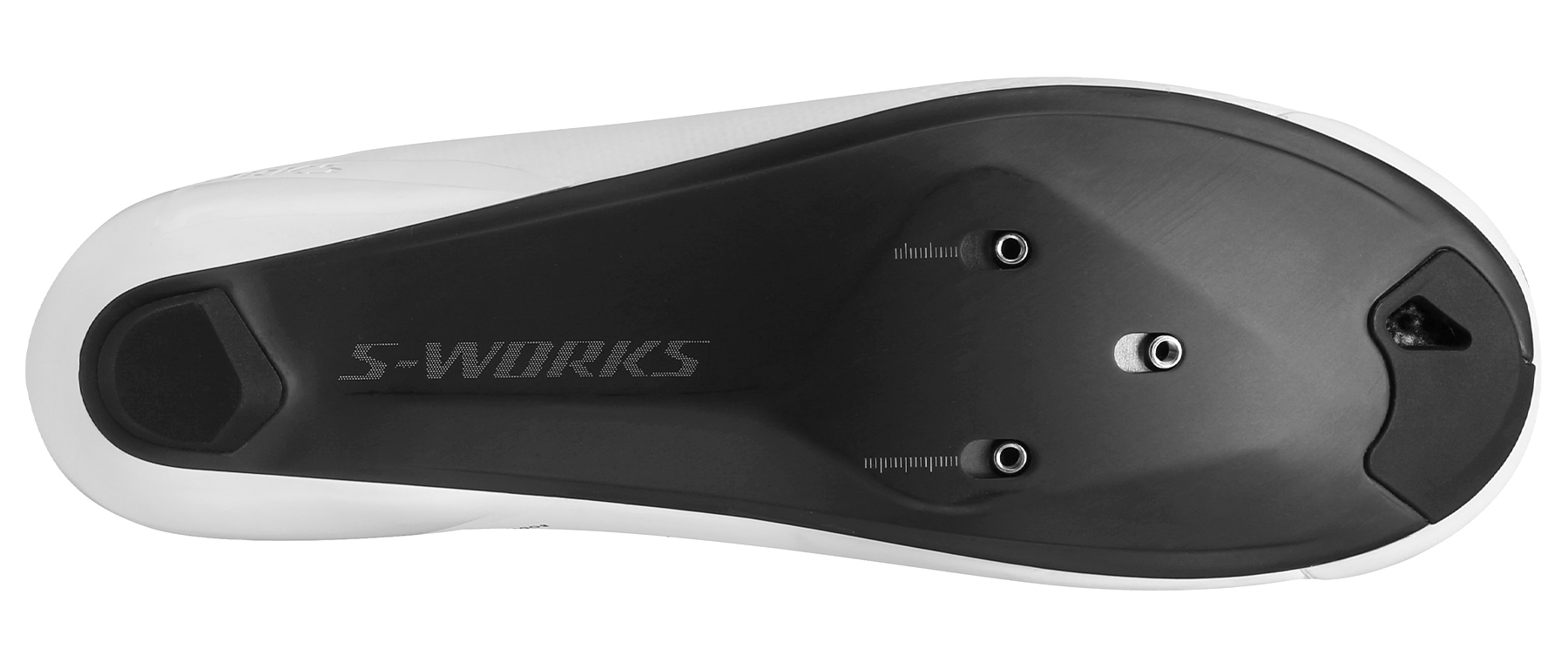
The carbon fiber sole carries a stiffness index of 15, which Specialized rates as their maximum for power transfer. That rigidity comes without a weight penalty — the redesigned base plate is roughly 20 grams lighter than the S-Works 7's, achieved through an internal I-Beam construction that adds stiffness without bulk and tapered "pie crust" edges that strip away excess carbon. The trapezoidal cross-section is the structural story here; Specialized rebuilt the plate from scratch rather than just widening the previous one, which is why the shoe gets wider without getting heavier.
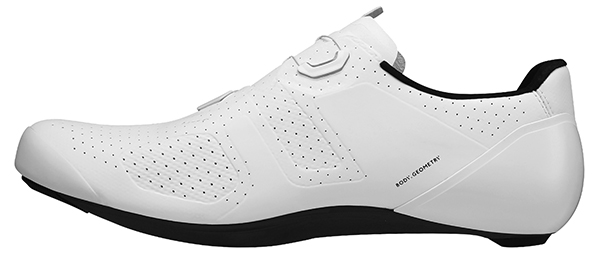
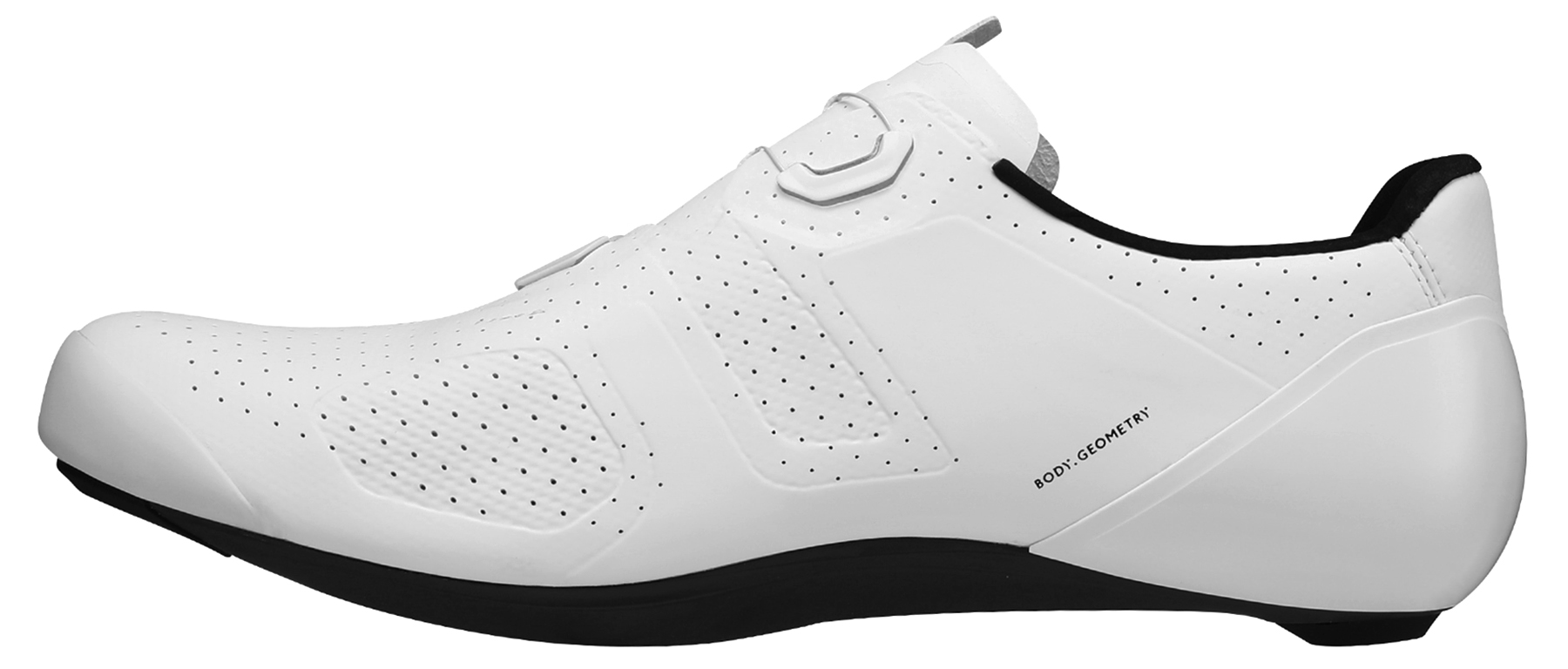
Specialized walked away from Dyneema for this generation, citing manufacturing difficulty and a feel that was a little too unyielding. In its place is a multi-layer, exoskeleton-style upper with zonal reinforcement — stiffer layers around the ankle and midfoot where you want lockdown, more compliant material across the forefoot where the foot needs to expand under load. A TPU layer over the top preserves the clean look and keeps road grime from soaking in. The result is a hold that feels closer to the old Dyneema uppers without the break-in period or the pressure points.... Read More
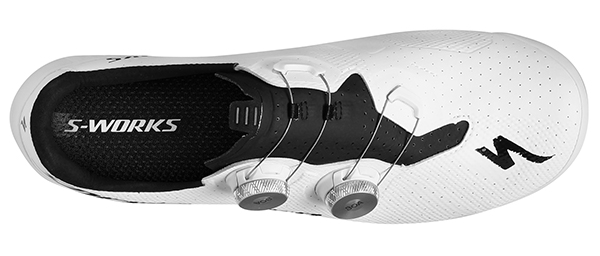
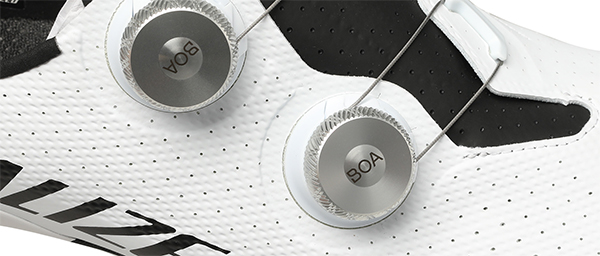
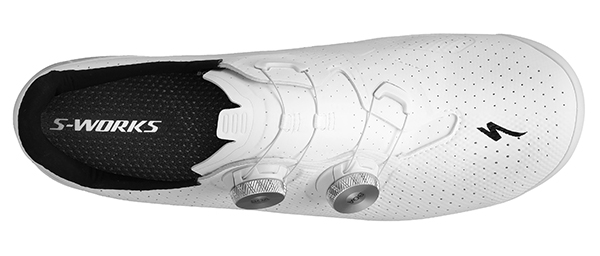
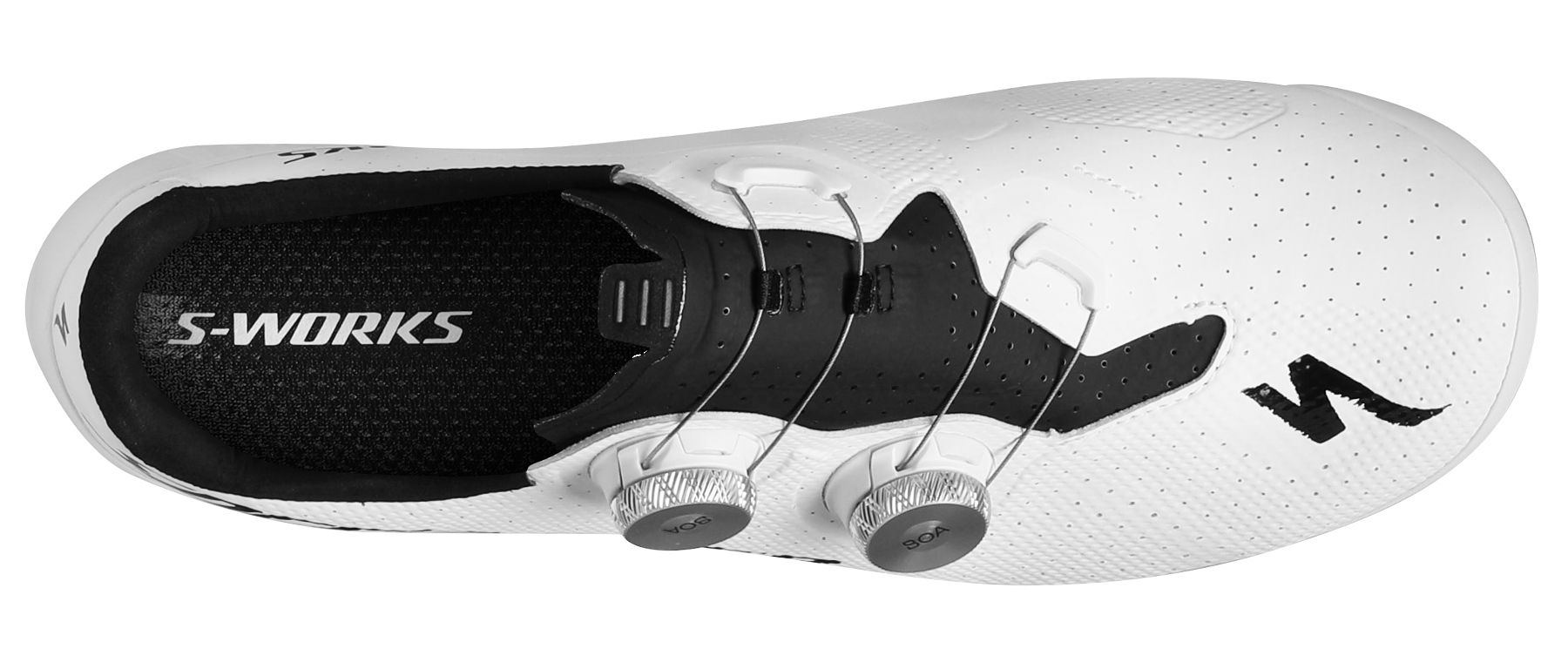
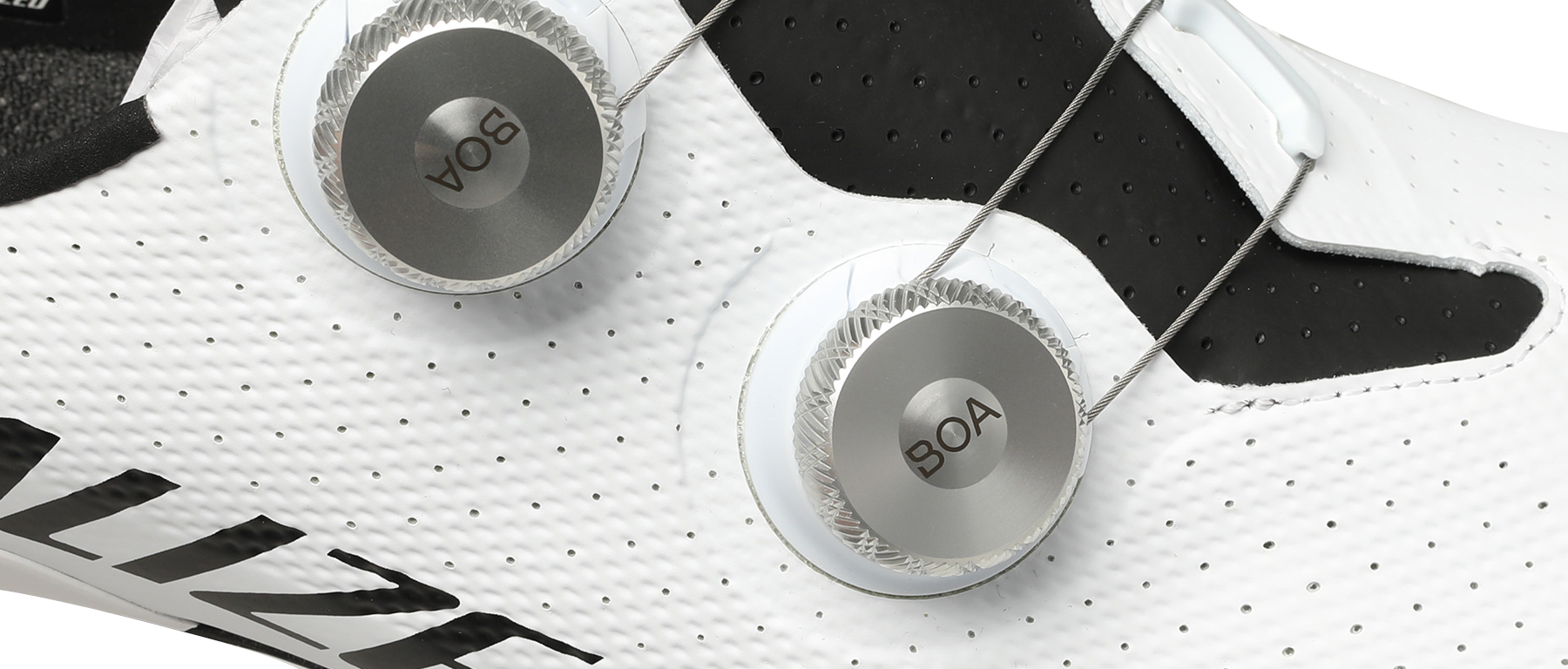
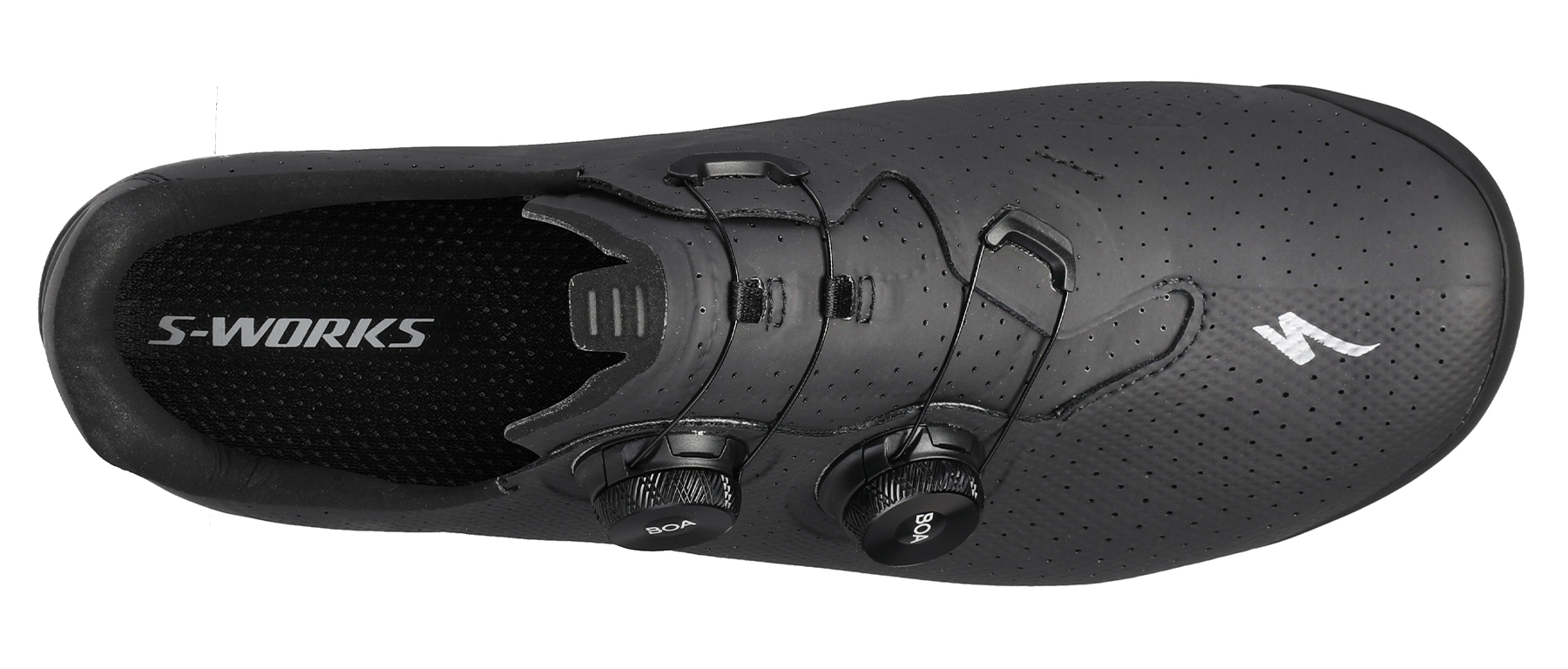
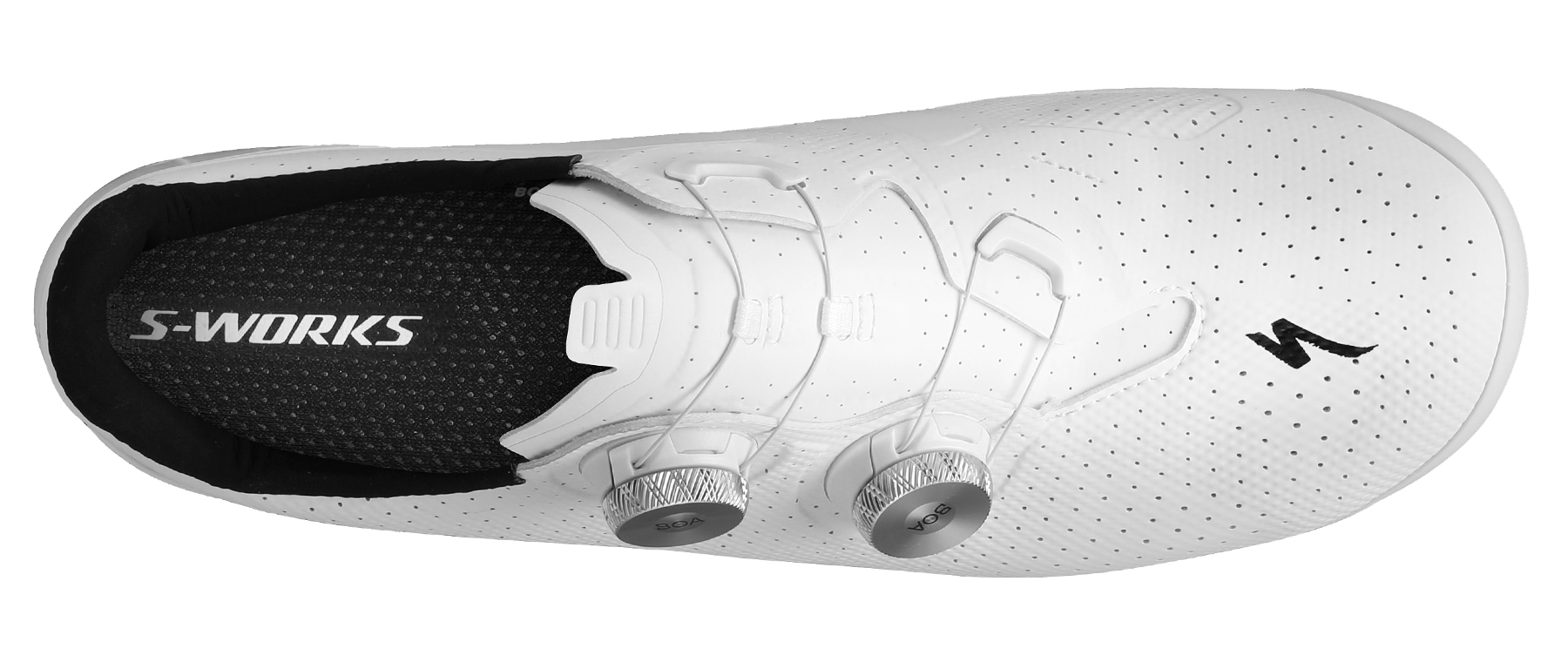
Closure comes from twin Boa S3-Snap dials, the CNC'd alloy version with 1mm micro-adjustment in both directions. The lower dial has been shifted down and angled compared to the S-Works 7, which lets Specialized eliminate the velcro toe strap entirely while preventing lift at the ball of the foot. The upper dial cable now routes through guides on the tongue to keep it positioned correctly, and both cables can be pulled out of the guides for easier on/off. There's also a relief zone built into the tongue between the two dials, which addresses the pressure point that some riders developed on top of the foot in the S-Works 7.
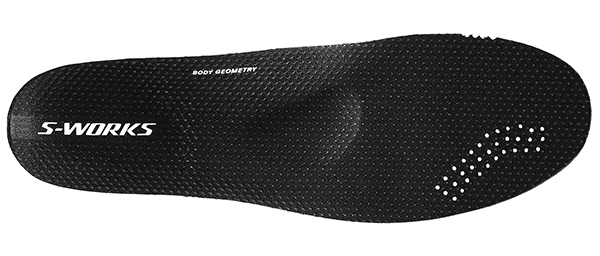
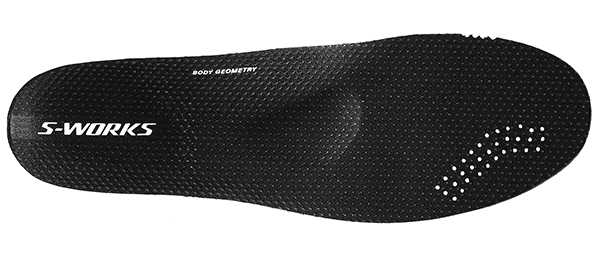
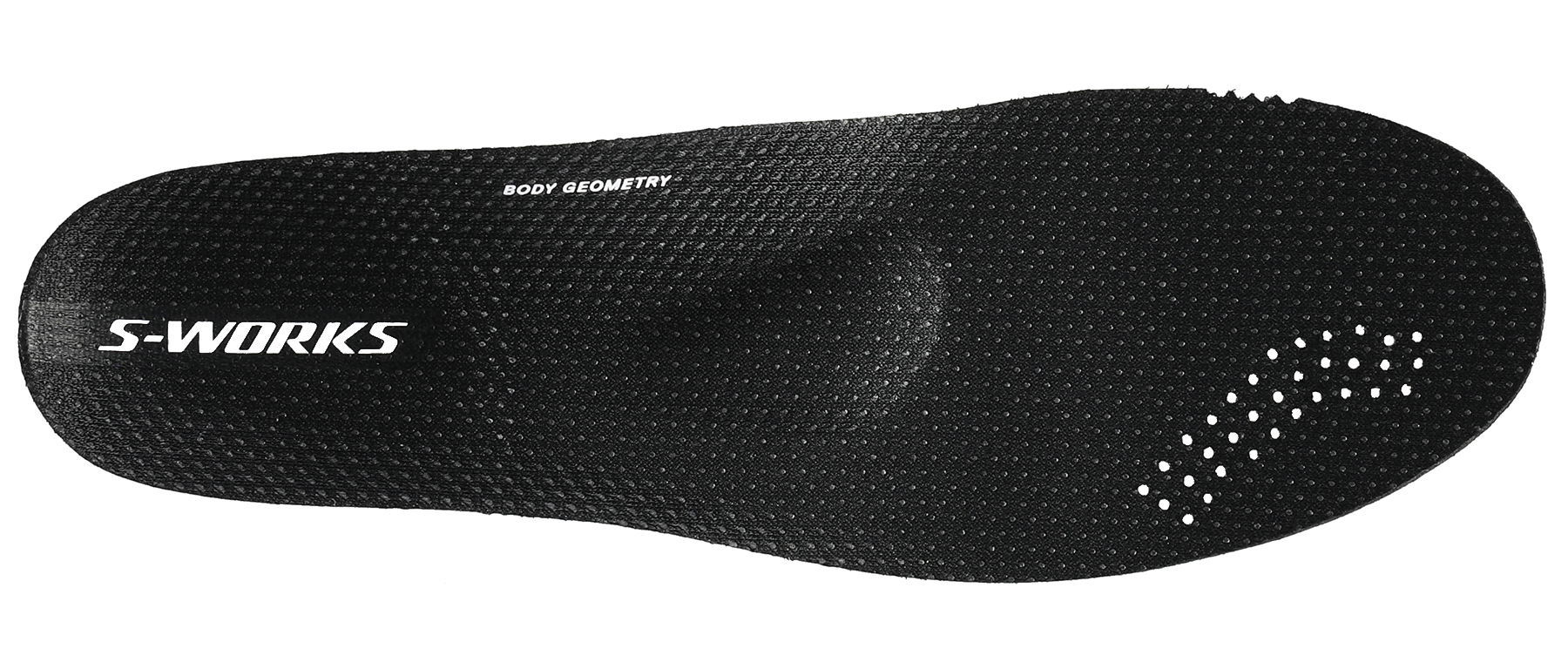
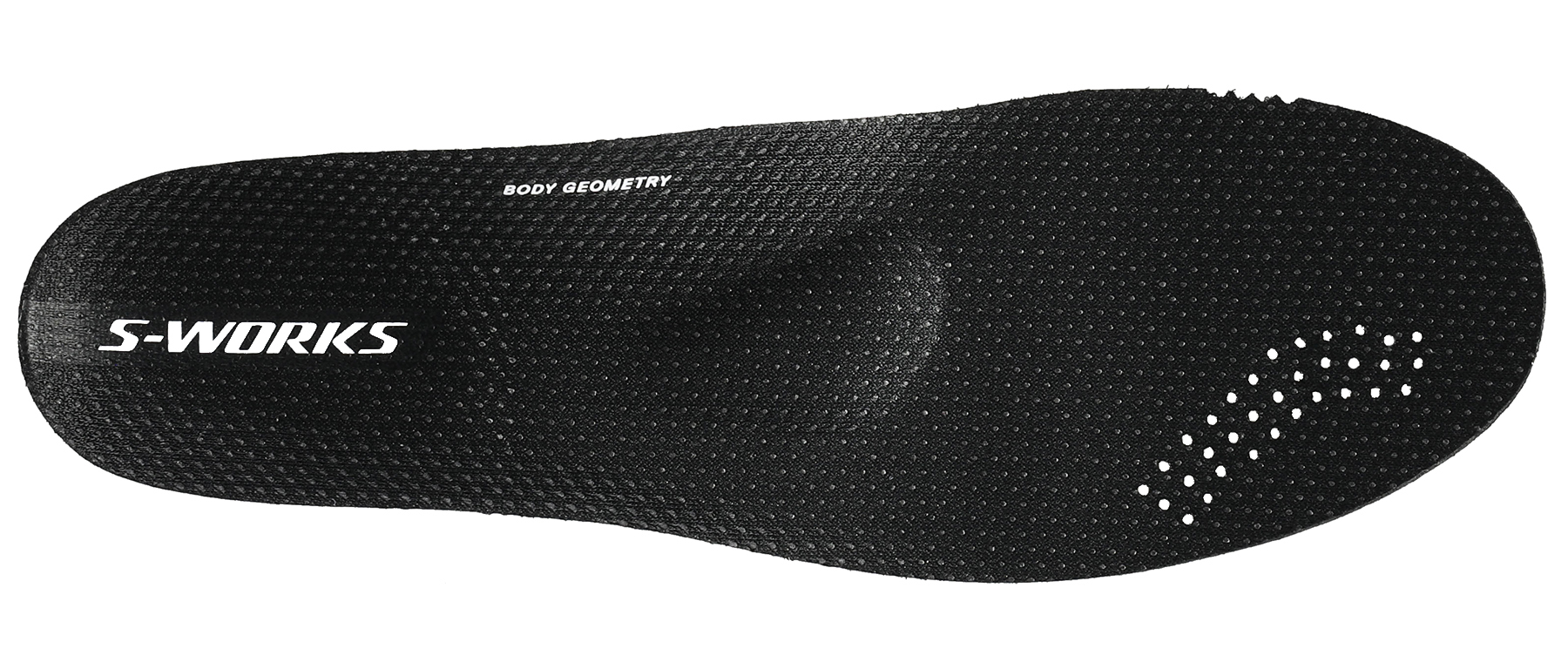
The three Body Geometry pillars — varus wedge, longitudinal arch support, and metatarsal button — carry over from previous S-Works shoes. The varus wedge tilts the forefoot to align the knee through the pedal stroke, the arch support holds foot structure under repeated loading, and the metatarsal button relieves pressure on the nerves running between the metatarsal heads where hot spots and numbness typically develop on longer rides. These features are integrated into the footbed rather than bolted on, which is the reason the Torch fits the way it does instead of being a generic narrow race last with a fancy upper.
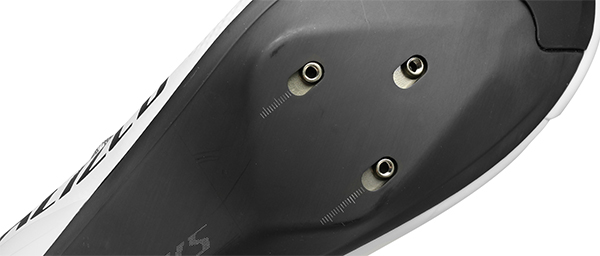
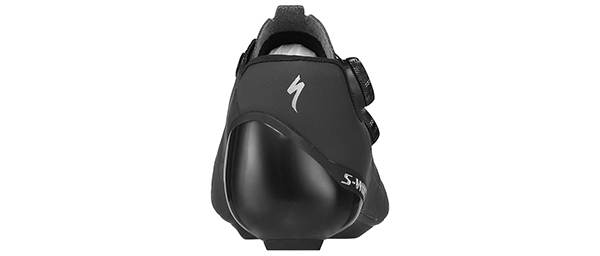
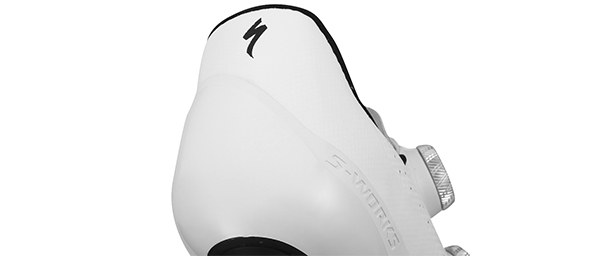
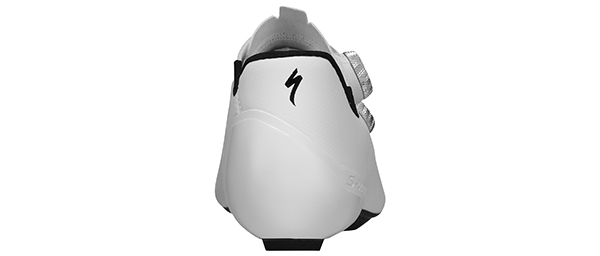
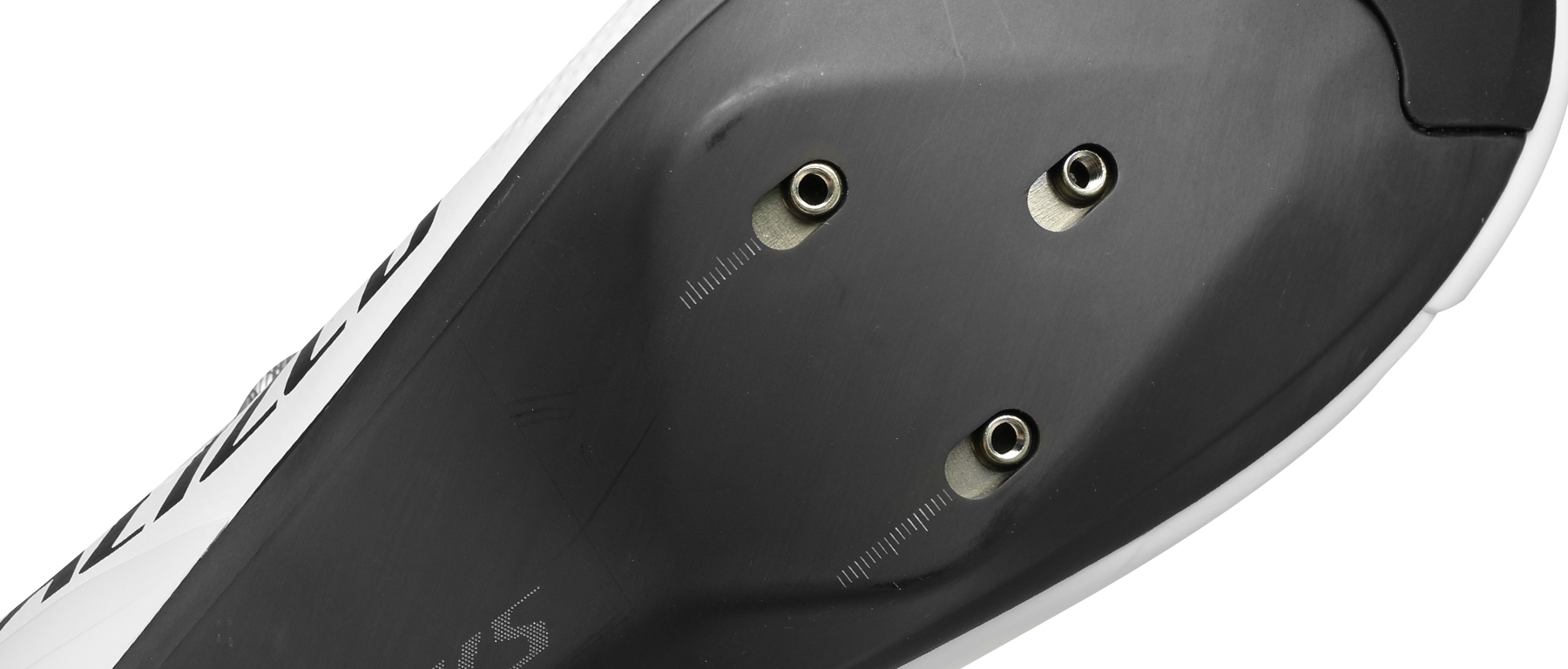
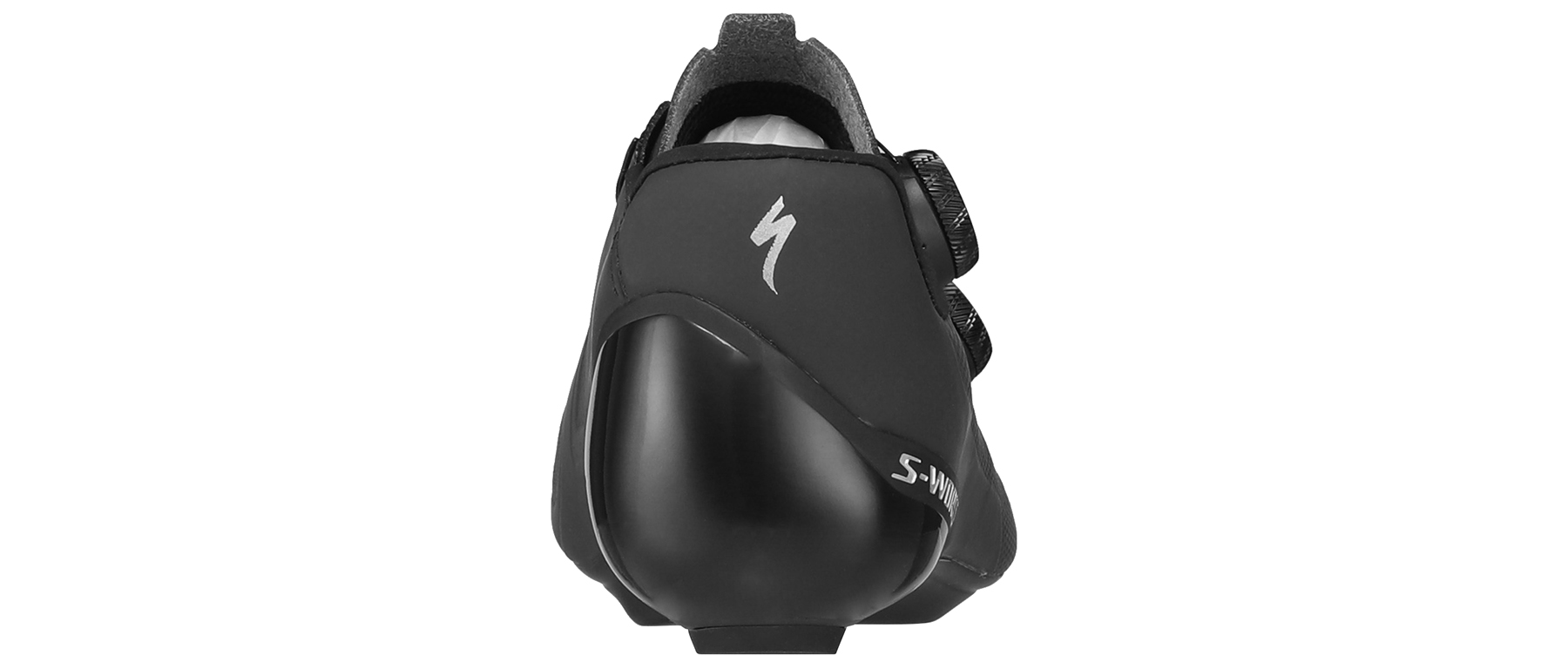
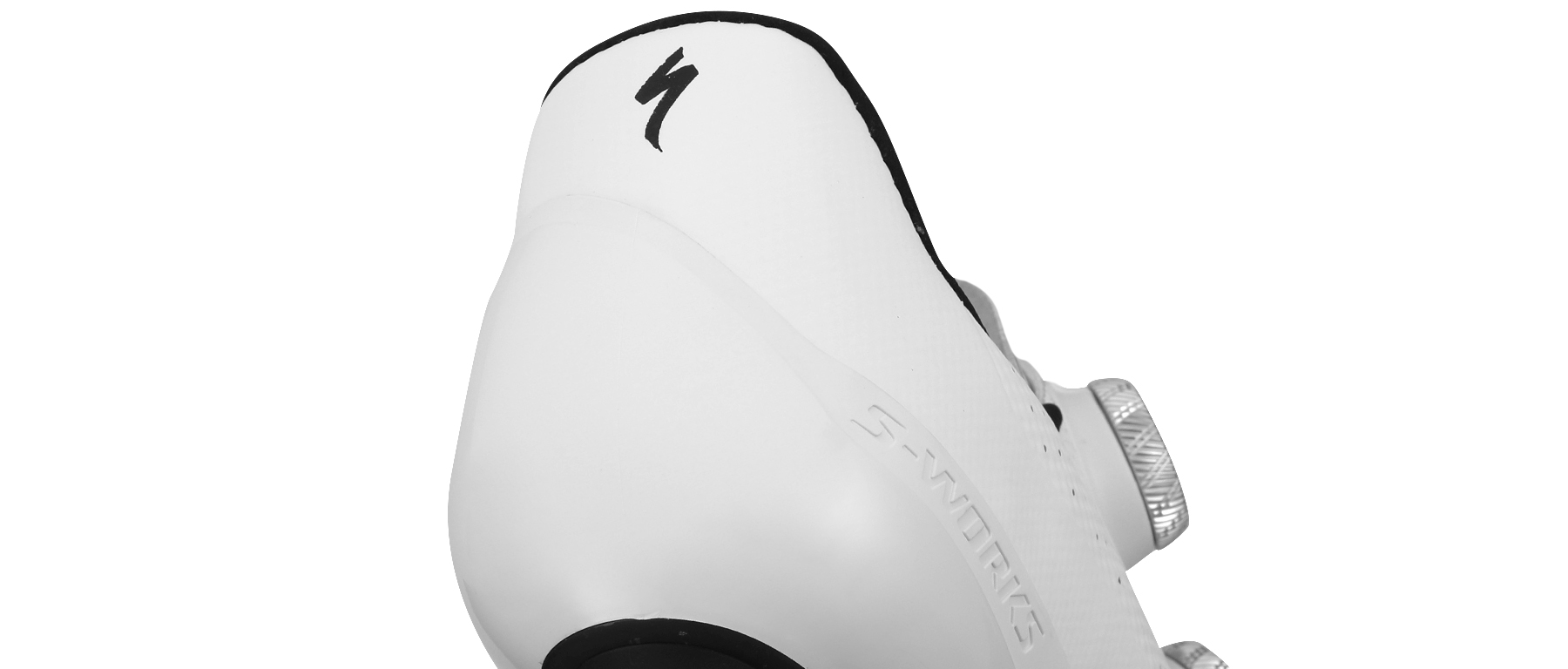
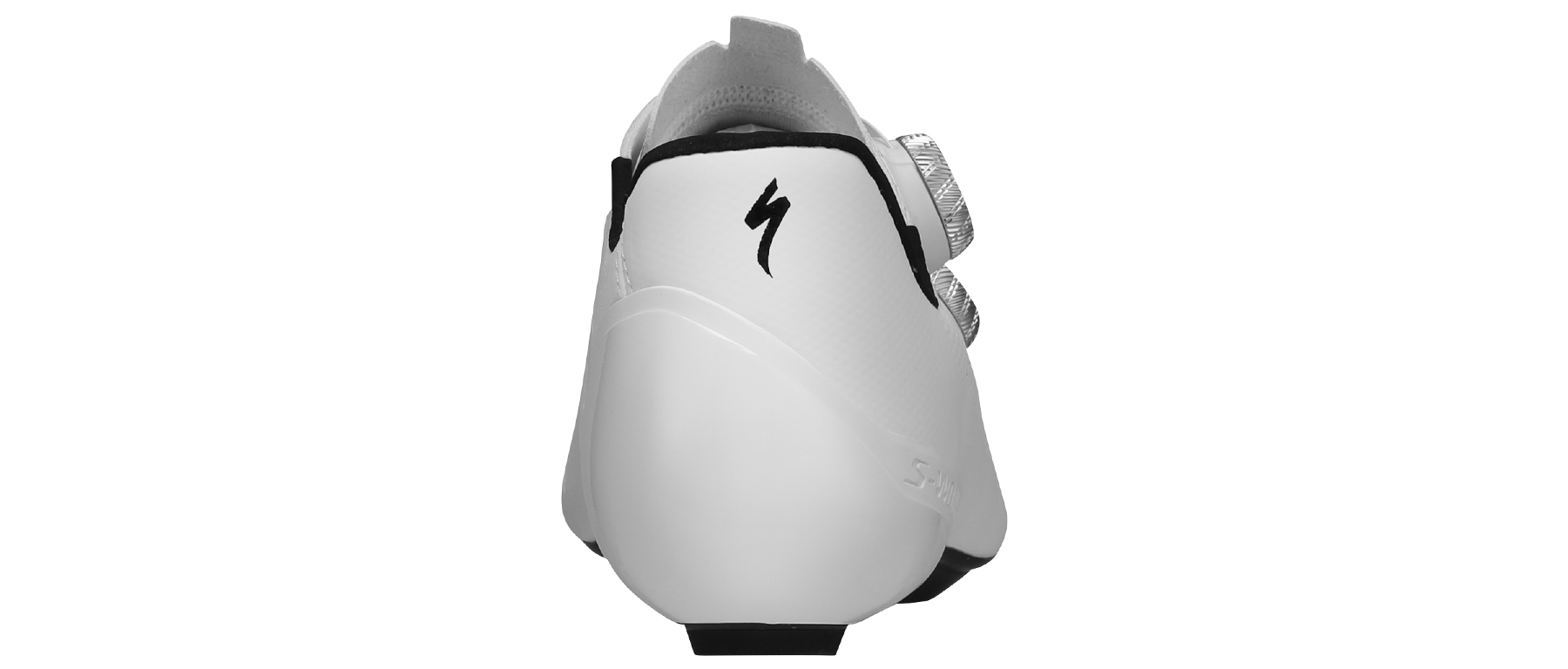
The asymmetrical heel cup is new for the Torch and replaces the symmetrical design of the S-Works 7. Specialized dropped the lateral collar by 4mm to keep it clear of the ankle bone at the bottom of the pedal stroke, and the softer outer heel construction gives riders with wider Achilles attachments more room. Sliding cleat nuts carry over from the previous generation, giving you fore-aft adjustment range without having to drill new positions. The cleat interface accepts standard three-bolt road cleats.
Fit-wise, if you've historically worn a size up in S-Works 7 to accommodate forefoot volume, try your actual size in the Torch first — the wider last is doing the work the size-up used to do. The toe box has more room than the silhouette suggests, while the heel cup stays narrow to hold the foot in place. The Team White and White colorways will show wear and road grime faster than the Black, which is worth considering if you ride in variable weather.